Conflict in the Middle East will accelerate sell-off in US IT stocks - BCA

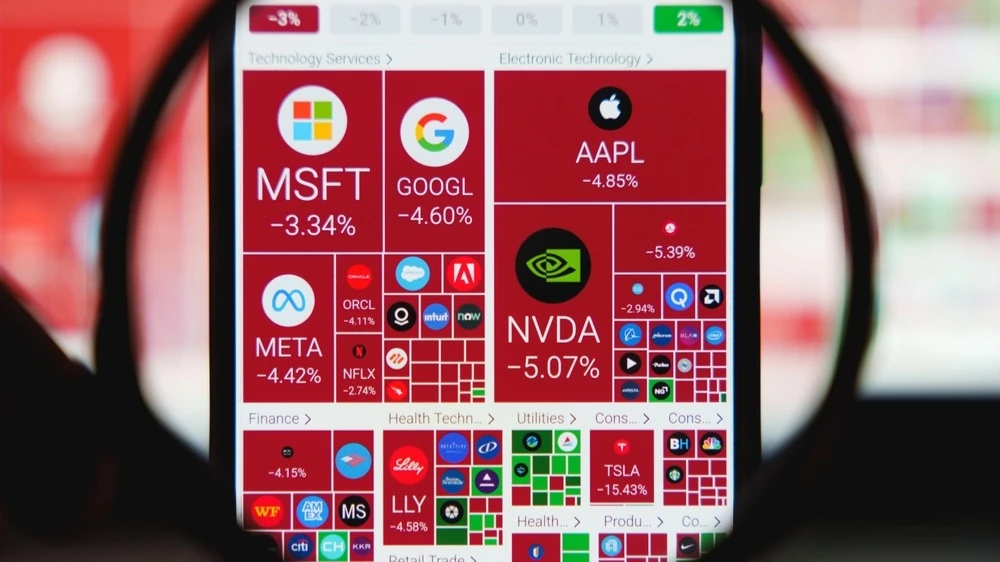
Escalation in the Middle East will accelerate the sell-off in US IT stocks - BCA / Photo: Rokas Tenys / Shutterstock
The start of hostilities in Iran last weekend changes short-term benchmarks for investors: in the current environment, a tactical reduction in the share of stocks in portfolios is justified, keeping the focus on the energy sector, while technology securities may face additional pressure, according to Marko Papich, a strategist at independent research company BCA Research. His note is quoted by MarketWatch.
Details
Papich highlighted three particularly important signals to watch closely in the near term.
- The first is the dollar's behavior. The BCA believes that if the U.S. currency does not receive pronounced inflows as a defensive asset during this crisis, it will be a "funeral bell for the dollar within the cyclical horizon." Right now, the dollar index is only slightly stronger, the publication notes.
- The second key indicator for Papich is the dynamics of industrial metals, primarily copper, which the market traditionally views as a barometer of global economic activity. By its behavior, he assesses whether there is a change in the macroeconomic trend - from the rotation within the technology sector and the problems of companies working on the model of "software as a service" (SaaS), to a more serious risk of a full-fledged recession. Copper futures were little changed in price on Monday, MarketWatch writes.
- The third key signal, according to Papich, will be the general mood in the markets: he expects the sell-off in technology stocks, which began in early February after AI startup Anthropic introduced plug-ins to automate business tasks, to intensify. The reason, he said, is simple: "The world doesn't need another U.S. SaaS company right now. Investors need industrial, materials and energy stocks, as well as commodity stocks."
The State Street Industrial Select Sector SPDR ETF, which invests in stocks of U.S. companies in the industrial sector, has gained 12.7% since the beginning of the year. The State Street Materials Select Sector SPDR ETF, which invests in U.S. companies in the materials sector of the S&P 500 Index, has added 15.2% since January. The State Street Energy Select Sector SPDR ETF, which invests in energy companies in the S&P 500 Index, is up nearly 24%.
Papich also recommended investors consider opening a position in an ETF focused on tanker shipping (Breakwave Tanker Shipping ETF is up 25.7% YTD), expecting a significant and sustained rise in freight rates. In January, following the extradition of Nicolas Maduro from Venezuela, BCA Research analysts began buying Brent futures and an ETF focused on U.S. oil equipment and services companies. With the start of the U.S. military operation Operation Epic Fury, the strategist confirmed the relevance of these investment ideas.
Why an analyst sees a trend change
Papich attributes the reason for his recommendations to an assessment of a key factor that he believes will determine the duration of the conflict - Iran's drone capabilities. U.S. forces may have difficulty neutralizing these capabilities because drones are often used by small mobile units capable of "striking and rapidly changing positions over weeks, if not months," using the complex mountainous terrain of Iran's coastline as cover, he added.
This, he believes, increases the risk of prolonged disruption to shipping through the Strait of Hormuz. With 2026 being an important electoral period in the US with midterm elections in November, Papich believes US President Donald Trump will be keen to announce the operation's objectives quickly, but this may prove more difficult in practice.
Papich characterizes the possible range of consequences of the operation as "broad." In his assessment, the goals of the military campaign include regime change; possible targets for Iranian retaliation also remain "broad," as does the list of targets that could be hit by U.S. and Israeli strikes.
This article was AI-translated and verified by a human editor