Delta cuts profit guidance due to fuel costs. What this means for other carriers.
Delta, which has the highest market capitalization of any airline in the world, is the first U.S. carrier to report quarterly results

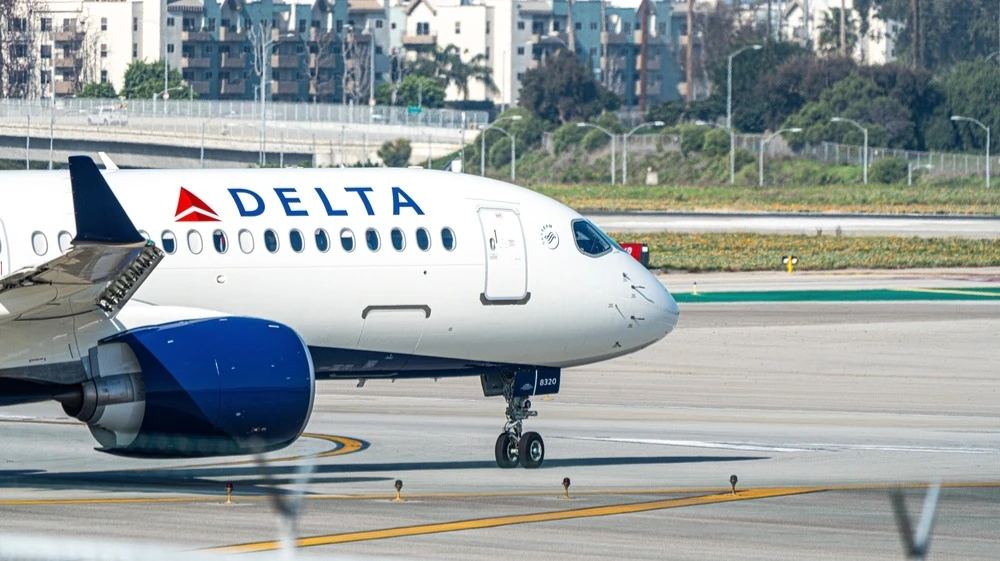
Delta is thought to be better insulated from war-related spikes in oil prices thanks to ownership of an oil refinery and a focus on premium customers / Photo: Lukas Souza / Shutterstock
Delta Air Lines, the world’s largest airline by market capitalization, has cut its full-year profit outlook due to high jet fuel prices. The move signals mounting pressure on an airline industry whose smaller players are far less equipped to weather spiraling costs, Bloomberg reports. A day earlier, for example, low-cost carrier easyJet doubled its winter capacity cuts.
Details
Delta Air Lines said on Friday that it had cut its adjusted earnings guidance for 2026 to $5.10-5.60 per share, from the $6.50-7.50 range it reaffirmed in July. The new forecast is in line with the Bloomberg-compiled consensus of $5.44 per share for the year. Delta expects to absorb around $6 billion in additional fuel costs this year versus 2025 as tensions in the Middle East persist.
The airline fell short of expectations for adjusted third-quarter earnings, which came in at $1.72 per share versus the $1.82 consensus in a Bloomberg survey. Net income almost halved as fuel expenses surged 69%. Meanwhile, the top line rose around 16% year over year to a record $17.6 billion, roughly in line with market expectations. Deep-pocketed consumers and business travelers shrugged off higher airfares and sought out perks like upgraded lounges and premium seating, the Financial Times noted.
“I wouldn’t call that a surprise to anyone, it’s all because of higher fuel prices,” Delta CEO Ed Bastian said of the downgraded earnings guidance. “If this continues to go higher for longer, which I think it will, as the premium airline in the industry we have the best ability to be able to price for that.” Bastian also does not expect travel demand to taper off, even though passengers will likely have to pay more for their seats. Delta shares fell as much as 3.6% in New York trading on Friday before paring their loss to around 1.6%.
What Delta’s earnings mean for other airlines
Delta, the first U.S. carrier to report results for the last quarter, has been better insulated from war-related spikes in oil prices thanks to its ownership of an oil refinery and focus on premium customers, Bloomberg notes. However, its sharply reduced profit forecast underscores the challenges facing smaller, less profitable carriers that lack similar advantages.
“The refinery has about a $1 billion benefit to this year, so it is providing a bit of a boost for them,” Jefferies analyst Sheila Kahyaoglu told Bloomberg Television. “But higher fuel will eventually eat into consumer demand” and remain a major headwind for all carriers.
Unlike European airlines, U.S. carriers do not hedge jet fuel, leaving them more exposed to surging prices this year, the FT notes. Still, European low-cost carrier easyJet decided on Thursday to cut another 700,000 seats from its winter schedule to save on fuel costs, the FT reported.
Wall Street remains broadly upbeat on Delta stock. According to MarketWatch data, 25 of the 27 analysts covering the stock have “buy” ratings versus one “hold” and one “sell.”