The Argentine phenomenon: whether the riskiest reform of the decade is worth investing in

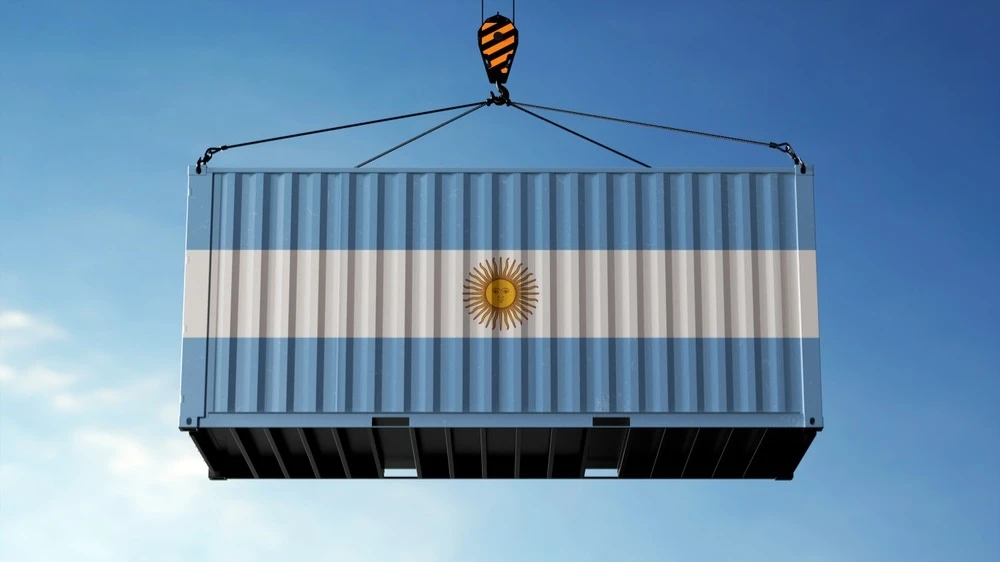
Argentina's rating upgrade has opened up the issue of government bonds, but the risks for investors are still high. Photo: / Shutterstock.com
Fitch has upgraded Argentina's rating from CCC+ to B-. For a middle-income developing country this does not sound like an achievement, but not for Argentina. It has defaulted on its debt three times this century and has not borrowed on the international market for 8 years.
The rating upgrade has opened the question of issuing government bonds, and the Economy Ministry is considering such a possibility, but wants to wait for a further drop in country risk. Economy Minister Luis Caputo is focused on the JP Morgan country risk index (EMBI+). It stands at 523 points after the latest update, although it fell below 500 in May. Although country risk has fallen by about 50% in the last six months, it is very high compared to its neighbors. All Latin American countries have significantly lower country risk (except Venezuela). Even Ecuador (411), where the government is trying to regain control of the country from drug gangs, and even El Salvador (400), where 2.6% of the adult population is in prison.
Country risk
At the current level of country risk, bonds can be placed at 9-10% per annum. So far, the government manages to cover its financial needs by borrowing on the domestic market and loans from the IMF and World Bank. Caputo considers the 400-point mark of the JP Morgan country index as a condition for Argentina to issue sovereign bonds.
Until that happens, Argentine provinces and companies are issuing bonds at interest rates lower than the national government could borrow. Mostly, regions and companies related to energy and agriculture - booming industries - are doing so. The provinces of Buenos Aires, Santa Fe, Chubut, Cordoba and Entre Rios have issued their own bonds at 6-9% per annum.
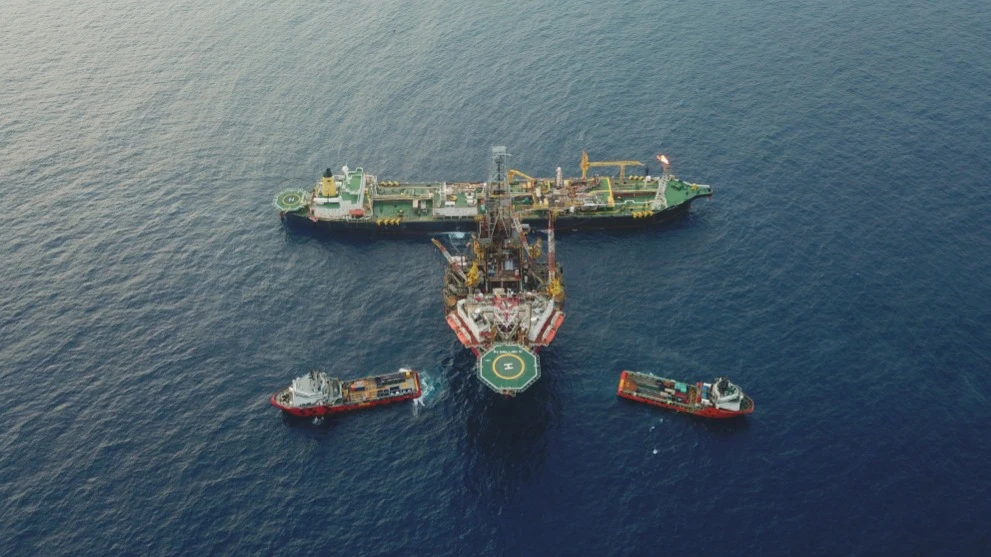
In the last six months, Argentine companies have issued $13 billion in bonds, including YPF, Pampa Energía and Vista Energy, which have placed about $3 billion in bonds with companies developing one of the world's largest shale gas and oil fields, Vaca Muerta ("Dead Cow"). Macroeconomic stabilization, reduced country risk, and the new RIGI investment regime (tax and currency incentives for large investments) have allowed production to increase dramatically, and Argentina has transformed from a chronic fuel importer to a net exporter.
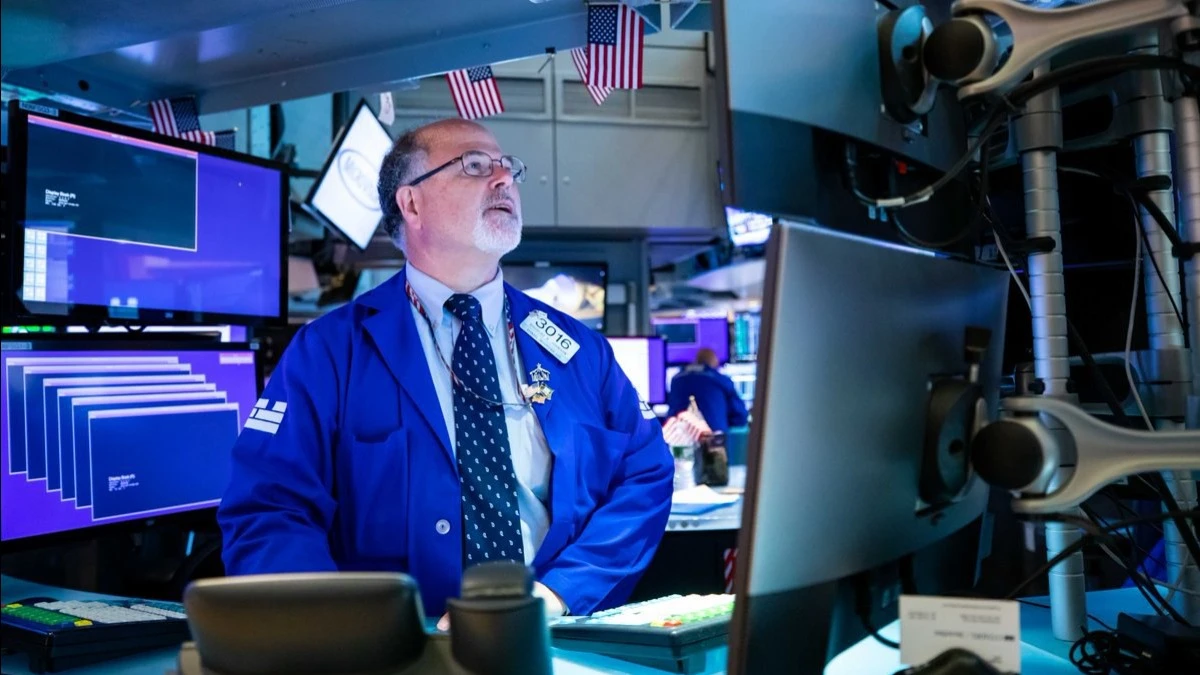
By the way, these companies are traded on the NYSE. On U.S. stock exchanges you can buy shares and ADRs of other Argentine companies, such as the online travel agency Despegar, several banks, agroholdings, infrastructure companies and, of course, MercadoLibre (analog of Amazon in Latin America, part of the NASDAQ-100). Since Miley became president in December 2023, with a few exceptions, the capitalization of traded Argentine companies has grown by hundreds of percent. Among emerging markets, these have been some of the best-performing assets.
Is this a good time to invest in Argentina?
The answer to this question lies deeper than analyzing standard macro indicators from regular investment bank reports.
For the third year already, Argentina is going through an economic transformation, the scale of which can be compared to the transition to a market economy in Eastern Europe in the 1990s. And on the continent - with Pinochet's reforms in Chile (only Argentina is a democracy, not a dictatorship, with all the pros and cons that entails). It used to be a country with endless restrictions on trade, capital flows, labor market, clientelist practices in politics, high taxes, informal economy and chronic budget deficits. It is now transforming into a "normal" developing country. Such transformations are rare events. Their success depends on many factors. If Argentines appreciate the achievements of the Miley government and re-elect him for a second term in October 2027, reforms will continue and asset prices will rise.
Two factors speak for this scenario. First and foremost, a team of reformers who know what they are doing. Milei himself is a political outsider, but from his center-right allies he inherited professional economists with a ready-made, detailed reform plan. The number of already abolished restrictions (tariffs, duties, quotas, licenses, etc.) is in the thousands. Subsidies for housing and utilities and transportation have been abolished. Now on the agenda is labor reform, which fundamentally changes the relationship between employer and employee and reduces the role of all-powerful trade unions.
Second, the weakness of the opposition to Miley. The main rival and threat to reverse the reforms are the Peronist-Kirchnerists. But their leader Christine Kirchner is serving house arrest (for corruption) and can no longer be elected, and the bench is not too long. The main candidate is the longtime governor of Buenos Aires' most populous province, Axel Kisilev. He famously ignorantly nationalized Argentina's largest oil and gas corporation, YPF, in 2012, so that 11 years later a New York District Court judge ordered Argentina to pay $18 billion to minority shareholders. On appeal, the decision was overturned, but the story is not over. However, it does not prevent Kisilev's ratings from getting closer to those of Miley.
Now about two factors that may prevent re-election for a second term and continuation of reforms. First, it is corruption in Miley's inner circle (but not among the group of reformers). For the last couple of months, news about Prime Minister Manuel Adorni has been making the headlines. He paid cash for a private flight on personal business, he underestimated the cost of an apartment in a residential area in a contract, he took his wife on a business trip. Compared to the corruption for which Christine Kirchner was convicted, these are small things, but Milay came under the banner of fighting corruption in the political class. His sister and right-hand woman, Karina Milay, has been implicated in several kickback scandals. And Miley's own role in the $LIBRA shithcoin story remains ambiguous.
Second, the external environment. In general, in times of turbulence, investors flee riskier assets, and in the event of a global recession, demand for Argentina's export products will decline (although so far it has benefited from high prices for oil, gas, soybeans, wheat, corn and fertilizers.
There is also a fifth factor that could end up hitting both plus and minus - the economy. Milay's shock therapy has yielded phenomenal results. Inflation has fallen from 211% in 2023 to 31.5% in 2025.The budget is in surplus, and this in a country that literally lived with deficits for the entire 20th and 21st century. Poverty has never fallen so fast (although it rose sharply in the early months), from 53% in the first half of 2024 to 28% now. The economy grew by 4.4% in 2025, the forecast for this year is 2.8-4%.
Who will benefit?
However, structural transformations always produce winners and losers. The opening up of the economy is leading to the ruin of local industries previously protected by tariffs. In the first two years in Argentina, more than 22,000 companies - manufacturers of tires, clothing, shoes, housewares, telephones, appliances, etc. - closed down. That's hundreds of thousands of people out of work. The budget surplus was achieved, among other things, by cutting civil servants, and those who remained are not having their salaries indexed. The same goes for the salaries of teachers, university professors and doctors in state hospitals, as well as pensions. In construction alone, more than 120,000 jobs have been cut because of the state construction freeze.
Mealey's approval rating has been steadily dropping and is now at 35-40%. He has a year and a half to come up with mechanisms to compensate the many losers. The history of Latin American reforms shows that this is the hardest part. The investor who guesses the outcome will be the winner.
This article was AI-translated and verified by a human editor