The US and Iran have agreed to a two-week truce. WTI crude oil price collapsed by 16%
The Strait of Hormuz will be open for this time, Tehran confirmed

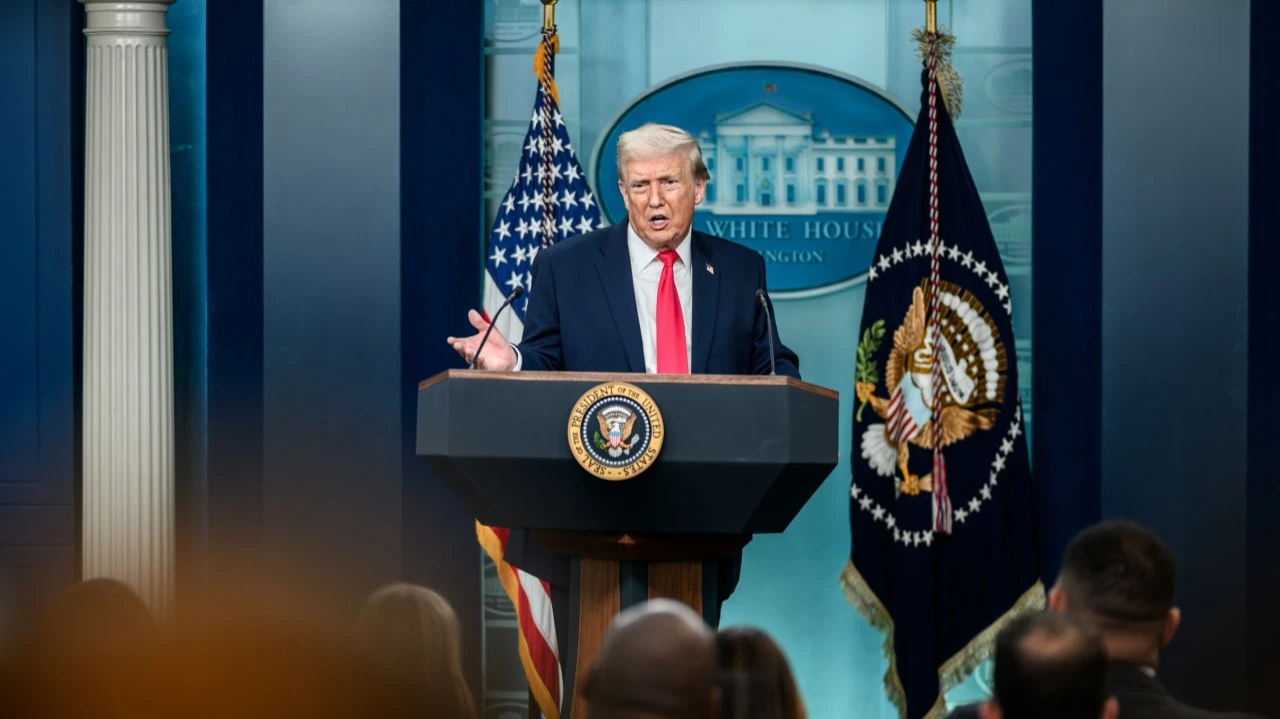
Photo: Rawpixel.com / Shutterstock.com
U.S. President Donald Trump has agreed to postpone for two weeks the strikes on Iran that he promised to hit the country on Tuesday night if the Islamic republic immediately opens the Strait of Hormuz. Iran's Supreme Leader Ayatollah Khamenei accepted the offer and endorsed the ceasefire plan, The New York Times reported. Safe passage through the Strait of Hormuz will be possible within two weeks, Tehran confirmed.
"Following conversations with Pakistani Prime Minister Shehbaz Sharif (...) in which I was asked to refrain from using the destructive force that was to be used tonight against Iran, and provided that the Islamic Republic of Iran agrees to a FULL, IMMEDIATE and SAFE OPENING of the Strait of Hormuz, I agree to suspend the bombing and attack on Iran for two weeks. This will be a bilateral STOP OF FIRE!" the American leader wrote in a post on the Truth Social platform.
He said the U.S. is "very far along" in working toward a final agreement on long-term peace in the Middle East. Trump called Iran's proposal of 10 conditions a working basis for dialog, noting that there are agreements on most of the disputed points. In two weeks, the president believes, it will be possible to finalize them.
Israel will also join the truce, the White House said.
How the markets reacted
After it became known about the request of Pakistani negotiators, US stock indices reduced or fully recovered the day's decline, and futures jumped sharply after the close of trading. An hour after the publication of Trump's post, futures on the S&P 500 were up 2.3%, stock contracts on the Nasdaq Composite were adding 2.7%.
The price of Brent crude oil fell by 5.8% to $103 per barrel, trading will resume later. North American WTI collapsed by more than 16% and cost about $94 per barrel, while at the close of the session in the U.S. the price reached $104.
"If a peace agreement is reached and the parties agree to open the strait, the price of oil could immediately drop by $15 to $30 a barrel," Dennis Kissler, senior vice president of trading at BOK Financial Securities, gave a forecast.
As Bloomberg strategist Mark Cranfield notes, such growth of futures on S&P 500 in the Asian session is an unusual phenomenon. According to him, it indicates the accumulated demand for shares after the volatility of recent weeks. Combined with a weaker U.S. dollar, rising bonds and a sharp drop in oil prices, it sets the stage for strong gains in Asian markets at the open.
This article was AI-translated and verified by a human editor