"Flashbacks to 2008 or 2001": Are There Still "Bullish" Scenarios on Wall Street?

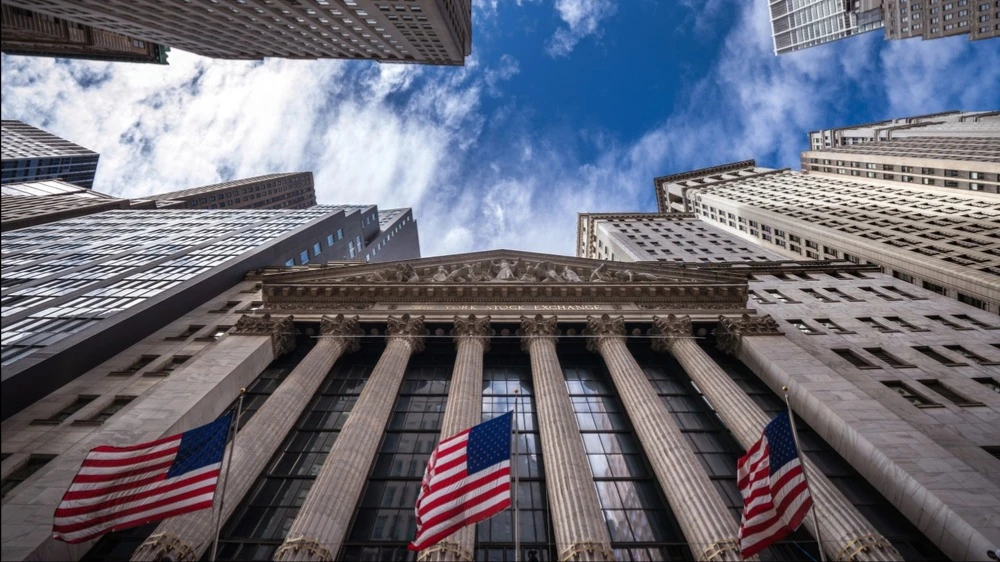
Photo: Dogora Sun / Shutterstock.com
Market participants are trying to determine whether the stock market crash marks the beginning of a major correction or is merely a temporary dip. On the morning of Friday, November 6, the sell-off in U.S. stocks eased as investors began buying up discounted shares of companies related to artificial intelligence, according to Bloomberg. Four hours before the main session opened, futures on the Nasdaq-100 S&P 500 technology index were up 1.3%. Futures on the broad-market S&P 500 index were up about 0.3%—after concerns the previous day about a possible tightening of regulations on data centers had reduced its market capitalization by approximately $3 trillion. Futures contracts for the Dow Jones blue-chip index remained in negative territory.
Here's what Wall Street advises people to prepare for:
“I’m having flashbacks to 2008 or 2001,” said Greg Taylor, chief investment officer at PenderFund Capital Management, referring to the bursting of the real estate and dot-com bubbles. “Everything is so focused on a single theme and investors pulling out of it. I think this was bound to happen: we paid too much attention to AI, and it came to占据 too large a share of the market.”
“Do you really want to catch a falling knife when there’s a war going on and the Fed is raising rates? I’m generally bullish, but I’m not ready to buy yet,” said Jay Hatfield, CEO of Infrastructure Capital Advisors.
— The bursting of the AI bubble will trigger a crash in the U.S. stock market of at least 30%, and its market capitalization will shrink by $20 trillion, according to TS Lombard strategist Dario Perkins. In such a scenario, the sell-off would have “significant consequences” for debt markets and the private lending market: losses could reach $200 billion, he forecasts. Credit spreads will widen, leading to a wave of defaults in the technology sector. “The weakest players in the AI ecosystem,” including specialized cloud computing providers and Oracle, will face “acute financial difficulties.” The U.S. economy will inevitably enter a cyclical downturn due to a collapse in capital expenditures. The construction sector, which has been buoyed by the AI boom, will see “significant job losses.” However, the U.S. economy as a whole is likely to recover quickly, Perkins noted.
— KPMG Chief Economist Diane Swonk reported that over the past week, her team had been working on two scenarios for the U.S. economy. The first scenario involves instability in financial markets without a larger-scale crisis. The second is a “bear market” that would cause the AI bubble to burst. In that case, the recession would set in faster and be deeper than after the dot-com crash in 2001, Swonk warned. “Inflation will slow sharply, and the Fed will cut rates more aggressively to soften the blow. In the initial stage, consumer spending will suffer more than investment,” she wrote.
— Michael Wilson, Morgan Stanley’s chief U.S. equity strategist, reaffirmed his forecast for the S&P 500, despite Thursday’s sharp sell-off on Wall Street. He expects the index to reach 8,000 points by the end of the year, which now implies an 8% gain. “We’ve said that the mid-cycle transition phase would end with a pullback in the index, bringing it in line with the weaker performance of a broad range of stocks. This process is already underway, although the performance of the broader market is improving,” Wilson wrote on November 6. He favors companies capable of consistently generating cash flow, with strong balance sheets and improving earnings forecasts.
— Paisley Nardini, Head of Investment Strategy at Tema ETFs, believes that the fundamental factors have not changed. She noted that the Democratic Party’s future governor of Texas has already announced that plans to build data centers in 2027–2028 will remain in place. The victory in the U.S. congressional and gubernatorial elections by Democrats, who had criticized the aggressive rollout of AI infrastructure, was the main trigger for a massive sell-off.
— John Woods of Lombard Odier also noted that the elected candidates are toning down some of their statements regarding the suspension of data center construction. He agrees that the sell-off in AI stocks is driven by investor positioning rather than a deterioration in fundamentals. Woods noted that mid-cycle corrections of 10–15% are common during prolonged bull markets, and the current situation, in his view, fits this pattern. “If this is a correction, it’s perhaps the most expected one,” he said. “I wonder if the AI story is over, and I don’t have a strong sense that it is.”
— Dan Niles, founder of Niles Investment Management and an experienced investor in the technology sector, believes that market participants have virtually ignored risk management over the past few years, but will now have to be more selective when choosing stocks. “It’s good that this reassessment is taking place now: in the long run, it will make the market healthier and help avoid the kind of sharp fluctuations we’ve seen over the past six months.”
— Goldman Sachs’ equity trading division has been inundated with calls from investors trying to gauge just how deep the sell-off in tech stocks might be. On Wednesday—immediately after the election results were announced—the division experienced one of its busiest trading sessions of the year, said John Flad, head of equity execution for the Americas. On Thursday, it was “exactly the opposite,” he said. “Our phones are ringing off the hook with requests to explain what’s happening in the market. Unfortunately, we don’t have much visibility ourselves,” the strategist admitted.
This article was AI-translated and verified by a human editor