Frustration and reward: how to get rid of the tendency to over-trade

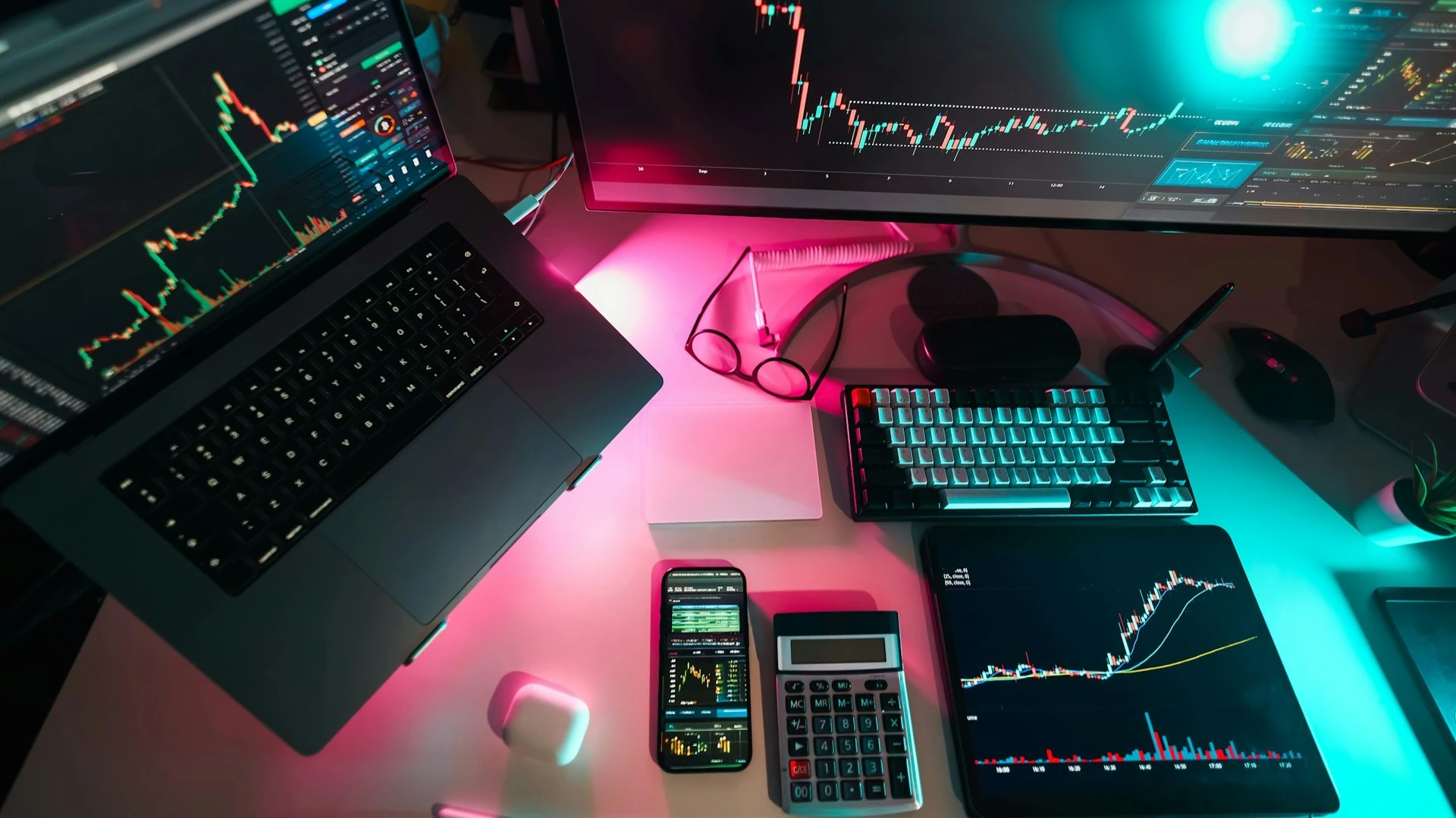
As experience grows, investors significantly reduce the turnover of their portfolios and learn to avoid overly active trading. Photo: Jakub Żerdzicki / Unspash.com
Active trading on financial markets can be harmful to investors and lead to losses in profitability. One of the most important reasons for the tendency to frequent trading, as scientists have found out, lies in the neurobiological mechanism laid down in each of us by evolution. Our brains seek quick relief from stress, and each trade provides a microdose of the joy hormone, forming a costly habit.
Why disappointment hurts more than loss
If an investment portfolio drops by 5-10%, the human brain perceives this not just as a loss, but as a threat to survival. The body releases cortisol, a stress hormone that motivates quick action for self-defense. But the paradox is that the frustration of a failed attempt to make things right causes an even greater release of cortisol. This is the conclusion reached by Loretta Graziano Breuning, professor of management at California State University and founder of the Inner Mammal Institute. She shared her findings in an article published in the Journal of Behavioral Health and Psychology.
Based on analyzing the evolutionary mechanisms of the human brain and the neurochemistry of stress, the researcher explains that investors have a sense of dissatisfaction when making losing trades, which they experience as discomfort. It is unpleasant, but tolerable. But the realization that the market has turned against us and the loss is growing, causes much more discomfort, almost intolerable. The brain demands immediate relief, and the quickest way to get it is any action: sell a falling position, buy a rising stock, rebalance the portfolio.
These impulsive actions only temporarily relieve psychological discomfort. But every time active trading brings emotional relief (even if the financial result is negative), a neural connection is formed in the brain: "action = salvation".
The author uses analogies with the behavior of mammals - gazelles, lions, and baboons - to compare the workings of the human brain and the mechanisms of the cortisol-dopamine cycle. When a lion is chasing a gazelle and the gazelle starts to get away, the predator must make a decision: continue the chase or retreat. If the lion persists every time the prey slips away, it runs the risk of wasting energy and never filling its stomach. Breuning notes that evolution has solved this problem in a radical way: the stress of frustration must be greater than the stress of hunger to force the lion to abandon a failed strategy and switch to "plan B" - so it has a better chance of survival.
How trading becomes a distraction from stress
Every time an unpleasant feeling is replaced by a more comfortable one, the brain registers it as important information. The body releases dopamine, the joy hormone, a reward neurotransmitter. It triggers the formation of new neural pathways. Therefore, the more often the cycle "stress - action - relief" is repeated, the stronger these new pathways become, and the easier and faster the electrical impulses in the brain "flow" along it the next time. This is how a habit is formed at the brain level.
The propensity to active trading is formed in the same way: the brain remembers that trading activity brings relief, and the next time the portfolio drawdown occurs, it automatically pushes you to open the terminal, sell or buy. And each such transaction, as in a closed circle, gives a microdose of dopamine, because it is both the anticipation of profit and the feeling of control over the situation.
The person may not even realize that he or she is not looking for a profitable transaction, but for emotional comfort. This mechanism does not depend on intelligence or education - it works at the level of the limbic system, the part of the mammalian brain responsible for emotions and instincts, notes Breuning. Humans have large brains that can create abstractions and imagine threats that do not exist in reality, but react to them as if they were real - by releasing stress hormones.
The price of over-active trade
A study by Brad Barber and Terrence Odin published in the Journal of Finance back in 2000 showed: the 20% most active traders earned only 11.4% annualized returns (after accounting for trading costs), while the market gained 17.9% and investors in the least active group gained 18.5%. The return gap was 7 percentage points per year between the most active and most passive investors. For the study, Barber and Odin analyzed 66,465 retail investor accounts from 1991 to 1996.
More recent data confirms this pattern. A study published in the Review of Financial Studies showed how investors learn from their mistakes. The authors found that as experience increases, investors significantly reduce the turnover rate of their portfolios, suggesting that people learn to avoid overly active trading.
Can evolution be outsmarted?
The bad news is, no. But there is good news: our brains are plastic, and neural pathways can be rewired. This works like learning a foreign language, meaning it requires repeated repetition of a new behavior. Loretta Graziano Breuning offers a three-step methodology that can be adapted to investing.
Step 1: Recognize when stress hormones are released
Learn to notice the physical symptoms of stress before your hand reaches for the trading terminal. This can be a rapid heartbeat, obsessive thoughts and desire to update the chart with quotes every 5 minutes, inner tension when reading news about the market.
The key task is to create a mental "exit from the freeway" of habitual behavior. Instead of the flow "saw a decrease → felt stress → opened the terminal → made a trade" you can consciously fix: "Stop. Now I feel tension, I feel stress. This is not a real threat to life, this is my brain reacting to the way I perceive the situation, my brain is sharpened to perceive it as a danger".
Step 2: Create an alternative relief ritual
It must necessarily be a more constructive and less harmful set of actions than impulsive trading. At the same time, it should be pleasant enough for the brain to get a dose of joy hormone. Breuning emphasizes: don't try to replace trading with something "right" but unpleasant, like a cold shower or push-ups. That won't work because it won't provide a reward.
Ways that work for investors might be opening the annual report of a successful portfolio company and reading its CEO's letter, writing in your investment diary three reasons why you hold this position, or listening to a short podcast about long-term investing.
All of these can bring a sense of control and useful activity, structure your thinking and give you a break, distract your brain from stress, remind you of strategy, and lay the foundation for productive action instead of chaotic action.
Important: The alternative should take about the same amount of time as it would normally take for an impulsive trade and be available at any time.
Step 3: Reward yourself
One of the most important principles of animal learning and training works here - reward for a small step, repeated many times. After every time you stop and don't make an impulsive transaction, you can, for example, make yourself a nice coffee or turn on your favorite music.
It can also be helpful to keep a record of "no panic-trading days" - almost like 12-step sobriety, marking each week of success with something enjoyable but not involving spending that might create new stress.
The reward should be something you really enjoy, not just something that is "useful". If you hate yoga, it won't work as a reward. If you have thoughts of falling stocks swirling around in your head while walking in the park, that's a reward too.
It is important to remember and realize that the tendency to trade too often is not a lack of intelligence, discipline or "morality". It is a consequence of the neurobiological peculiarity of the human brain, a centuries-old heritage of ancestors. But unlike a lion chasing a gazelle, the modern investor has the tools to reprogram these ancient instincts.
This article was AI-translated and verified by a human editor