Gold has lost a quarter of its value from its peak. Why does JPMorgan expect it to rise by 45%?
Analysts expect demand from large buyers, but warn that rate hikes could slow the growth of the precious metal's value

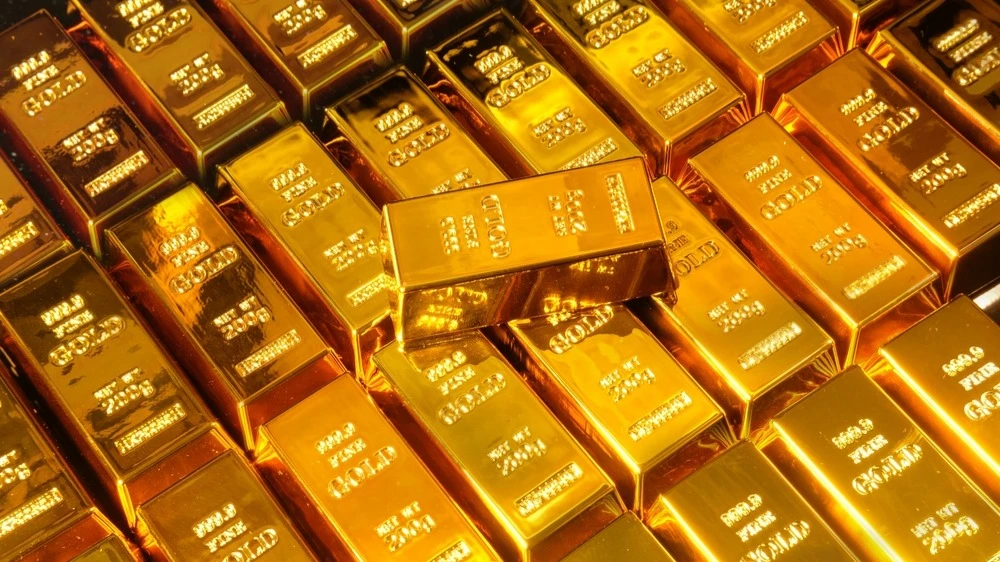
Gold cheapens amid rising inflation fears over US-Iran war / Photo: Shutterstock.com
JPMorgan has lowered its year-end forecast for the cost of gold, but still believes it will renew the record. The bank estimates that the precious metal will cost $6,000 per ounce in the fourth quarter. That's 45% higher than the current price and 9% above the all-time high reached in January. Why does JPMorgan maintain a high forecast despite the pullback in the value of gold from the peaks?
Details
In the fourth quarter of 2026, gold will cost $6000 per ounce, and by the end of 2027 the price will rise to $6300, according to the updated forecast of JPMorgan. In February, after a powerful rally in the precious metals market, the bank's analysts expected $6300 by the end of 2026 and $6600 by the end of 2027. The forecast was revised after the price of gold moved away from the January highs.
JPMorgan attributes the forecast of growth to a new record to demand, which the market may be underestimating. According to official data, central banks' demand weakened sharply at the beginning of the year: in the first quarter, announced purchases amounted to only 16 tons, while from 2021 to 2025, central banks bought an average of 225 tons per quarter. But analysts point out that official statistics may not reflect the entire market: central banks are not obliged to disclose all gold transactions. According to alternative data of World Gold Council, real purchases of central banks in the first quarter could amount to 244 tons against 208 tons a quarter earlier.
The People's Bank of China shows strong statistics even according to official data: for six months the regulator bought about a ton of gold per month, and then increased purchases to 5 tons in March and 8 tons in April. At the same time, the total inflow of gold into the country increased: net imports in the first quarter of 2026 reached 317 tons, almost triple the figure of the previous quarter, JPMorgan notes.
JPMorgan analysts believe that the People's Bank of China is building up gold reserves in order to be less dependent on the American financial system: the freezing of assets of the Russian central bank in 2022 was a signal to Beijing that dollar reserves are not protected from American sanctions. Additional support for the market can be provided by Chinese insurers: from the beginning of 2025, the ten largest companies can invest in physical gold up to 1% of assets; this limit corresponds to about 200 tons of metal. Now insurers are not obliged to disclose such investments, and the first data on them may come as a surprise to the market.
JPMorgan's bullish forecast on gold may be broken by the Fed. Analysts see the main risk in the regulator's reaction to inflation: if the U.S. economy and employment remain stable, the Fed will have a reason to consolidate the cycle of rate hikes as early as 2026. "Gold serves as a hedging tool against depreciation risks - a kind of protection against loss of purchasing power of currency due to inflation or devaluation. However, because the metal itself doesn't generate interest income, it typically loses out to the market during periods of rising yields on alternative assets such as U.S. government bonds or money market funds," said Greg Shearer, head of base and precious metals at JPMorgan.
A Fed rate hike could intensify outflows from Western exchange-traded funds into gold, Shearer believes. With weaker central bank purchases, this would put more pressure on the gold price. But Shearer believes that such a scenario is unlikely in 2026.
Context
During trading on June 10, the price of gold fell by 3.4%, dropping to a low of $4114 per ounce. This happened against the background of renewed mutual strikes between the U.S. and Iran in the Middle East: investors preferred to look for other assets to protect against increased inflationary risks, writes Barron's. On the morning of June 11, gold remained at $4115 per ounce.
The value of gold has already fallen more than 25% since hitting an all-time high near $5500 an ounce in late January and has lost 22% since the first U.S. strikes on Iran in late February.
This article was AI-translated and verified by a human editor