Gold prices have reached their lowest level since the beginning of the year. They are under pressure from the US-Iran conflict

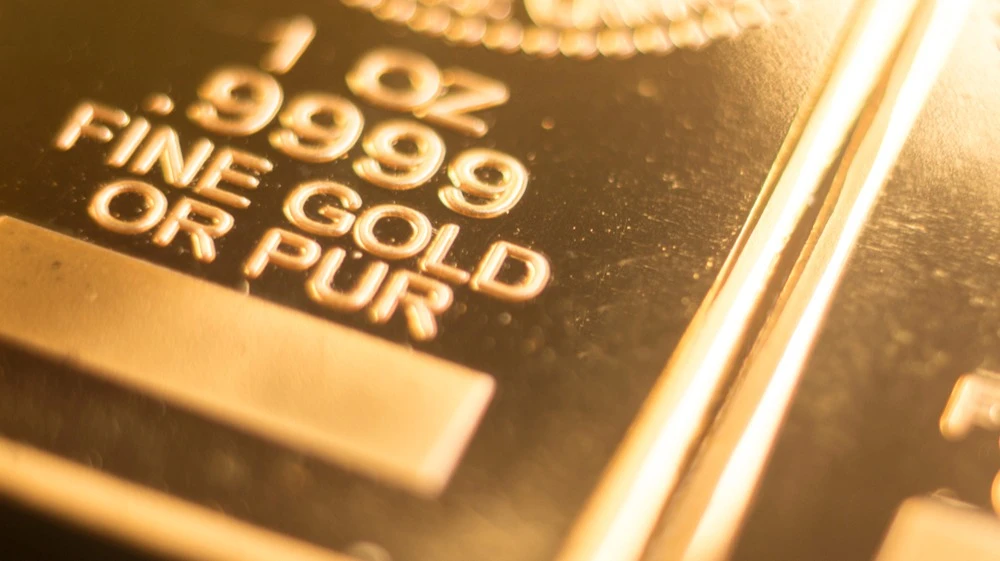
Gold has plunged even deeper into the bear market zone - it has already lost more than 25% from its January highs / Photo: edwardolive / Shutterstock
Gold prices on Wednesday, June 10, collapsed to their lowest since the beginning of the year, plunging even deeper into the bear market zone. This happened against the backdrop of renewed mutual strikes between the US and Iran in the Middle East: investors preferred to look for other assets to protect themselves from increased inflation risks, Barron's writes.
Details
In trading on June 10, the precious metal fell in price by 3.4%, dropping to a low of $4114 per ounce. Gold has already fallen by more than 25% since reaching an all-time high near $5500 per ounce in late January, and lost 22% after the first U.S. strikes on Iran in late February.
Spot silver prices were down 1.6% at the low on June 10 (then slowed down to 0.9% - trading around $65 per ounce). Compared to the peak of late January, when silver reached $115.5, prices for the precious metal have fallen by more than 44%.
Such dynamics of prices for precious metals was triggered by a series of clashes between the U.S. and Iranian forces, which began after a U.S. Apache helicopter was shot down over the Strait of Hormuz on June 9.
What the analysts are saying
As long as the conflict in the Middle East continues to threaten energy supplies and keep inflation risks high, investors are likely to remain focused on the prospect of continued higher interest rates over the long term, rather than gold's traditional role as a portfolio diversification tool, noted Ole Hansen, head of commodity strategy at Saxo Bank, Barron's.
"The appeal of gold as a protective asset tends to play out best during a financial crisis or demand shock ... during periods when central banks cut rates, real yields fall and the dollar weakens. An energy shock due to [energy] supply disruptions has the exact opposite result," Hansen explained.
Gold could slip another 20% to $3500 an ounce by fall if the Strait of Hormuz remains closed through the summer, Citi analysts warned the day before.
However, some other experts saw a "good entry point" for investing in gold on the background of the current collapse. This position, in particular, is held by Christopher Looney from RBC Capital Markets. "We get the feeling that interest in gold has paused, not dried up, and that this may turn out to be a healthy correction," he says (quoted in Barron's).
Gold and silver are under pressure as market attention shifts back to interest rates and inflation rather than net demand for safe-haven assets, said Eva Mantei, commodities strategist at ING. Her words were reported by CNBC. "The escalation in the Middle East is pushing oil prices up and raising inflation risks, which in turn reinforces expectations that central banks will keep tight monetary policy longer. This pushes up real bond yields - an obvious negative for non-interest-earning assets such as gold and silver," she said.
This article was AI-translated and verified by a human editor