Geopolitics is changing central bank reserves. Why they are betting on gold
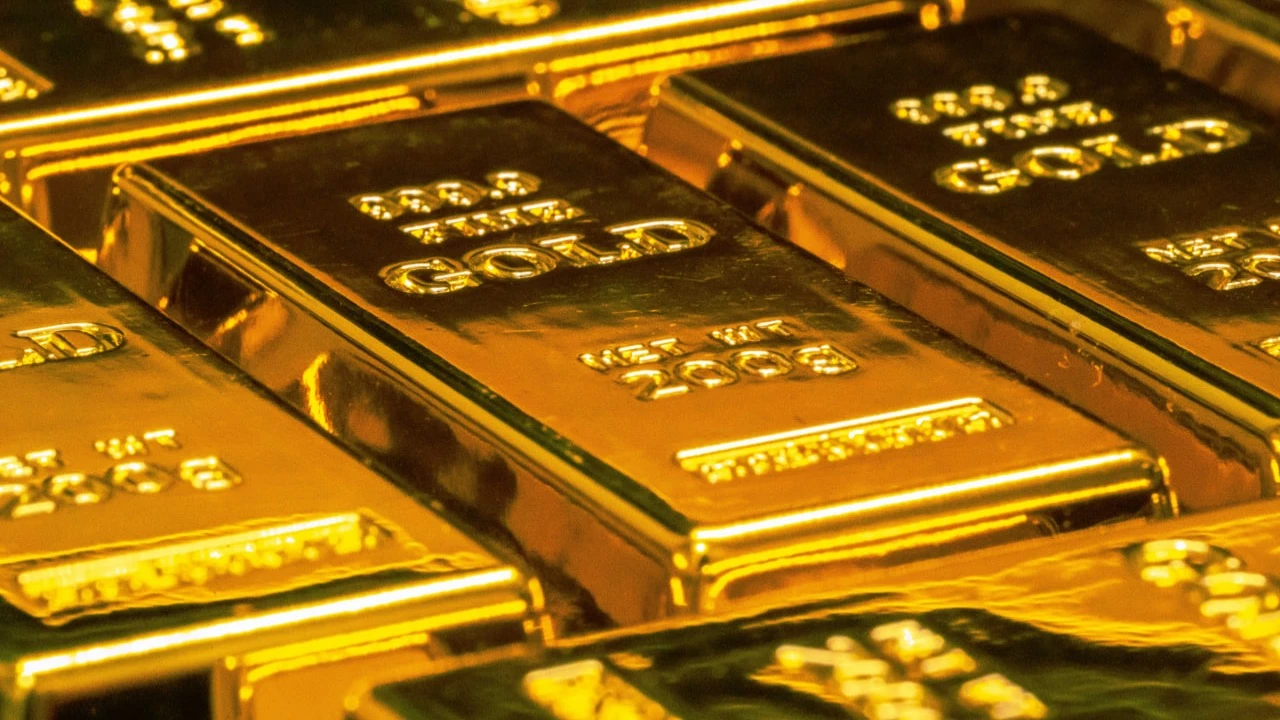
The world has returned to the era of the Bretton Woods system in terms of the volume of gold held by the national banks - more than 36 thousand tons. At the peak - in 1965 - they stored 38 thousand tons of this metal. Photo: Jingming Pan / Unsplash.com
The share of gold in international reserves at the end of last year exceeded the share of US Treasury bonds for the first time - thanks to impressive price growth, central banks were actively buying it. Demand from regulators remains an important supporting factor. They buy and use gold largely for protection against geopolitical problems. Will the metal retain its position in the future?
Most valuable asset
Gold's share of official foreign exchange reserves was 27% at the end of 2025, compared with 22% for U.S. Treasuries, the European Central Bank said in a report.
In terms of volumes - more than 36 thousand tons - the world went back more than half a century to the era of the Bretton Woods system, which operated from 1944 to the early 1970s. Back then, currency rates were pegged to the dollar, and the dollar was backed by gold. In order to exchange the dollar for gold, at its peak - in 1965 - central banks held 38 thousand tons of this metal.
A year earlier, gold surpassed the euro, becoming the second most popular asset in the reserves of central banks by the end of 2024. Now it is the turn of US Treasury bonds.
As a result, this metal has the largest share in the world's foreign exchange reserves, although cumulatively dollar assets, which include not only Treasury securities, account for 44%. Euro-denominated assets account for 15%. In the currency reserves themselves, the shares of the dollar and the euro are 57% and 20%, respectively.
Central banks continued to actively buy gold in 2025, albeit at a slower pace. They purchased 850 tons, whereas in 2022-2024 purchases exceeded 1 thousand tons per year. The large increase in the share of gold is due to its rising price, the ECB points out: by about 30% in 2024 and 60% in 2025. If we use constant prices at the end of 2023, the share of gold will be comparable to the share of the euro - 16%.
The spot price of gold reached a historic peak in late January at $5595.47 per troy ounce. After the rapid growth there was a strong correction, then the quotations stabilized and held slightly above $5000 until mid-March. Further sales by the central banks of Middle Eastern countries, apparently, became one of the main reasons for a new wave of falling prices, says Jon Treacy, publisher of investment newsletter Fuller Treacy Money.
Recently, quotes have been at $4400-4500, not far from the 200-day moving average, or "trend line," he adds. On Monday, June 8, gold was over $4300.
A tool of salvation
On Feb. 28, after the outbreak of war in the Middle East, the Turkish Central Bank sold or pledged about 130 tons of gold, one of the largest reductions in foreign exchange reserves in recent years. The Turkish regulator did this to "support the exchange rate, mitigate the effects of rising energy costs and cope with the economic consequences" of the conflict, the ECB said. At the same time, the Turkish Central Bank has purchased 220 tons since the start of the Russian invasion of Ukraine in 2022, the report said.
Gold this spring has played for Turkey the role traditionally played by U.S. Treasury bonds: central banks sold them from their reserves to raise funds in case of financial problems.
"Turkey's central bank holds 60% to 70% of its reserves in gold. Therefore, it had to sell or swap some of these reserves in order to attract the necessary dollar liquidity," the Financial Times quotes the opinion of Turkish economic observer Ugur Gürses, who previously worked in the Central Bank of Turkey's gold reserves management unit.
According to market participants, resort to gold sales this year can also resort to oil-importing countries affected by the energy crisis, such as India, or Central Asian countries with significant reserves of metal, writes FT.
The Bank of Russia also sold gold this year, "reportedly to finance the continuation of the war against Ukraine," the ECB said. It has been buying and selling gold on the domestic market since the fall of 2025, mirroring the Finance Ministry's transactions with the National Welfare Fund, Reuters pointed out.
This year, it is selling gold to finance the budget deficit, the agency quoted Natalia Milchakova, a leading analyst at Freedom Finance Global, as saying.
The Polish Central Bank also proposed to use gold to finance government spending. The country has "a unique opportunity to use unrealized profits from gold reserves to finance military expenditures," said Adam Glapinski, chairman of the National Bank of Poland, in early March. Prior to that, President Karol Nawrocki had also suggested using the reserves for this purpose. The government, however, rejected such plans.
Back to shopping
Now the conflict in the Middle East has once again entered a hot phase. But when the current problems subside, at least because of the situation in the Middle East, central banks will resume buying gold, Tricy believes.
The ECB envisions this as well. According to its survey, geopolitical risks remain a top concern for central banks, with many citing geopolitics as one of the fastest growing threats to their operations.
Central banks making larger gold purchases also tend to be located in regions with a higher risk of external conflict. Since Russia's full-scale invasion of Ukraine in 2022, China has purchased more than 350 tons of gold, followed by Poland (320 tons), Turkey (220 tons) and India (130 tons).
In 2025, Poland was the largest state buyer and bought about 100 tons, followed by Kazakhstan, Brazil, China and Turkey, the ECB adds.
The People's Bank of China has already bought 160,000 ounces (nearly 5 tons) in March, the highest in more than a year, a move that may reflect a desire to take advantage of lower prices, said Shaokai Fan, Asia-Pacific director at the World Gold Council: "We see central banks wagering on price movements in both directions."
"Many central banks have previously bought gold to sell it at a high price when there is a dire need to do so, and with the difficult geopolitical situation in the world and uncertainty in the global economy, it seems that this year such a dire need has come," Milchakova stated. According to Freedom Finance, the demand for gold will not drop much, because it is the most serious competitor to the dollar as a reserve currency.
"At low prices, on corrections, central banks will buy gold, and in the long run, at high prices, sell it to get liquidity to solve any important tasks, including - to stabilize the banking system," - said Milchakova.
In addition to central banks and investors, non-traditional buyers may provide additional support to gold prices. According to the ECB, in 2025, the company Tether, the issuer of the eponymous stablecoin (also known by the ticker USDT), overtook central banks in terms of purchase volumes: it purchased more than 100 tons.
This article was AI-translated and verified by a human editor