Has OpenAI's New AI Revived the "Software Apocalypse"? Who Won and Who Lost From the Launch of AGI?


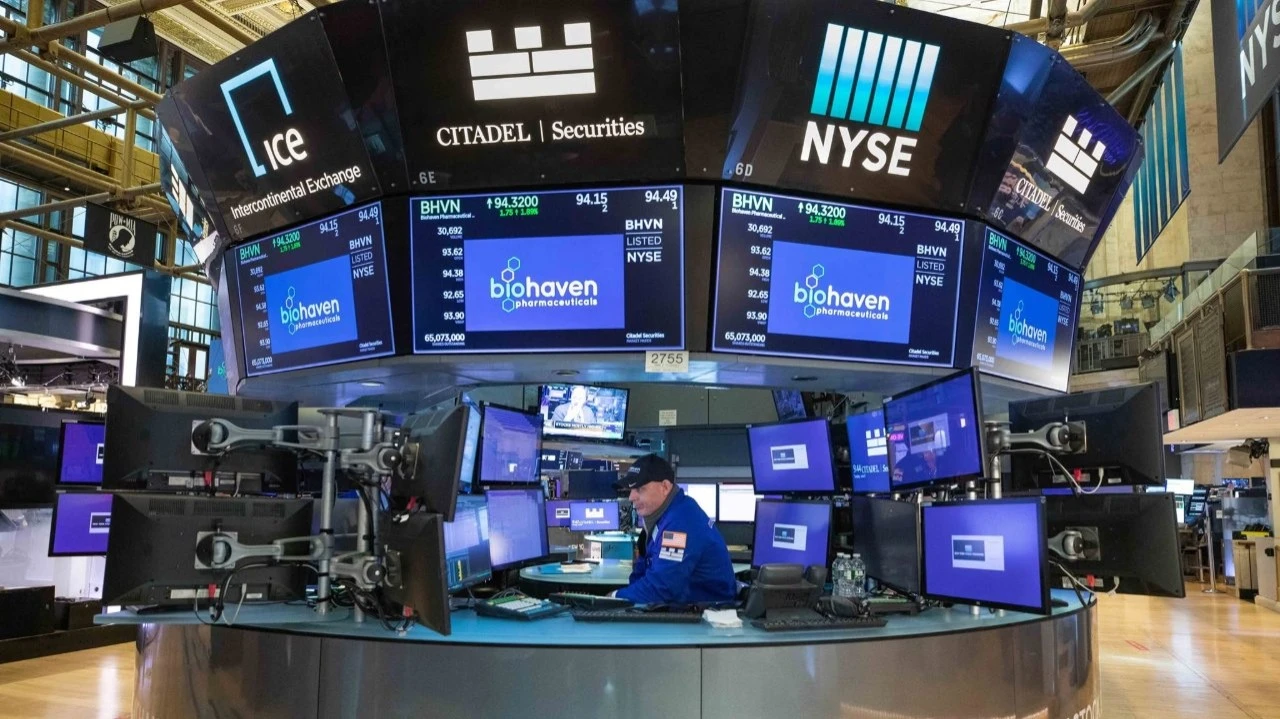
"We've returned to the previous trend, where shares of semiconductor manufacturers and companies benefiting from capital expenditures are performing well, while shares of software companies are performing poorly," says an analyst / Photo: sdx15 / Shutterstock
Last week’s launch by the AI lab OpenAI of its latest model, GPT-6 Astra—which the company has already classified as general artificial intelligence (AGI — the term used to describe the stage of AI development at which a neural network outperforms humans in a wide range of cognitive tasks), has reignited concerns in the markets about potential competition from AI with services currently offered by specialized software development companies. At the same time, however, it has boosted the stock prices of AI-related companies, according to Reuters and The Wall Street Journal.
Whose stocks came under pressure because of Astra
Shares of software companies fell during trading on September 9, dragging down the broad U.S. stock index, the S&P 500, Reuters notes. The agency attributes this trend to OpenAI’s launch of its latest AI model, which the company has already dubbed “the smartest in the world.” This release, Reuters continues, has reignited investors’ fears that AI could disrupt the businesses of software companies — in February, this idea triggered a sell-off in the U.S. stock market that wiped out nearly $1 trillion in market capitalization from software companies in a single week. The phenomenon came to be known as the “software apocalypse.” Last week, Salesforce’s strong financial results, as well as the software developer’s partnership with Anthropic, led Guggenheim analyst John DiFucci to speculate about a possible “dispelling of the ‘soft apocalypse.’” However, on September 8—as a new, shortened trading week began on U.S. markets—investors in software companies were once again gripped by anxiety: Salesforce shares fell 3.9%, Intuit’s dropped just over 4%, ServiceNow lost nearly 5%, and the S&P 500’s software and services subindex fell 1.4%, marking its second consecutive trading day of declines. The broad U.S. stock index, the S&P 500, also lost 0.58% on Tuesday amid pressure from software developers, according to Reuters.
Whose stocks were boosted by Astra's release?
Meanwhile, shares of AI-related companies rose despite a general decline in U.S. stock markets amid the escalating conflict in the Middle East (the Nasdaq Composite fell 0.3%, while the Dow Jones dropped by 1.18% at once), rose on September 9: shares of CoreWeave, which provides cloud infrastructure for AI, jumped 11.7%, while shares of manufacturers of optical and laser equipment used in AI data centers, Lumentum and Coherent, rose by 11% and 7%, respectively. This growth fueled overall investor enthusiasm regarding OpenAI’s latest AI model, according to The Wall Street Journal.
CNBC notes that shares of companies involved in AI infrastructure were also buoyed this Tuesday by a deal between Qualcomm and Amazon, under which the largest developer of mobile processors will design and supply AI chips worth up to $60 billion to the tech giant, while Amazon will receive Qualcomm warrants (the right to purchase shares) worth up to $4 billion. Also contributing to the rally was a multibillion-dollar partnership between Corning and Verizon to expand the broadband network. According to CNBC, the partnership is aimed at providing connectivity for AI.
What People Are Saying in the Market
"In a sense, Astra has reignited concerns about the destabilization of the software market, and we’ve returned to the familiar pattern we’ve already grown accustomed to—where shares of semiconductor manufacturers and beneficiaries of data center capital expenditures are performing well, while shares of software companies are struggling,” — noted Jed Ellerbrock, a portfolio manager at Argent Capital Management (as quoted by Reuters).
This article was AI-translated and verified by a human editor