"The Second Brain": Meta Unveils a Personal AI Assistant Built Into WhatsApp
The personal assistant is already available in the U.S., and Meta plans to make it available in other countries as well

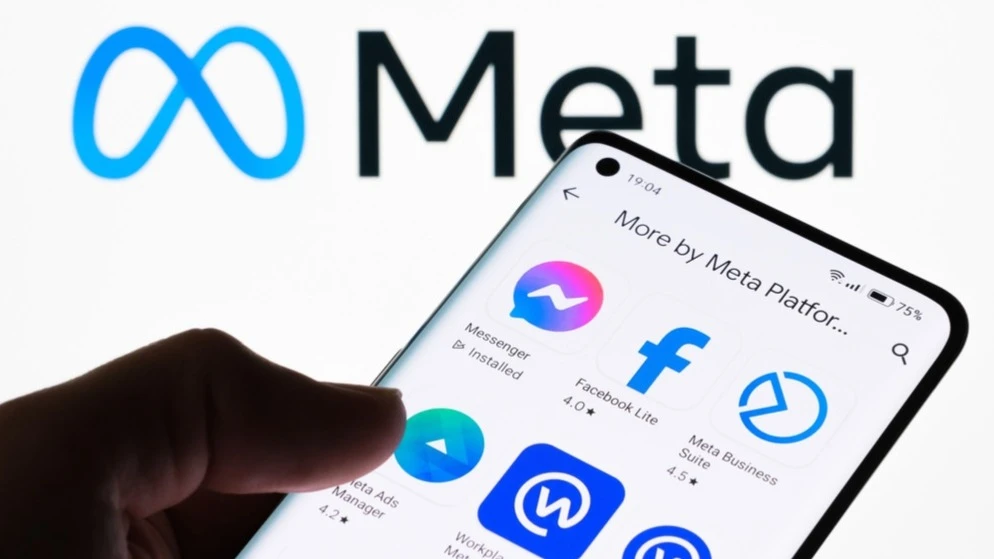
Meta claims that Muse, a personal AI agent, will be able to automate a wide variety of everyday tasks / Photo: mundissima / Shutterstock.com
Meta Platforms has introduced a new AI agent capable of performing everyday tasks on behalf of users. In this way, the AI developer and owner of the social media platforms Facebook and Instagram is promoting CEO Mark Zuckerberg’s vision of a future in which everyone will have a personal AI assistant, according to Bloomberg.
Details
The new agent is called Muse—the same name as the series of models being developed by Meta’s AI lab. According to the company, Muse will be able to automate a wide variety of tasks. The agent became available to users in the U.S. on Tuesday. Meta reported that Muse handles digital tasks. For example, it allows users to schedule meetings, sign up for sports classes, fill out online forms, and even monitor live feeds from home security cameras. Users can communicate with the agent in the Muse app or directly on WhatsApp, Meta says. The company designed the tool so that it “feels very accessible, friendly, and intuitive, and doesn’t seem too complicated,” said Meta’s director of AI, Alexander Wang, in an interview with CNBC.
“Behind the scenes, Muse can handle very complex programming tasks, create advanced integrations, or do a lot of heavy lifting, all while keeping things as simple as possible for the user,” he added.
Meta hopes to eventually offer this product to the billions of people who already use its social media apps, including Instagram, Facebook, and WhatsApp. The agent will run on a separate, secure virtual machine—the Muse Secure VM—in the cloud and interact with the apps. “This is one of the principles built into the product: to make it truly simple and user-friendly for the average user,” Bloomberg quotes Van as saying. “We’ve built an extremely secure architecture.”
Muse keeps a record of what it has already done and what it plans to do, does not share data with Meta’s advertising system, and handles the information it receives with care. “Muse always checks in with you before doing anything sensitive or important,” added Meta’s director of AI. For example, according to Wang, Muse asks for confirmation before making any purchase. Wang himself uses the agent to find and buy furniture for his new home.
On less sensitive matters, Muse can operate independently, a top Meta executive noted. His assistant helps him stay organized, suggests workout ideas, and helps him plan his meals. “I really use it as a second brain,” Wang said.
The company's release of a personal AI agent was a continuation of Meta's other AI initiatives, including the Muse Code AI agent for developers.
A Personal Assistant for Everyone
Mark Zuckerberg draws a clear distinction between business-oriented agents and personal agents for regular users. It is in the latter category that he sees the greatest opportunities for the company, according to Bloomberg.
In a manifesto published last month, Meta’s CEO outlined his vision for this technology: “Everyone will have an exceptionally capable personal agent who understands you, your goals, and everything that matters to you,” he wrote.
Meanwhile, concerns are growing in the market about potential cybersecurity risks associated with AI agents and the underlying models that power them, and in the U.S., negative sentiment toward AI data centers and the companies building them is intensifying, according to CNBC. At the same time, Meta is under pressure from Wall Street, which is expecting a return on its AI investments.
What about the stocks?
On Tuesday, Meta shares fell 0.5% to $613.5, while the S&P 500 broad-market index declined 0.58%.
Wall Street is optimistic about the stock of the AI developer that owns the social media platforms Facebook and Instagram: of the 66 analysts tracking the stock, 59 recommend buying it, and only seven recommend holding it, according to MarketWatch data. The analysts’ consensus price is $745.4, which is 21.5% higher than the closing price on September 8.
This article was AI-translated and verified by a human editor