Interest Rates and Oil: What Lies Ahead for the Tenge After the Opening of the Strait of Hormuz

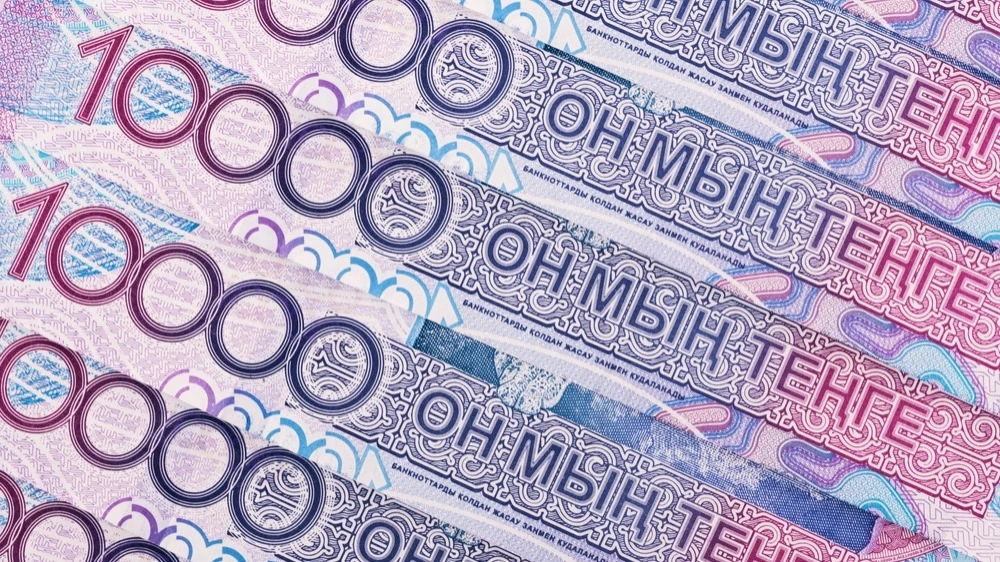
Investment banks expect the exchange rate to reach 500 tenge per dollar by the end of the year. Photo: Shutterstock.com
The period of appreciation for Kazakhstan’s currency, which began back in October 2025—when the dollar peaked at 548.6 tenge— ended on April 28 at 458.73. Since then, the tenge has depreciated by more than 6.5% to 487.2 (closing price as of June 18). This contrasts with the general trend among emerging-market currencies: according to both MSCI and the U.S. Treasury, since late April the dollar has been weakening against baskets of emerging-market currencies—or, at the very least, has been behaving neutrally. Why is the tenge weakening in particular, and how will a potential drop in oil prices following the reopening of the Strait of Hormuz affect the exchange rate?
Why Did the Tenge Weaken?
One of the likely factors behind the tenge’s weakening was the June 5 cut in the base rate—from 18% to 17% per annum. The National Bank attributed its decision to improving inflation trends. Prior to this, the rate had been rising steadily since December 2024, and in October 2025, it was raised from 16.5% to 18% in a single move. “High real interest rates were one of the reasons for international investors’ interest in tenge-denominated instruments,” says Dmitry Dolgin, ING’s chief economist for the CIS, noting that the inflow of foreign investors over the past six months had been high, at around $200 million. But in May, instead of an inflow, the market saw a net outflow of non-resident funds. And even ING called the subsequent rate cut of one percentage pointa “surprise.”
It is also worth considering seasonal factors—in particular, experts at Deutsche Bank note in their June 12 CEEMEA Macro & Strategy Weekly report that the tenge often faces difficulties after losing the support provided by April tax payments. The exchange rate is also likely to be affected by budget allocations fueling demand for imports, outbound tourism, and the resumption of foreign currency purchases for the pension fund’s (ENPF) portfolio, the report states. According to data from the National Bank of Kazakhstan, purchases for the ENPF began as early as April—amounting to $502 million at that time—and rose to $878.5 million in May, accounting for 13% of total trading volume.
“The replenishment of pension reserves with foreign currency is a one-time, non-systematic occurrence; they simply decided to buy back in anticipation of the dollar strengthening, and this factor will not continue to put pressure on the market,” said Rasul Rysmambetov, former chairman of the board of the National Analytical Center at Nazarbayev University.
What's going on with oil?
The price of oil is one of the main factors determining the tenge’s exchange rate in the long term. With the outbreak of the war in Iran, oil prices jumped by 1.5 times, causing a shock not only in commodity markets but also in currency markets. In March, Deutsche Bank called the tenge a “safe haven” because the Kazakhstani currency is less prone to volatility due to its limited dependence on foreign investors; the country has substantial foreign exchange reserves, and the exchange rate is supported by a balanced current account and high interest rates. Nevertheless, the bank’s experts described Kazakhstan’s exchange rate as significantly overvalued.
The anticipated end of the war in Iran has also sent oil prices tumbling: a steady downward trend has been observed since at least June 3—when a barrel of Brent cost $98.9, compared to the current $79.5. And yesterday, oil prices fell to their lowest level since the start of the war (to $76.66 per barrel) following the signing of a memorandum of understanding between the U.S. and Iran, which is intended to cement a ceasefire in the Middle East and reopen the Strait of Hormuz. The tenge exchange rate has recently fallen to 492.6 per dollar, after which it stabilized near these new levels.
What will happen with oil going forward remains the subject of heated debate. In its “Monetary Policy Report” released in early June, the National Bank raised its forecast for the average oil price in 2026 from $66.3 to $90.1 per barrel. Barclays continues to maintain its forecast for Brent at $100, while Goldman and Morgan Stanley are more optimistic, predicting $80–90 per barrel.
If Brent remains around $80–85 per barrel, the tenge could gradually weaken to 500 tenge per dollar and approximately 7 tenge per ruble, says Freedom Global analyst Vladimir Chernov, noting that he does not expect a sharp collapse. “If Brent falls below $80 and the ruble also begins to weaken, pressure on the tenge will intensify, and a rate of 525 tenge per dollar could become a possibility,” he notes.
"Real pressure on the tenge will begin if oil prices fall below $65 per barrel; for now, the levels are comfortable," says Rasul Rysmambetov.
What's Next?
In a report released on Monday, the Eurasian Development Bank forecasts an average exchange rate of 490 tenge per dollar in 2026, with a year-end target of 500 tenge. ING Bank expects the same figures by the end of 2026 and forecasts a weakening to 540 tenge per dollar in 2027. Analysts at Deutsche Bank also expect the same exchange rate for 2027.
Experts at Bank of America point out that there are factors that will support the tenge in the long term. For example, an increase in investment inflows—including those related to the country’s expected connection to Euroclear.
An Attractive Investment
The difference between the base rate and inflation currently stands at about 7% per year—and this is still a fairly attractive level for financial investments, according to Dmitry Dolgin. He sees no grounds for a further rate cut, as inflationary risks persist. “Moreover, an aggressive cycle of rate cuts would seem out of place given the global context,” he says. “The safest decision for the National Bank in the near term is to take a pause.”
Vladimir Chernov agrees with them: the 17% interest rate is still supporting demand for tenge-denominated instruments, and oil remains relatively expensive by historical standards. At the same time, Deutsche Bank experts warn that continued monetary easing by the National Bank and a resolution of the situation in the Middle East could lead to investors resuming the liquidation of their tenge positions.
This article was AI-translated and verified by a human editor