Investors swap TACO for NACHO: what does this have to do with the Strait of Hormuz?

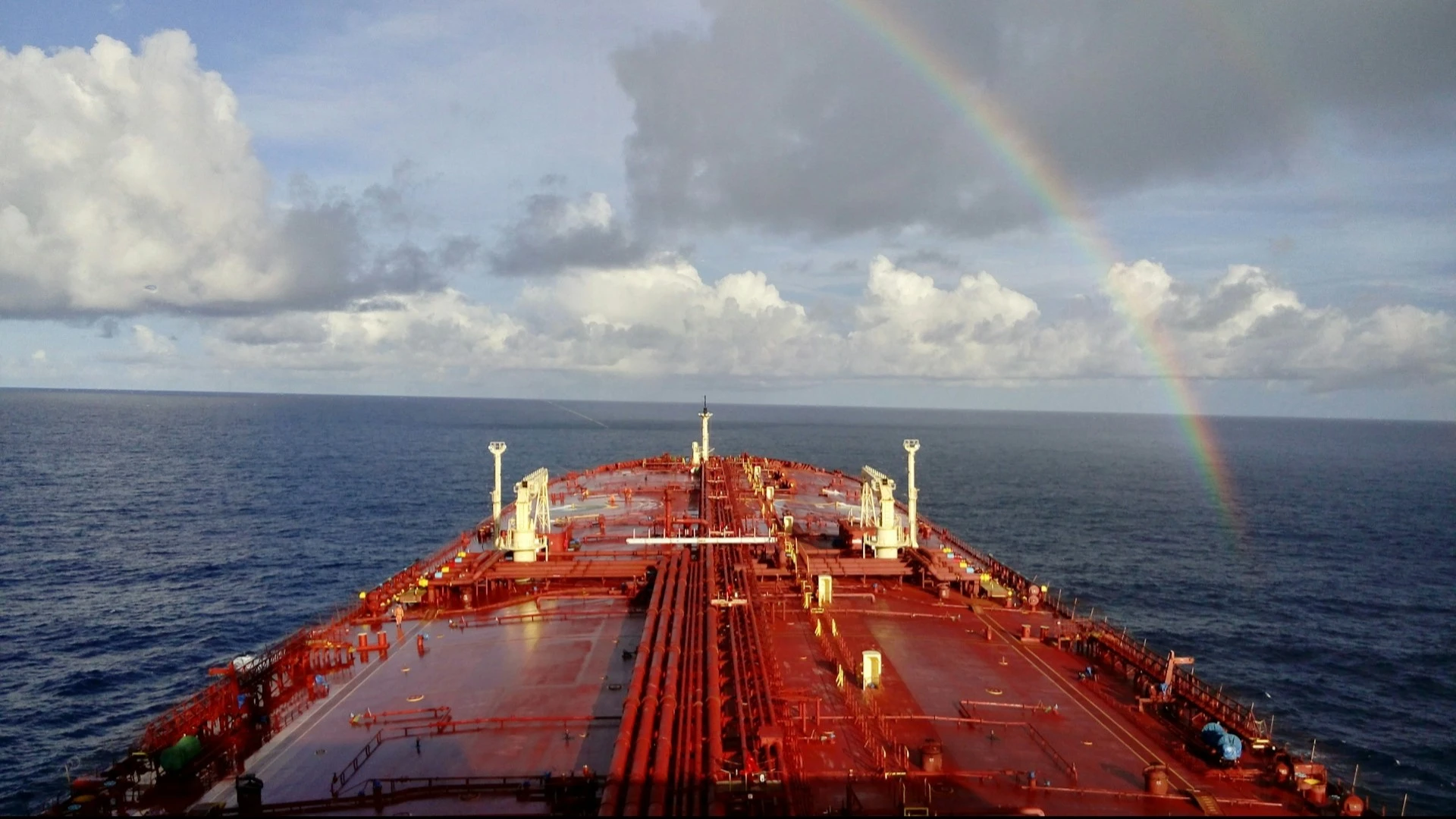
Market participants, among others, are beginning to bet that the Strait of Hormuz may remain closed for a long time to come and expensive oil will become the new norm for markets / Photo: Unsplash.com / Giorgos Barazoglou
The "Trump Always Chickens Out" (TACO) investment strategy has become one of the main drivers of the US stock market amid the war in the Middle East. However, a new trend is now emerging among traders, Not A Chance Hormuz Opens (NACHO), CNBC noted.
Details
Traders have coined a new acronym to describe a new strategy in the U.S. stock market: NACHO - "Not A Chance Hormuz Opens". This is how trading floors describe the growing disappointment that the Strait of Hormuz, closed since late February due to the military conflict between the U.S., Israel and Iran, will open in the foreseeable future, notes CNBC.
A new trend is emerging in the market along with the so-called "TACO" trade - Trump Always Chickens Out. Thus, investors used to bet that the US president would back down on his toughest threats - be it tariffs or geopolitics. Now the market has a new strategy: if previously every headline about a possible truce in the Middle East caused a sharp drop in oil prices, now traders have stopped believing in a quick resolution of the conflict between the U.S., Israel and Iran. Market participants increasingly view supply disruptions across the Strait of Hormuz as a persistent macroeconomic feature rather than a temporary geopolitical shock, CNBC writes.
What the analysts are saying
Both strategies - TACO and NACHO, unfolding in parallel - are now operating simultaneously in the market, note analysts at State Street Global Advisors, CNBC writes. "High energy prices did not prevent the S&P 500 from recovering to new all-time highsin the second quarter," the analysts said in a recent note.
"Essentially, the market is losing hope for a quick resolution [to the conflict in the Middle East]," eToro analyst Xavier Wong tells CNBC. - For most of the [Iranian] crisis, every headline about a ceasefire caused oil prices to plummet, and time after time traders have pledged [asset] prices for a quick [asset] settlement that never came," he added. "NACHO is a recognition that high oil prices are not a temporary shock but a current market reality," the analyst stated. He attributed his stance to, among other things, "a signal from the insurance market." So far, "military surcharges for [ship] passage through the Strait of Hormuz" remain eight times the pre-war level, he estimated. "Insurers make money on risk assessment - and they clearly don't see the current situation as a story with a close resolution," Wong believes.
Context
The Strait of Hormuz is one of the most important routes for energy supplies, through which about 20% of the world's oil supplies and a significant volume of LNG passed before the war in the Middle East. Since the end of February, amid possible attacks from Iran and then the U.S. blockade of Iranian ports in the strait, shipping along this route has virtually stopped. The International Energy Agency (IEA) estimates that the crisis in the Strait of Hormuz has led to the largest supply disruption in the history of the oil market. At the maximum amid the war in the Middle East, Brent crude oil quotes jumped to $126 per barrel.
On Ma. 8, Brent is trading just above $100 a barrel, U.S. WTI is in the $95 range - yet oil prices have risen 38% since late February relative to pre-war levels.
This article was AI-translated and verified by a human editor