"It Won't Return to Its Pre-War State": What's Happening with Traffic in the Strait of Hormuz?
Over the weekend, Iran announced the closure of this waterway, yet ship traffic through it continues to increase, Bloomberg reported

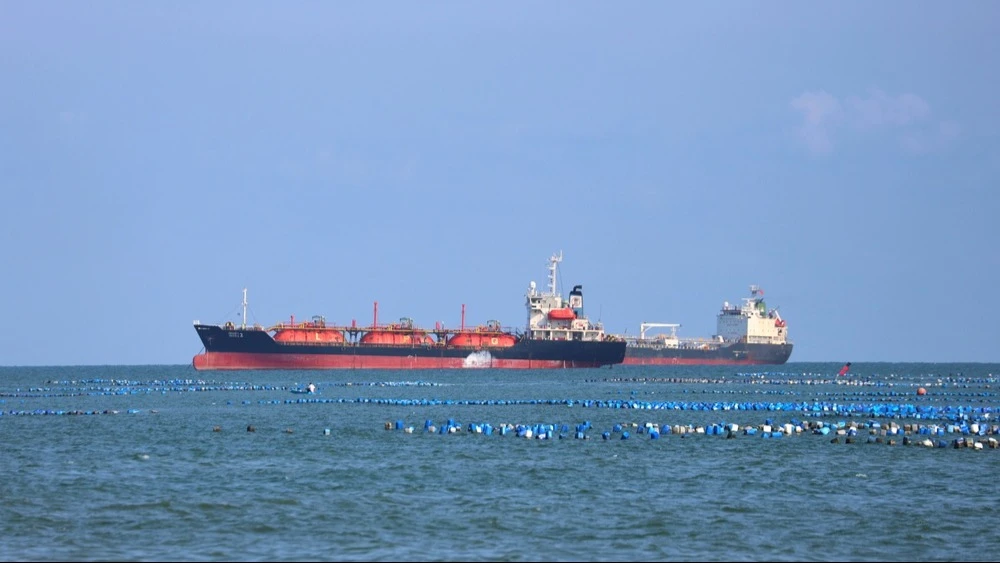
Iranian oil exports through the Strait of Hormuz have surged / Photo: somkanae sawatdinak / Shutterstock
Despite Iran’s announcement over the weekend that it would close the Strait of Hormuz, shipping activity in the region continues to pick up, and Iran itself has increased the volume of oil shipments through the strait to its highest level since the start of the war, according to Bloomberg. This is happening against the backdrop of efforts by Tehran and Washington to reach a long-term peace agreement, the agency notes.
Details
According to ship-tracking data, early Monday morning, June 22, three supertankers subject to U.S. sanctions—the Elva, Virgo, and Vigor—entered the Strait of Hormuz carrying about 6 million barrels of oil, Bloomberg reports. All three are headed for Singapore, where Iranian crude is typically transshipped to other vessels that transport it to China, the agency notes.
Three Iranian tankers have departed from Khark Island—the Islamic Republic’s key export terminal in the Persian Gulf. These shipments will supplement the volumes of Iranian crude previously exported from the port of Chabahar in the Gulf of Oman, from which about 20 million barrels have been shipped in recent days, Bloomberg reported.
In addition, on Monday, four empty LNG tankers linked to Qatar signaled their entry into the Strait of Hormuz, heading toward the Persian Gulf, the agency notes. If their passage is successful, it will mark the largest number of empty LNG tankers to have transited this waterway in a single day since the war began more than three months ago, Bloomberg reports.
What Else You Need to Know About the Situation in the Strait of Hormuz
Traffic in the Strait of Hormuz has picked up after the U.S. and Iran signed a memorandum of understanding last week that, among other things, called for the lifting of the blockade on Iranian ports and ships that had been in place since mid-April. However, over the weekend, due to Israel’s shelling of Lebanon, Iran once again announced the closure of this waterway.
Against this backdrop, according to an analysis by Windward, a firm specializing in maritime analytics, on Sunday, June 21, a total of 12 ships passed through the Strait of Hormuz—compared to more than 21 ships the previous day, CNBC reports. At the same time, five of the eight incoming ships were reportedly sailing “in the dark” — that is, with their Automatic Identification System (AIS) turned off, which is deactivated to conceal the vessel’s location, identification data, and destination. Before the war began, more than 100 vessels, including dozens of tankers, passed through the Strait of Hormuz daily, CNBC notes.
“The current traffic profile [through the Strait of Hormuz]: vessels sailing without signals, those under sanctions, and those linked to Iran—which more closely resembles the baseline figures from the late blockade period than a functioning, open strait,” — Windward representatives reported on June 21 on social media platform X.
What's going on with oil?
The price of August WTI crude oil futures fell by a symbolic 0.1% to $76.5 per barrel. August contracts for the benchmark Brent crude also fell by 1.9% to $79 per barrel.
Sellers of Iranian crude oil to China have already slashed prices sharply after larger volumes of the oil appeared on the market. For example, spot shipments of Iranian Light crude for July delivery are being offered by traders and intermediaries at a discount of $2.5 to $5 per barrel relative to the benchmark Brent grade. By comparison, before the deal between the U.S. and Iran was concluded, the discount was about $1, Bloomberg reports, citing sources.
China typically purchases about 90% of Iran’s oil exports—this trade channel has proven remarkably resilient thanks to workarounds in financing, logistics, and other processes. However, on paper, the Asian country has not imported crude oil from Iran since 2022, as such shipments are often labeled as Malaysian, the agency explains.
What Analysts Are Saying
The situation in the Strait of Hormuz will never return to its pre-war state, according to Jared Cohen, an expert on global affairs and co-head of the Goldman Sachs Global Institute. Sky News reports his opinion.
According to him, the war with Iran has changed the situation in this strategic body of water forever. The current situation resembles a “haphazard ceasefire” and leaves little hope for a lasting peace, he noted. “The Iranians have discovered that they have something more valuable than nuclear weapons, namely, unilateral control over the strait. And unlike [the facilities of] the nuclear program, [this control] cannot be attacked and cannot be ignored,” he said.
U.S. efforts to open shipping lanes in the Strait of Hormuz will allow for a gradual increase in ship transit, although the security situation remains unstable, said Evan Greenberg, CEO of Chubb Ltd., the largest commercial marine insurer. Evan Greenberg. His comments were reported by Bloomberg. “Everything is changing from day to day, from hour to hour,” he said. However, he noted that the sea mines laid by Iran in the Strait of Hormuz during the conflict represent the greatest uncertainty. “We’re talking more about conditions in a war zone. Only a narrow channel is being used for transit, and that limits the number of ships that can actually enter and exit [through it]. “The naval forces are working to open up a wider network of passages, and as that happens, shipping volumes will increase,” Greenberg added.
Context
Iran announced “significant progress” in its discussions with the U.S. over the weekend. The two countries held technical talks in Bürgenstock, Switzerland, according to CNN. Last week, they signed an interim memorandum of understanding that led to an extension of the ceasefire and was intended to keep the Strait of Hormuz open for the unimpeded passage of ships for at least 60 days.
Over the weekend, progress in the negotiations between the U.S. and Iran was in danger of collapsing. This came after U.S. President Donald Trump once again issued threats against Tehran, and the Islamic Republic announced it would close the Strait of Hormuz in response to Israeli shelling of Hezbollah positions in Lebanon.
This article was AI-translated and verified by a human editor