Meta has released a new AI model, Muse Wonder, and announced that it has caught up with industry leaders
Stocks jumped 3.4%

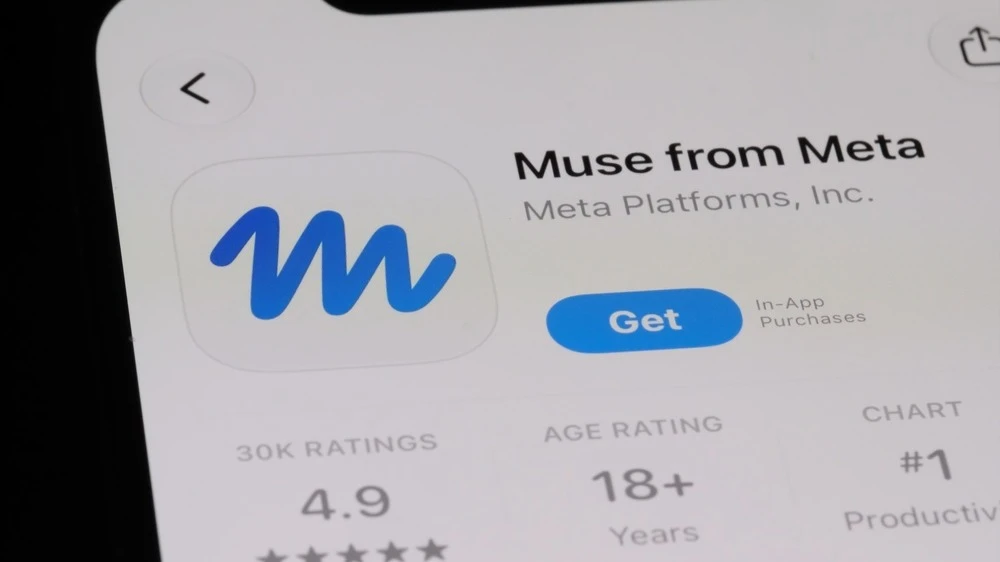
Meta has unveiled its new AI model, Muse Wonder. The company says it can compete with industry leaders / Photo: Shutterstock.com / Robert Way
Meta Platforms, the owner of the social media platform Instagram, has unveiled a new artificial intelligence model called Muse Wonder, which the company claims is capable of competing with cutting-edge developments from OpenAI and Anthropic in programming and solving complex professional tasks. The release marks a significant milestone in Mark Zuckerberg’s multibillion-dollar strategy to strengthen Meta’s position in the AI race after the company’s previous models failed to meet expectations, according to Bloomberg.
What is known about the new model
Meta stated in a blog post that Muse Wonder outperforms some of its competitors’ models in technical tests. Specifically, the company compared it to Anthropic’s Claude Opus 5.5 and Fable 5.1, as well as OpenAI’s GPT-6 Astra. However, Bloomberg notes that test results do not always reflect the models’ performance in real-world conditions, and the comparison is complicated by the fact that different systems excel at different tasks.
Muse Wonder is designed to handle complex tasks, including programming, analyzing financial information, and reviewing legal documents. The new model is also better at remembering important details from previous conversations with users.
Meta plans to integrate it into Muse, its personal AI assistant unveiled in September. Muse is capable of performing everyday tasks, such as ordering groceries and booking trips. Muse Wonder will soon become the foundation of the app’s paid version.
Meta has moved away from its previous strategy focused on open models: Muse Wonder will be a closed platform. The company plans to sell access to the most powerful versions to business customers, competing with OpenAI and Anthropic for corporate contracts. The cost for basic usage will start at $0.20 per million tokens, while the premium version, Muse Wonder Full, will cost $200 per month.
The model’s release was the result of a major restructuring of Meta’s AI division. After the Llama 4 model failed to meet expectations in April 2025, Meta stepped up its investments in infrastructure and the recruitment of specialists. In particular, Alexander Van, founder of the startup Scale AI, was hired to lead the new AI development division. In April 2026, Meta unveiled Muse Spark, but this model still lagged behind its competitors, according to the Financial Times.
What Meta CEO Mark Zuckerberg Said
In an October 12 interview with the Financial Times, Zuckerberg stated that Meta is back among the leaders in the AI race and intends to continue making large-scale investments to compete with OpenAI and Anthropic.
According to him, Muse Wonder “will enable the implementation of much more complex behavioral scenarios that are at the cutting edge of current AI development.” He also emphasized that creating the model required significant computing power, investment, and extensive scientific research.
Meta is already developing the next generation of models, and the pace of technological development may accelerate, Zuckerberg noted. At the same time, he rejected calls to slow down AI development and stated that the safety of such systems can be ensured through standard safeguards and a responsible approach on the part of developers.
The Meta CEO also explained how the company's strategy differs from the approaches taken by OpenAI and Anthropic. According to him, competitors are primarily focused on automating intellectual work, whereas Meta aims to create personalized superintelligence that will expand the capabilities of individual users.
At the same time, Zuckerberg acknowledged that current models do not yet possess enough common sense to become ideal personal assistants. He noted that the industry still has work to do to ensure that AI functions reliably in practical scenarios such as handling customer support requests.
Risks to Meta's Strategy
Although the Muse app helps popularize AI assistants capable of performing tasks on their own in the U.S. market, obstacles to their widespread adoption remain, according to the Financial Times. Shortly after its launch, Amazon blocked Muse’s AI agents from making purchases on its website. This limited the system’s functionality and demonstrated that technology companies can use their market position to restrict the capabilities of competing AI products.
Data privacy raises additional concerns. Users have accused Muse of accessing or sharing personal information without permission. In response, Zuckerberg pointed to plans to launch Muse Confidential VM—a version of the service in which the company will not be able to access user data or their conversations with the AI agent.
Large-scale investments in AI have also been accompanied by internal changes at Meta. In April 2026, the company laid off approximately 8,000 employees, or 10% of its workforce. According to employees, the layoffs and plans to implement software to track employees’ mouse movements and keystrokes for the purpose of training AI have had a negative impact on staff morale, the Financial Times notes.
This article was AI-translated and verified by a human editor