Agent Muse in Action: How Far Will Meta Go with It in the AI Race?

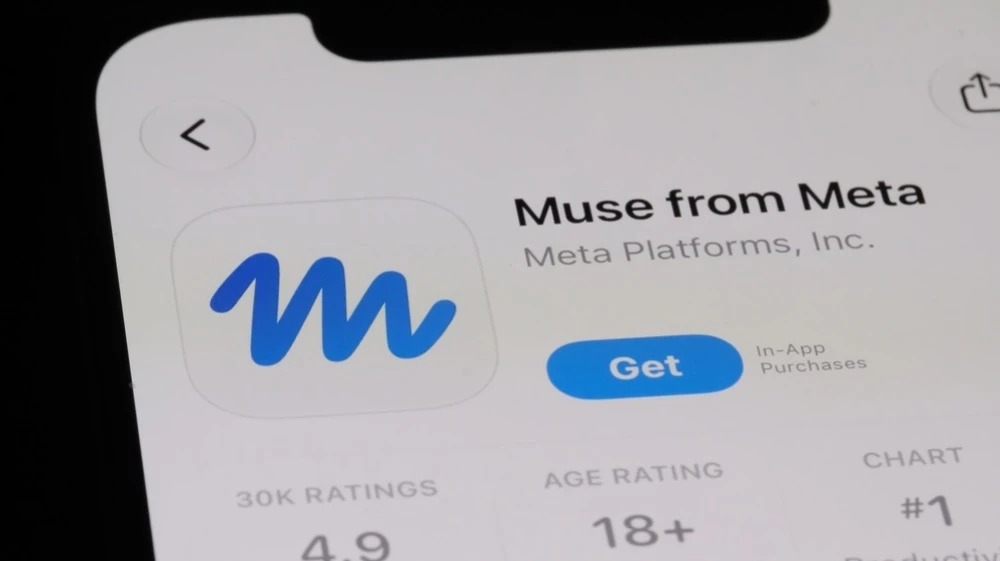
Within the first 24 hours of its launch, Meta's app featuring the AI agent Muse reached the top spot on the U.S. App Store. Photo: Robert Way / Shutterstock.com
In early September, Meta finally made a significant move in the field of AI. It launched Muse, touted as “the world’s first personal AI agent designed for everyone.” The app was downloaded more than 700,000 times in a single day and shot to the top of the U.S. App Store. In six days, it reached 900,000 downloads. By comparison, the ChatGPT app for iOS reached 500,000 downloads in its debut week in 2023. But that was a different era. Muse, on the other hand, entered a market already populated by AI agents from Google, Anthropic, OpenAI, and others, and still became number one in a single day. What has changed?
A Streak of Bad Luck
Just a year and a half ago, Meta was an underdog in the AI race. In April 2025, the release of Llama 4 backfired —the community accused the company of manipulating benchmarks, and its former chief AI researcher, Yann LeCun, later admitted that “the results were slightly falsified.”

Meta CEO Mark Zuckerberg has switched to “founder mode”: he fired the entire AI department, poached several key members of Mira Murati’s team from Thinking Machines Lab, and bought a 49% stake in ScaleAI for $14.3 billion—all so that its 28-year-old founder, Alexander Wang, could lead the Superintelligence project at Meta.
At the same time, realizing that chatbots are, figuratively speaking, a thing of the past and that the era of agent-based AI is dawning, Meta attempted to acquire Manus —a Chinese AI agent—for $2 billion, but China blocked the deal.
Critics, meanwhile, have claimed that Meta has virtually no real AI users compared to OpenAI’s 900 million per week. Alex Kantrowicz, an analyst and host of the Big Technology channel, put it bluntly: Meta is spending billions on infrastructure, but it doesn’t have an AI product that people use every day.
It had to be built from scratch, which is exactly what Meta did just a few months after the Manus fiasco.
What is Muse?
Unlike ChatGPT or Claude, which are positioned more as tools for work, Muse is designed for everyday tasks: it can book restaurant tables, buy tickets, manage schedules, reply to emails, order products, track packages, and even haggle with sellers on online marketplaces. The app operates separately from Instagram and Facebook but is integrated with Gmail, OpenTable, Shopify, Spotify, Ticketmaster, Expedia, Instacart, Stripe, PayPal, Walmart, Best Buy, Gap, Sephora, Notion, GitHub, and Granola. And, of course, the list will continue to grow.
Zuckerberg gave Muse users 100 million free tokens per week. Is that a lot or a little? I think we’re all familiar with free versions of AI tools (and even some paid ones!) that, after you’ve made a couple of requests, tell you to “wait for the limits to be updated.”
For a personal agent, 100 million tokens a week is a lot, according to the eesel.ai website :
To put this into perspective: that’s roughly 14 million tokens per day, and a single agent task—reading several web pages, analyzing options, and filling out a form—can require anywhere from tens of thousands to several million tokens, depending on the amount of web browsing involved. In practice, a typical user who tasks an agent with handling everyday tasks, booking trips from time to time, and monitoring prices for a few products is unlikely to reach this limit.
The free plan is not a “limited demo version,” according to eesel.ai.
But for active users, there are subscriptions for $20 and $100 per month.
Each Muse agent runs on a separate cloud-based computer (Muse Secure VM) that is inaccessible to other agents. Passwords and payment information are stored privately and are not visible to the agent itself.
A New York Times reporter who spent a week with Muse called the experience “amazing,” but noted that the assistant sometimes makes mistakes. CNN also tested Muse and found that the assistant handles reservations and purchases well, but can get confused by multi-step requests.
"A Personal Superintelligence for Everyone"
On September 23, two weeks after the launch of Muse, Zuckerberg spoke at the Meta Connect 2026 conference in Menlo Park. He took the stage wearing a black T-shirt that read “Building is my love language” and made it clear right away: the new AI agent is a strategic move.
Muse is at the heart of what we are building. In the coming years, I expect Muse to evolve into a personal superintelligence that billions of people around the world will use to achieve their goals and improve their lives.

He also outlined a path to monetization: not so much paid subscriptions as a “small commission on transactions.”
At the end of the conference, Zuckerberg pulled a small gadget out of his pocket and said, “I want to show you something else”—much like how Steve Jobs used to casually unveil Apple’s most important new products.
It turned out to be the Muse Charm—a keychain the size of an Apple AirPods case. Inside, it features a 2-inch OLED screen, a built-in 5G modem (no Wi-Fi required), a camera, microphones, and a fingerprint scanner. To start a conversation, all you have to do is touch the sensor and speak—no need to take out your phone or open an app. Gizmodo called it an “AI gadget prototype.”
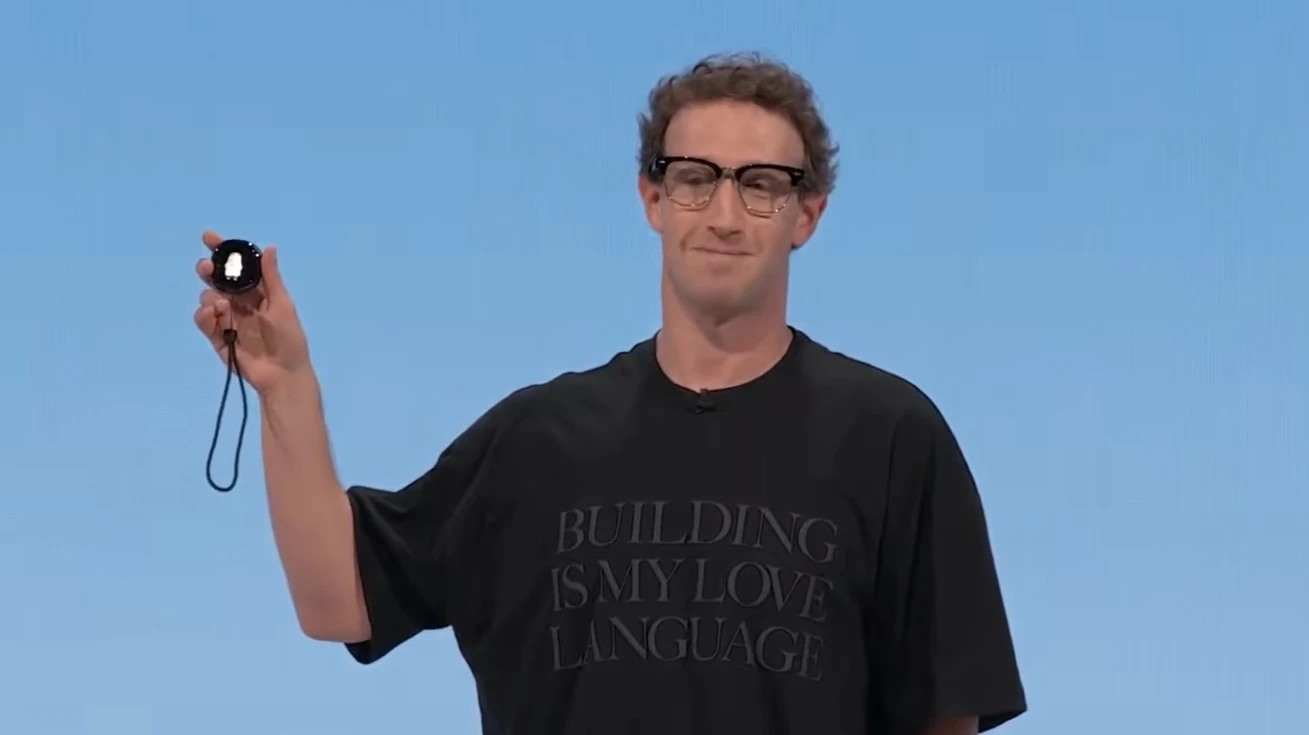
This is a clear challenge to OpenAI, which is working on something similar but has not yet shown any prototypes. Zuckerberg said that Meta has produced only a few units of Charm but plans to release the device by December, in time for the holiday season. The price has not yet been announced.
In addition to Charm, Meta announced the integration of Muse into Ray-Ban smart glasses—now the AI agent will be able to see the world through the glasses’ camera and provide real-time assistance. Zuckerberg showed a demo: a person looks at a restaurant menu, and Muse translates it, recommends dishes, and places the order.
Agents are going after intermediaries
Since the launch of Muse, Meta’s stock price has risen by more than a quarter. The launch of Muse has shaken up the market —and not just in the AI sector. It triggered a sell-off in the financial sector—Charles Schwab’s stock has fallen by more than 8% since the Muse announcement, LPL Financial’s by more than 15%, and Raymond James’ by more than 10%.
Why were financial intermediaries and brokers affected? Muse does not trade stocks, but when asked how it can mimic the work of a financial advisor or broker, it lists capabilities such as tracking investments and progress toward goals, as well as analyzing how portfolio assets are balanced.
"There will be a lot of changes among financial intermediaries that charge fees for billing, reporting, trading, and so on," CNBC quotes Jimmy Lee, founder and CEO of The Wealth Consulting Group, a Las Vegas-based consulting firm.
This isn't just one industry's reaction to a single product. The research firm Citrini Research describes the problem this way: a huge portion of the U.S. consumer economy is fueled by the fact that people don't bother to keep track of things. This includes insurance policies that automatically renew at inflated rates, money sitting in interest-free accounts, and bonuses and frequent-flyer miles that expire unused. And our favorite: offers for supposedly “discounted” subscriptions, the price of which is then raised on the assumption that the customer won’t notice.

According to Self Financial, 59.9% of Americans pay for at least one subscription they don’t use, and on average, they pay for 2.6 “dormant” services, wasting $26.79 a month on them. That adds up to more than $320 a year.
People are willing to pay extra for convenience and to save time, just to avoid having to deal with all of this. Citrini calls this “friction” and believes that AI agents break this pattern. Because an agent isn’t lazy.
In June 2023, just six months after the launch of ChatGPT, Citrini put together a portfolio of companies whose existence depends on “friction”: call centers, business process outsourcing, stock photography, corporate subscriptions, staffing agencies, legal tech, and no-code website builders. It included stocks that analysts had predicted would fall. Over the course of just over three years, the S&P 500 rose by 75%, while Citrini’s portfolio fell by nearly 40%, according to their latest September report.
Is it time to buy Meta, or is it too late?
You should have bought them back in April, when I wrote about it! Just kidding—my columns are by no means investment advice; rather, I hope they serve as a source of new ideas and food for thought.
Morgan Stanley (Oninvest has the September 9 report) believes that Muse is targeting a market worth approximately $30 trillion (yes, trillion!). The target price for the company’s shares is $775, which is roughly equal to the current price, with an “Outperform” rating. At the time the report was released, the shares were trading at $613.5.
The bank's analysts wrote at the time that the successful launch of Muse Agent "represents one of the biggest growth opportunities that is not yet reflected in Meta's stock price."
"For the stock to be valued more highly, investors—and we—need to first see growth in the number of users and the emergence of new ways to monetize," the note stated.
BNP Paribas, which released its report later, on September 18, was already much more optimistic and set a price target of $855, while Bank of America, in its report from the same date, set a price target of $810 with a “Buy” recommendation.
Currently, the average target price for Meta shares is $783.8; 60 analysts believe the stock is a buy, and seven recommend holding it. There are no “Sell” recommendations.
It seems they know something.
After all, the issue isn’t the model’s power, but the scale of distribution. Meta has access to 3.6 billion daily active users across all its platforms, such as Facebook, Instagram, WhatsApp, and Threads, according to TD Cowen. Muse has something no competitor does: instant access to more than 40% of the world’s population.
This article was AI-translated and verified by a human editor