Hermès shares fell to a three-year low due to weak performance in China
The company's total quarterly revenue increased, demonstrating Hermès' resilience compared to its competitors, according to Bloomberg

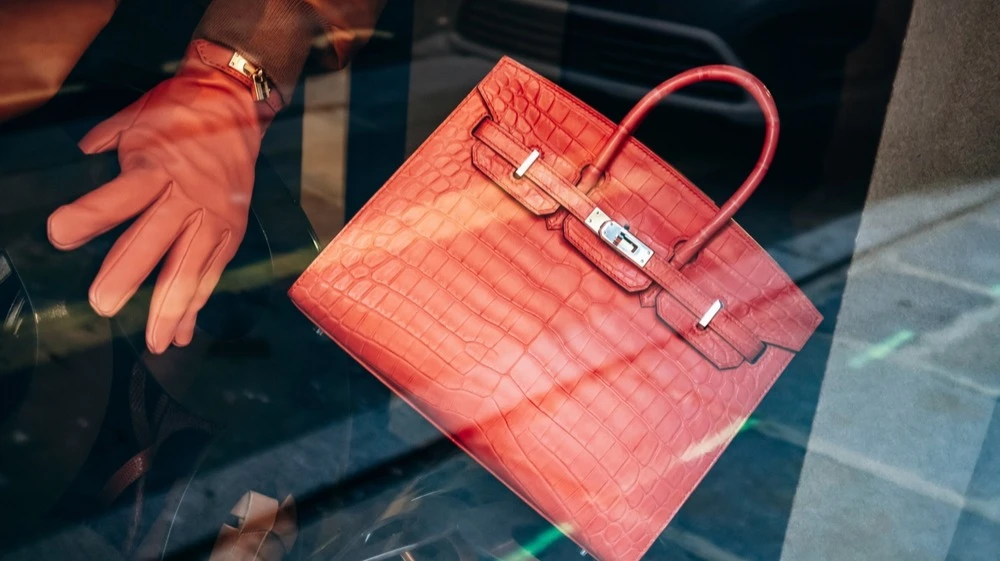
Hermès shares fell amid China's weak recovery / Photo: Andrei Antipov / Shutterstock
Hermès, the maker of Birkin bags, reported an increase in total revenue for the second quarter, thereby demonstrating resilience compared to its competitors amid a decline in demand for luxury goods, Bloomberg notes. However, the lack of a recovery in China has hit the company’s stock price hard—in Paris, it fell 11%, dropping to its lowest level in more than three years, the agency notes. Year-to-date, the stock is down nearly 29%.
Details
Hermès' revenue in the second quarter rose 6.7% year-over-year at constant exchange rates, totaling approximately €4.1 billion ($4.7 billion). The figure exceeded the consensus forecast of analysts, who had expected growth of 6.51%, according to Bloomberg.
Hermès’ sales in North and South America showed the strongest growth, rising 13.7% compared to the same period last year. In France, a major tourist destination, growth reached 6.2%. In the region encompassing the Middle East, performance improved compared to the first quarter: although sales there fell by 2.4% year-over-year over the past three months, the decline in the first quarter had been 5.9%. This region “demonstrated remarkable resilience amid a volatile geopolitical environment,” the company stated. The war in Iran reduced the group’s sales growth by 1.5 percentage points in the first half of the year, said Eric du Algoy, executive vice president of finance. His comments were reported by the Financial Times.
In the Asia-Pacific region, excluding Japan—the company’s largest market in terms of sales volume— — second-quarter revenue rose 2.5% after adjusting for currency fluctuations, which was broadly in line with first-quarter results. However, according to Visible Alpha’s consensus forecast, analysts had expected to see 3.3% growth in this metric for the reporting period, Reuters reports.
“I see the Chinese market stabilizing, but I don’t yet see a fundamental recovery,” Axel Dumas, the company’s executive chairman, told reporters. His remarks were reported by Bloomberg. He added that the company continues to grow in China, albeit at a slower pace than in recent years.
Hermès is more dependent on China than many of its competitors. In the first half of 2026, this region accounted for about 43% of the company’s revenue. Bloomberg notes that for LVMH, Asia—excluding Japan—accounted for 29% of revenue during the same period.
Hermès, which also targets affluent customers with handbags priced at over $10,000, reported that sales in its leather goods division—which accounts for nearly half of the company’s revenue—rose 10% in the second quarter, while Visible Alpha’s consensus forecast had predicted a 10.8% increase, according to Reuters.
At the same time, the company’s operating profit for the first half of 2026 amounted to €3.4 billion—only a slight increase from the €3.3 billion reported for the same period in 2025.
The conflict in the Middle East and reduced spending by consumers seeking to purchase premium goods on a limited budget have hit the entire luxury industry. However, Hermès has shown resilience thanks to long waiting lists for its products—particularly the Kelly and Birkin bags—as well as a business model that limits the availability of coveted items to fuel demand and maintain high prices, Bloomberg notes.
What Analysts Are Saying
"The persistent lack of growth in China" continues to be a cause for concern, wrote Jefferies analysts led by James Grzinich. Although Hermès’ operating margin of 41% exceeded expectations, analysts note that the relatively modest improvement in sales is likely to draw investors’ attention, according to Reuters.
"The problem here is that the stock is trading at a price-to-earnings ratio of 38 times earnings, which is the highest in the sector. And earnings, in fact, haven’t changed,” Reuters quotes Morningstar analyst Elena Sokolova as saying.
“Hermès posted strong sales in the second quarter: the group’s revenue growth accelerated, [although] the quality of that growth was uneven,” the FT quotes Deutsche Bank analysts as saying. They noted that the company delivered “higher-than-expected profitability.”
On July 22, Bernstein analysts assigned a “Buy” rating to the company’s stock with a price target of €2,150. This target implies a 26.8% increase from the closing price on July 28.
Of the 22 analysts covering the company's stock, 13 recommend buying it. Eight recommend holding the stock, and only one recommends selling it.
Context
Hermès’s report was released against the backdrop of weak results from most of its competitors—market leader LVMH, Burberry, and Moncler, whose sales depend largely on apparel and leather goods. At the same time, Richemont’s strong performance with its Cartier and Van Cleef & Arpels brands demonstrated that consumers are still willing to spend on luxury goods but are much more selective in their choices, Bloomberg notes.
This article was AI-translated and verified by a human editor