Morning in New York: The Market Awaits a Turning Point

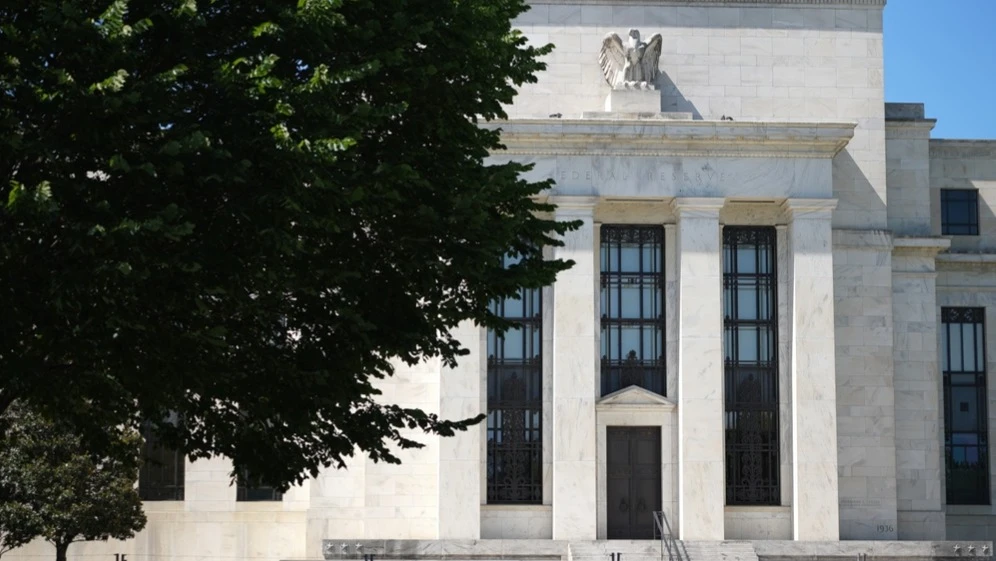
The highlight of the day will be the Fed meeting / Photo: Chiarascura / Shutterstock
A daily review and forecast of events in the U.S. stock market by Mikhail Denislamov, Deputy Director of Capital Markets Research at Freedom Broker.
We expect
The Fed meeting will be the main event of the day. The consensus expects the upper bound of the policy rate to remain at 3.75%. Futures markets estimate the probability of a rate hike at approximately 35%. We consider such a move unlikely. Consumer inflation, as measured by the CPI, remains low; the economy is growing without signs of overheating; and tightening monetary conditions will do little to curb the rise in prices caused by disruptions in oil supplies, but it will hurt investment and consumption.
The relatively high assessment of the likelihood of a rate hike is largely due to the fact that the regulator’s new head, Kevin Warsh, is providing fewer advance signals. As a result, market participants are forced to factor uncertainty into their pricing. Leaving the rate unchanged will be viewed positively, but that alone does not guarantee significant market growth. A rally requires a combination of factors, including stabilization of AI sentiment. We believe that the Fed Chair will not rule out the possibility of tightening monetary policy at the September meeting, so expectations of a rate hike will merely be postponed.
After the market closed on July 28, the situation in the Middle East deteriorated once again. According to U.S. Central Command, several ballistic missiles fired by the Islamic Revolutionary Guard Corps at U.S. military facilities were intercepted. According to Axios, the IRGC’s target was a U.S. base in Jordan. In response, U.S. and Saudi military forces struck weapons depots and logistics facilities in eastern Iraq. Against this backdrop, oil prices rose once more. As a result, the factor of normalizing energy prices—which had caused Treasury bond yields to fall the previous day—ceased to have an effect.
Trading in Southeast Asia isn’t helping to boost optimism either, as it exacerbates the negative external environment for U.S. semiconductor and equipment manufacturers. SK Hynix reported significant profit growth and confirmed strong demand for memory chips, but its shares plummeted nearly 10% during the session, as these results still fell short of extremely high expectations. The pressure spread to Samsung and other technology companies. A 7.1-magnitude earthquake in Kumamoto, Japan—a major hub of the semiconductor industry—was a negative development for the sector. Meanwhile, TSMC (TSM) reported that an inspection of its facility’s structures has been completed and operations are gradually resuming.
Before the start of the main trading session, Procter & Gamble (PG), Automatic Data Processing (ADP), Amphenol (APH), Vertiv (VRT), Boston Scientific (BSX), and SoFi Technologies (SOFI) will report their quarterly results. After the market closes, Microsoft (MSFT), Meta Platforms (META), Qualcomm (QCOM), Lam Research (LRCX), Arm Holdings (ARM), Fortinet (FTNT), Flex (FLEX), and Robinhood Markets (HOOD) will report their results. The earnings reports from Microsoft and Meta Platforms will be of the greatest significance to the market. Expectations for these companies are set very high. As Alphabet’s (GOOGL) report showed, it’s not enough for companies to beat consensus estimates for revenue and earnings—investors need confirmation that investments in artificial intelligence, which are growing exponentially, are paying off.
Futures on U.S. stock indices are showing positive momentum. We assess the risk balance for the upcoming session as neutral, with heightened volatility amid expectations for the outcome of the Fed meeting, the escalation of the conflict in the Middle East, and a correction in the semiconductor sector. The main price movements are likely to occur during the evening hours and the extended session, when the Fed announces its rate decision and tech companies release their earnings reports.
What to Watch for in the Pre-Market
— Teradyne (TER) shares are rising more than 8% following the release of strong quarterly earnings. Revenue doubled year-over-year to $1.33 billion, beating the consensus estimate of $1.22 billion, while adjusted earnings per share (EPS) came in at $2.47 versus the expected $2.05. The revenue guidance of $1.25 billion was 21% above the average market forecast. These results were driven by record revenue in the memory segment, fueled by steady demand for DRAM and a recovery in NAND final testing.
— Bloom Energy (BE) shares are up about 11% as its quarterly revenue exceeded $1 billion for the first time, reaching $1.07 billion against a consensus estimate of $822.77 million. Adjusted EPS nearly doubled estimates, coming in at $0.78. Product sales revenue rose 215.4% year-over-year. The company raised its full-year revenue guidance from $3.4–3.8 billion to $3.9–4.2 billion. Management stated that its data center power supply technology has been approved by all leading hyperscalers.
— Seagate Technology (STX) shares are up by about 7%. The company’s fourth-quarter revenue increased 48% year-over-year to $3.63 billion; adjusted gross margin rose to 52.7% from 37.9% a year earlier, and EPS doubled, settling at $5.71. An additional positive driver for STX shares was the revenue guidance for the first quarter of fiscal year 2027 of $4.1 billion, which significantly exceeded analysts’ average expectations.
— Ford Motor (F) shares are up 5% following the release of its earnings report and an upward revision to its full-year forecast. The automaker’s adjusted EPS came in at $0.42, beating the consensus estimate of $0.35, although revenue fell 4% year-over-year to $48.3 billion. The guidance for adjusted EBIT for the current year has been raised from $8.5–10.5 billion to $10–11 billion, and for free cash flow—to $6–7 billion. Management confirmed that the recovery from disruptions in aluminum supply is proceeding according to plan.
— KLA (KLAC) shares are down more than 7%, despite strong quarterly results. Revenue rose 15% year-over-year to $3.66 billion, compared to a consensus estimate of $3.60 billion, while adjusted EPS came in at $1.05, exceeding the market’s average expectation of $1.00. Pressure on the stock price came from the earnings guidance for the current quarter, which was in the range of $1.06–1.26, with the midpoint only slightly exceeding market estimates. This stands in stark contrast to the double-digit beats in previous quarters.
The Market on the Eve of...
Trading on July 28 on U.S. stock markets ended with mixed results. The S&P 500 rose 0.22%, the Dow Jones gained 1.03%, the Russell 2000 rose 0.2%, and the NASDAQ 100 fell 0.98%. The gains were broad-based: the equally weighted S&P 500 outperformed the “classic” benchmark by approximately 90 basis points. Selling pressure in artificial intelligence-related stocks (the SOX sector index fell for the fourth consecutive session) was offset by demand for safe-haven assets and select cyclical stocks. Among the “Magnificent Seven,” Alphabet (GOOGL: +2.19% at the close of trading on July 28) posted the best performance. The healthcare sector (XLV: +2.36%) led the broad market’s gains, while the IT sector (XLK: -1.84%) lagged behind.
The correction in AI-sector stocks continues to reflect investors’ uncertainty about the return on growing capital expenditures, as well as concerns about competition from Chinese developers of open-source models. Additional pressure is coming from an increase in the supply of stocks and debt, coupled with the unwinding of overloaded long positions. Buyers were buoyed by reports that intermediaries believe the Iran negotiations are close to a breakthrough; however, the aforementioned IRGC attack on U.S. military facilities casts doubt on the reality of the progress made.

The Conference Board’s Consumer Confidence Index for July fell from 91.2 in June to 90.8 points, compared with a consensus estimate of 92.4. Respondents revised downward their assessments of business conditions and the labor market. At the same time, the index’s differential narrowed slightly as the proportion of survey participants who considered jobs to be readily available decreased. The weekly ADP report showed an increase in private-sector employment of 15,000 on average over the four weeks ending July 11. Thus, the slowdown in growth has continued for five consecutive four-week periods.
Treasury bond yields fell by 4–5 basis points across the curve amid another drop in oil prices. WTI fell 4.1%, dropping below $80 per barrel after a 7.5% correction earlier in the week. Trading activity was subdued amid anticipation of the FOMC decision and the quarterly earnings reports from major technology companies.
Company News
— Sherwin-Williams’ (SHW: +8.25% at the close of trading on July 28) quarterly results exceeded expectations. Adjusted earnings per share came in at $3.70, compared to a consensus estimate of $3.50, while revenue rose 7.5% year-over-year to $6.79 billion, exceeding the forecast by $180 million. The full-year guidance for adjusted earnings has been revised upward to $11.80–12.2. An additional positive for investors was the announcement of an 8% price increase in the Paint Stores segment, effective September 1.
— Royal Caribbean Group’s (RCL: +5.72%) earnings per share for the second quarter came in above average expectations, and the company raised its full-year guidance. The company noted stronger-than-expected demand for upcoming cruises, despite unfavorable geopolitical factors.
— Coca-Cola (KO: +5%) exceeded market-wide expectations for earnings, revenue, and profitability in the second quarter. Organic growth significantly outpaced forecasts thanks to strong performance in North and Latin America, although part of the effect from price increases was offset by a less favorable sales mix. The company raised its guidance for comparable EPS and organic revenue growth for the current year.
— Boeing’s (BA: +4.76%) quarterly loss per share exceeded forecasts, while its operating margin fell short of expectations due to weak results in the defense segment. However, revenue beat the consensus, and free cash flow provided a positive surprise. An additional $280 million write-down was recognized under the Air Force One program. Management plans to increase 737 MAX production from 47 to 63 units per month and notes a significant expansion of the order book following the Farnborough Airshow.
— Corning’s adjusted earnings per share, revenue, and margins (GLW: -12.1%) for the second quarter exceeded average expectations; however, results from the Optical Communications and Glass Innovations segments only met forecasts, and the midpoint of the guidance range for core revenue in the third quarter fell short of the consensus. An additional factor contributing to the pullback was the stock’s rise of more than 60% since the start of the year.
This article was AI-translated and verified by a human editor