Bank of America shares hit an all-time high. And Buffett came out on top.
Berkshire Hathaway is one of BofA's largest shareholders

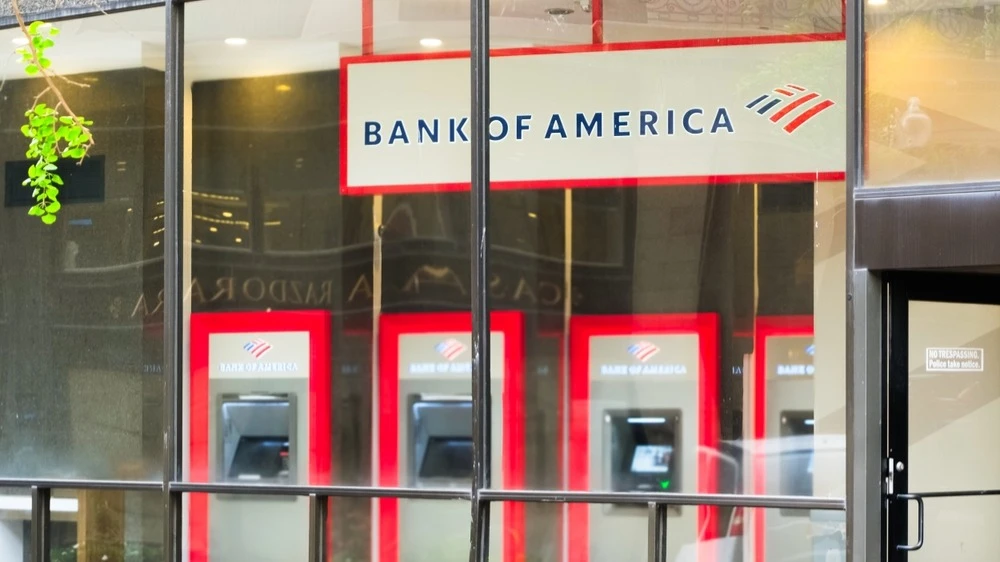
Bank of America shares outperformed their Wall Street competitors as investors shifted their funds into potentially undervalued stocks in the U.S. banking sector / Photo: Veroniksha/Shutterstock.com
Bank of America (BofA) shares hit a new all-time high on the first trading day following the U.S. holiday weekend, as part of a broader rally in the country’s banking sector. But Warren Buffett’s Berkshire Hathaway—BofA’s largest shareholder after two index funds— reaped the greatest benefit from this.
Details
On July 6, shares of Wall Street’s second-largest bank by assets rose 2% to a record $59.9 per share. BofA, which has gained about 9% in market value since the start of the year, began outperforming its competitors last month, when investors shifted away from investment banks whose shares had risen in price—Morgan Stanley (whose shares jumped 25% in 2026) and Goldman Sachs (up 20% over the same period)—to underperforming stocks in the financial sector, according to Barron’s.
As of the end of March, Berkshire held approximately 514 million shares of Bank of America, or 7% of its equity. If the stake has remained unchanged, the holding is now worth about $32 billion—the fourth-largest position in its stock portfolio (over $300 billion) after Apple, American Express, and Coca-Cola.
Berkshire acquired most of its stake practically for free. In 2011, when BofA’s stock was trading at about $7—half its book value— — Berkshire invested $5 billion in the bank’s preferred stock and received long-term options to purchase 700 million shares of common stock. According to Barron’s calculations, since then, the “option” portion of the stake has increased in value more than eightfold, while the remainder has roughly doubled.
However, the “Oracle of Omaha” himself seems to have lost faith in the bank’s stock, the publication notes. Over the past two years, Berkshire has halved its stake in BofA—in mid-2024, it held more than a billion shares. Buffett sold off his entire stakes in JPMorgan Chase, Wells Fargo, and Goldman Sachs—mostly in 2020–2021—and missed out on nearly $50 billion in potential profits. He sold his Goldman shares for about $200 per share—they are now trading above $1,000, Barron’s notes.
Context
Berkshire has been investing in the U.S. banking sector since the 1960s, and Buffett has built his trillion-dollar conglomerate largely on this strategy. The strategy works well during crises: in 2008, Berkshire made a profitable investment in Goldman Sachs, and in 2011, in Bank of America, which was facing multibillion-dollar losses, according to American Banker. The publication notes that Buffett’s company currently has hundreds of billions of dollars in cash, which it can set aside for the next market turmoil.
“Warren has significantly reduced Berkshire’s holdings in banking assets over the past few years,” says Christopher Blumstrand, president of Semper Augustus Investments, whose company has held a stake in Berkshire since 2000. “Wells Fargo is no longer in the portfolio. M&T Bank, which had been in [Berkshire’s] portfolio for decades, has also been sold.” What remains is a large stake in American Express acquired at a very low price (Berkshire has held these shares for many years), a shrinking stake in BofA, and small positions in Capital One and Ally.
Buffett, 95, stepped down as CEO of Berkshire at the end of 2025 but retained his leadership role on the board of directors. This spring, the legendary investor told CNBC that he still goes to the office five days a week and remains firmly in control of investment management.
What's next?
According to Blumstern, Berkshire will not invest any new money in the financial sector until the next major economic crisis. The most likely candidate for a future purchase is JPMorgan stock—a bank with numerous sources of revenue: Berkshire’s management has long had inside knowledge of the largest U.S. bank (former Berkshire executive Todd Combs served on its board of directors), and JPMorgan CEO Jamie Dimon is highly regarded at Berkshire, the expert noted.
This article was AI-translated and verified by a human editor