Morning Highlights: South Korean Stocks Fall 7%; IMF Concerned About Spike in Government Bond Yields


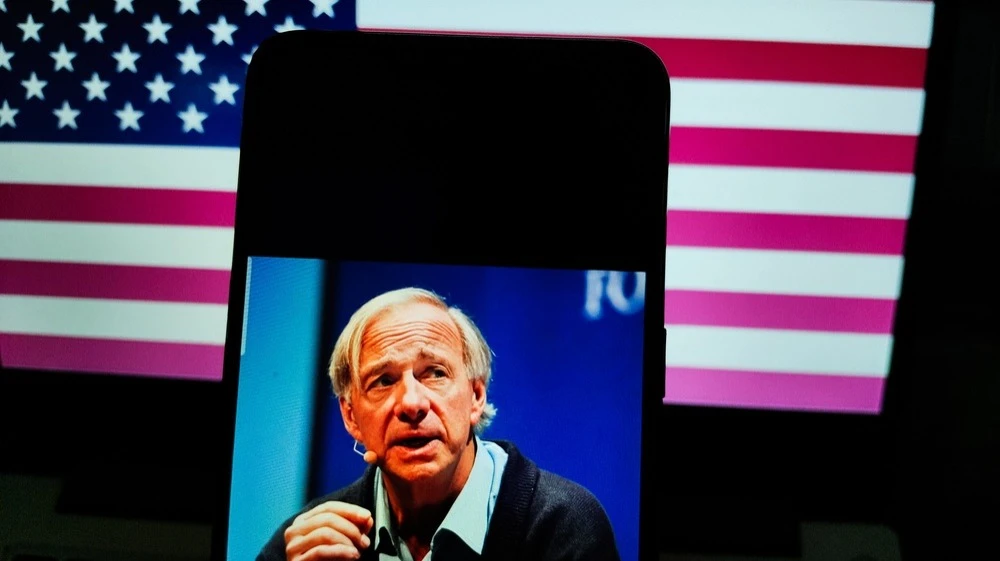
The South Korean stock index, which is dominated by chipmakers, plummeted after Broadcom's CEO compared the market to a casino / Photo: Shutterstock.com
Shares of Asian tech companies plummeted amid concerns over AI funding and intensifying competition from China: SK Hynix shares fell more than 8%, Samsung’s by 7.9%, and SoftBank’s by 8%. Oil prices are falling following Donald Trump’s decision to ease restrictions on Russian diesel exports for six months. Read about these and other topics in our roundup of key events as of the morning of October 13.
Shares of Samsung and SK Hynix fell 8% amid concerns about the AI market
Shares of Asian tech companies fell sharply following a sell-off in U.S. semiconductor stocks, according to CNBC. South Korea’s stock index, which is heavily weighted toward chip manufacturers, dropped 7%. Shares of SK Hynix and Samsung Electronics lost more than 8% and 7.9%, respectively, hitting intraday lows not seen since August. In Japan, SoftBank Group shares fell 8.03%, Tokyo Electron shares fell 6.6%, and Advantest shares fell 5.38%.
Pressure on the market was exacerbated by concerns over funding for the AI industry and growing competition from Chinese chip manufacturers. The day before, the CEO of Broadcom Inc. compared the market to a casino and stated that some investors do not fully understand what they are betting on in the artificial intelligence industry.
CNBC reports that pressure on Korean stocks has intensified following reports of progress by China’s ChangXin Memory Technologies (CXMT) in developing a new memory chip architecture that increases data storage density. Analysts note that Chinese manufacturers still lag behind Samsung and SK Hynix in cutting-edge HBM memory technology, and that large-scale production of CXMT’s new chips has not yet been established. In their view, the sharp drop in share prices reflects growing investor concerns about the prospects of the AI market and a desire to lock in profits following a prolonged rally in the stock.
The IMF has warned of the risk of a sharp rise in government bond yields due to debt and AI
The International Monetary Fund (IMF) has warned of the risk of a sharp and uncontrolled rise in government bond yields amid accelerating inflation, rising public debt, and large-scale borrowing by AI companies, according to CNBC. Global public debt is approaching its highest levels since World War II and may soon exceed 100% of global GDP. Bond issuances by tech giants are creating additional pressure: the share of the largest cloud companies in the global volume of investment-grade bond offerings has risen from less than 1% in 2024 to 10%.
The IMF also warned of the risks of “cyclical financing” in the AI industry. Since 2023, as part of 14 publicly disclosed deals, tech giants have invested approximately $300 billion in equity in less stable AI companies, while simultaneously providing $650 billion in debt financing. In return, investors received commitments for future purchases of services and chips worth $1.4 trillion. If the commercialization of AI fails to meet expectations, this could simultaneously lead to a decline in the value of investments, debt servicing problems, and breach of contract, the fund warned, according to the TV channel.
Oil Prices Fall Following Trump's Decision to Ease Restrictions on Russian Diesel Imports
Oil prices are falling amid expectations of increased Russian oil supplies to global markets, according to CNBC. Brent futures fell 1.48% to $105.05 per barrel, while WTI futures dropped 1.57% to $92.27. This comes amid Donald Trump’s decision to temporarily ease restrictions on Russian diesel exports. The agreement will allow Russia to supply diesel fuel to the U.S. and global markets for six months.
According to Goldman Sachs, additional shipments of 800,000 metric tons of Russian diesel—or about 6 million barrels—would lower wholesale fuel prices in the U.S. and Europe by only $1–2 per barrel. Russia’s ability to ramp up production is limited due to disruptions at refineries, the TV channel notes. Fears of an escalation in the conflict between Saudi Arabia and the Houthis—following their attack on the Riyadh airport, which killed 12 people and injured more than 300—are also holding back the decline in oil prices.
Trump plans to bring three high-ranking AI officials to the White House
The administration of U.S. President Donald Trump plans to transfer three high-ranking officials from the Center for the Advancement of Innovation and Standards in Superintelligence (CAISSI) to the White House, Reuters reports, citing The Information. The center, which is part of the U.S. Department of Commerce, assesses the security and capabilities of cutting-edge artificial intelligence models.
According to the publication, the officials will report to Michael Kratsios, director of the White House Office of Science and Technology Policy, and Sean Kerncross, the national director of cybersecurity. The decision stems from coordination issues between the White House and the U.S. Department of Commerce. Earlier in October, Trump appointed Director of National Intelligence Jay Clayton to oversee U.S. efforts to maintain leadership in the field of AI, the agency notes.
U.S. and European regulators have stepped up oversight of the use of AI in banks
U.S. and European banking regulators are tightening oversight of the use of artificial intelligence in the financial sector amid concerns about cyberattacks and autonomous AI agents getting out of control, Reuters reports, citing six sources. The U.S. Federal Reserve, the Federal Deposit Insurance Corporation (FDIC), and the Office of the Comptroller of the Currency (OCC) are investigating whether banks are using Chinese AI models, how they are deploying autonomous agents for cybersecurity, and whether they are capable of controlling their actions.
In Europe, the Bank of England and the European Central Bank are requiring financial institutions to improve their recovery plans in the event of potential disruptions, fearing that the development of AI could lead to serious turmoil in financial markets sooner than expected. An executive at a major European bank suggested that widespread consequences could occur as early as the next six months. These concerns have intensified following recent cyberattacks, including those on South Korean banks—which allegedly involved a Chinese AI agent and Anthropic’s Claude Code— as well as the hack of the Hugging Face platform, which involved uncontrolled OpenAI AI agents.
What's Happening in the Markets
— Japan's broad-based Topix index rose 0.1%, while the Nikkei 225 fell 2%.
— Hong Kong's Hang Seng Index rose 0.1%, while mainland China's CSI 300 Index rose 0.4%.
— In South Korea, the Kospi fell 5.7%, and the Kosdaq fell 1.7%.
— Australia's S&P/ASX 200 remained virtually unchanged.
— Nasdaq 100 futures were down 0.6%, S&P 500 futures were down 0.1%, and Dow Jones Industrial Average futures were up 0.3%.
This article was AI-translated and verified by a human editor