Morning Highlights: The Dollar Strengthened, Bitcoin Surpassed $80,000, and Meta Is Developing AI Products

The market interpreted Bessent's statements regarding the U.S. intention to cut Iran off from the global financial system as a signal of the U.S. currency's central role in global trade / Photo: Ruslan Lytvyn / Shutterstock
The U.S. dollar posted its strongest gain in two weeks following a statement by the U.S. Treasury Department announcing its intention to isolate Iran from the global financial system. Meanwhile, Bitcoin surpassed $80,000, continuing its rally of more than 20% over the past few days. Meta is preparing to launch its consumer AI agent, Hatch, in the coming weeks, followed by the AI model Watermelon in October. Read about these and other topics in our roundup of key events as of the morning of August 25.
The U.S. dollar posted its best gain in two weeks
The U.S. dollar rose about 0.2% against a basket of currencies on Monday and strengthened against all G10 currencies following a statement by U.S. Treasury Secretary Scott Bessent regarding his intention to cut Iran off from the global financial system, according to Bloomberg. The minister warned that countries doing business with Iran could also face U.S. sanctions. Market participants believe this underscored the dollar’s central role in global trade and boosted demand for it as a safe-haven asset.
The rise came as a rebound following last week’s sharp decline in the dollar amid plans by the U.S. Treasury to increase its repurchase of government bonds. The agency notes that JPMorgan maintains a neutral view on the dollar, pointing out that the Fed may still raise rates, which would provide support for the U.S. currency.
Bitcoin Surpassed $80,000 Amid an Influx of Funds into ETFs
Bitcoin rose more than 2% on Tuesday, surpassing $80,000 and continuing the rally that began last week, according to CNBC. Over the past three days, the cryptocurrency has gained more than 20%—its biggest gain since 2023. The rise was driven by the liquidation of more than $4 billion in short positions, improved demand for risky assets, and the U.S. Treasury’s decision to double its purchases of long-term government bonds.
The return of institutional demand provided additional support: over the past week, U.S. spot Bitcoin ETFs attracted $1.92 billion in net inflows—the highest since October. Fundstrat believes that the rally may prove to be more sustainable than a typical short-term rebound, thanks to inflows into crypto ETFs, increased trading activity, and the supply of stablecoins.
Meta is preparing to launch the AI agent Hatch and a new model called Watermelon
Meta plans to launch Hatch, a platform for consumer AI agents modeled after OpenClaw, in late August or early September, according to The Information, which cites internal documents. The company is considering a tiered subscription model for the service, with the premium plan potentially costing up to $199.99 per month. Hatch will be able to interact with external websites and services and perform tasks such as planning travel itineraries or managing a fitness tracker.
In addition, Meta is aiming to launch a new AI model, codenamed Watermelon, in October and is preparing a platform within WhatsApp to integrate third-party AI agents. These products are part of Mark Zuckerberg’s strategy to monetize large-scale investments in AI and reduce Meta’s reliance on advertising revenue.
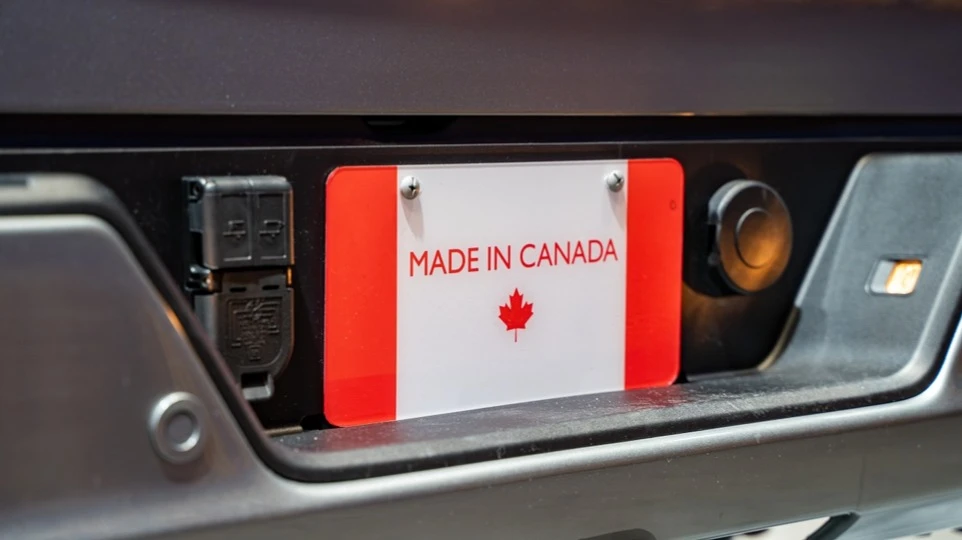
Trump threatened to raise tariffs on cars from Canada to 50%
U.S. President Donald Trump announced that, effective January 1, 2027, tariffs on imports of cars, trucks, auto parts, and steel from Canada will be raised to 50%, according to CNBC. Currently, U.S. tariffs on Canadian cars stand at 25%, while those on steel are already at 50%. The announcement followed the breakdown of trade negotiations between the two countries last week.
Earlier, the U.S. imposed 50% tariffs on approximately $20 billion worth of Canadian goods in response to alleged discrimination against American products. Canadian Prime Minister Mark Carney promised to respond to the new U.S. tariffs “dollar for dollar.” The trade conflict creates additional uncertainty for automakers, whose supply chains are closely intertwined between the U.S. and Canada.
Trump bought up to $50,000 worth of SpaceX stock following the company's IPO
In June, Donald Trump purchased shares of Elon Musk’s SpaceX worth between $15,001 and $50,000, Reuters reports, citing a financial disclosure form published on August 22. The purchase was made on June 23 and was one of more than 1,000 stock transactions carried out in the U.S. president’s portfolio over the course of the month. Earlier in June, SpaceX held the largest IPO in U.S. history, with a valuation of $1.77 trillion.
The White House stated that Trump’s portfolio is managed independently by third-party financial institutions, and that neither he nor his family influences investment decisions. SpaceX is a major contractor for the U.S. military and depends on decisions made by federal agencies; meanwhile, last week Trump instructed the administration to facilitate a sharp increase in the number of commercial space launches in the U.S., the agency notes.
What's Happening in the Markets
— Japan's broad-market Topix index rose 0.4%, and the Nikkei 225 also rose 0.4%.
— Hong Kong's Hang Seng Index fell 0.3%, while mainland China's CSI 300 Index remained virtually unchanged.
— In South Korea, the KOSPI fell 0.6%, while the KOSDAQ rose 0.4%.
— Australia's S&P/ASX 200 rose 0.6%.
— Nasdaq Composite futures rose 0.4%, S&P 500 futures rose 0.1%, and Dow Jones Industrial Average futures were virtually unchanged.
This article was AI-translated and verified by a human editor