Trump has threatened Canada with new 50% tariffs. Who stands to lose?

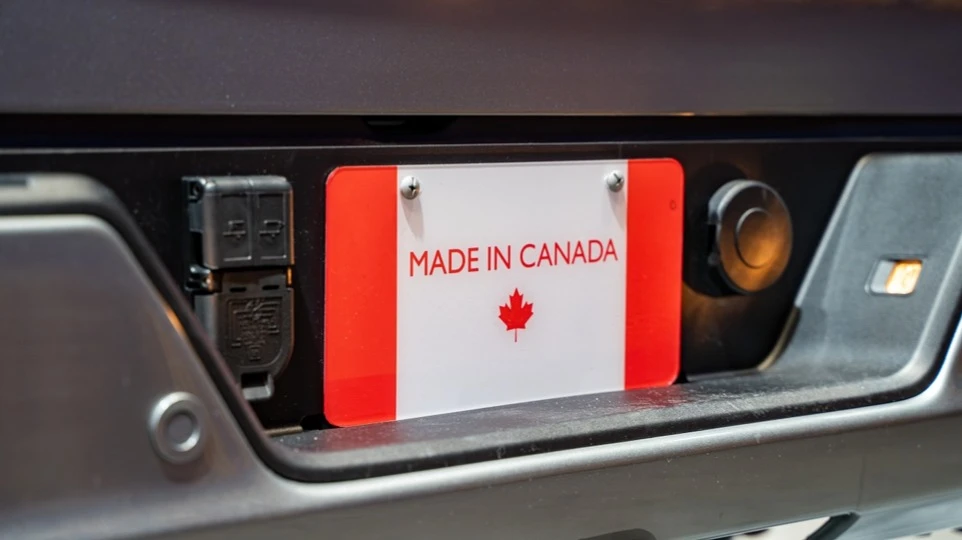
Trump threatened to raise tariffs on Canadian cars, steel, and auto parts starting January 1, 2027 / Photo: Shutterstock.com / Erman Gunes
U.S. President Donald Trump announced a sharp increase in tariffs on Canadian goods—following the breakdown of trade negotiations between Ottawa and Washington over the weekend. Starting January 1, 2027, tariffs on all vehicles, including trucks, as well as auto parts and steel, will be raised to 50%,
hewrote on August 24 on the social media platform Truth Social.
“For years, Canada has been fleecing the United States of America. Its ridiculously high tariffs on our farmers’ products and agricultural goods have made life unbearable for these great American patriots and have long since led to a $60 billion trade deficit between our countries. This is unacceptable, and IT WON’T BE LIKE THIS ANYMORE!” Trump declared.
Trump’s threat means that the tariff on car imports from Canada will double—it currently stands at 25%, and under the now-canceled trade deal, it was expected to drop to 15%. Meanwhile, the tariff on cars from the EU, Japan, and South Korea is already 15%, notes MarketWatch.
Tariffs on Canadian steel are also set to rise from 25% to 50%, according to Trump's post.
How did the market react?
Shares of the largest U.S. automakers fell following this announcement: the two countries’ supply chains are closely intertwined. GM, which operates a plant in Canada that manufactures Chevrolet Silverado pickup trucks, saw its stock price drop by 1.1%. Ford, which has invested $3 billion in a plant in Ontario where production of the F-Series Super Duty pickup trucks is scheduled to begin this year, saw its market capitalization drop by 3.4%. Stellantis fell by 3.5%.
Transportation company stock prices fell sharply: J.B. Hunt Transport shares plummeted 5.7%, Knight-Swift shares fell 3.5%, and Old Dominion Freight Line shares dropped 2.4%.
Auto parts retailers, on the other hand, ended the day on a high note: AutoZone shares rose 1.7%, O’Reilly shares rose 1.8%, and Advance Auto Parts shares rose 2.5%. Rising prices for new cars are prompting consumers to keep their old cars longer, which in turn boosts demand for repairs, maintenance, and parts, as The Wall Street Journal previously explained.
Barron's named U.S. steelmakers as beneficiaries of the escalating trade conflict between the U.S. and Canada: their stocks rose sharply at the opening bell on August 24. Steel Dynamics’ stock jumped 6.8%, Nucor’s rose 5.5%, and Cleveland-Cliffs’ soared 9.4% right off the bat. The rise in steel prices from $800 to $1,200 over the past year has already boosted the stock prices of most companies in the sector. However, by the close of trading on August 24, the shares of the major players had lost all their gains, and some even slipped into negative territory.
Discussing other possible consequences of the announced measures, the Washington Post notes that Canada supplies nearly 80% of U.S. farmers’ fertilizer needs, and refineries in the U.S. Midwest are designed to process Canadian heavy sulfur-rich crude, access to which helps keep gasoline prices lower than they would be without these supplies.
Context
On August 22, it was reported that the U.S. had imposed 50 percent tariffs on a wide range of Canadian goods—from hockey equipment to wine and cement. As a result, American homebuilders, for example, are among the potential losers, according to MarketWatch.
Trade relations between the two countries have become strained after the U.S. refused to renew the trade agreement with Canada and Mexico, known as the USMCA. Canadian Prime Minister Mark Carney stated that his country had been “attacked” by Washington and was “at war,” according to the Washington Post. Ottawa will respond with its own tariffs on American products, Carney said.
Canada is the largest market for U.S. exports, and the United States accounts for about 62% of Canada's total foreign trade.
This article was AI-translated and verified by a human editor