A Blow to the Dollar: Why the U.S. Effort to Support the Government Bond Market Failed to Convince Investors

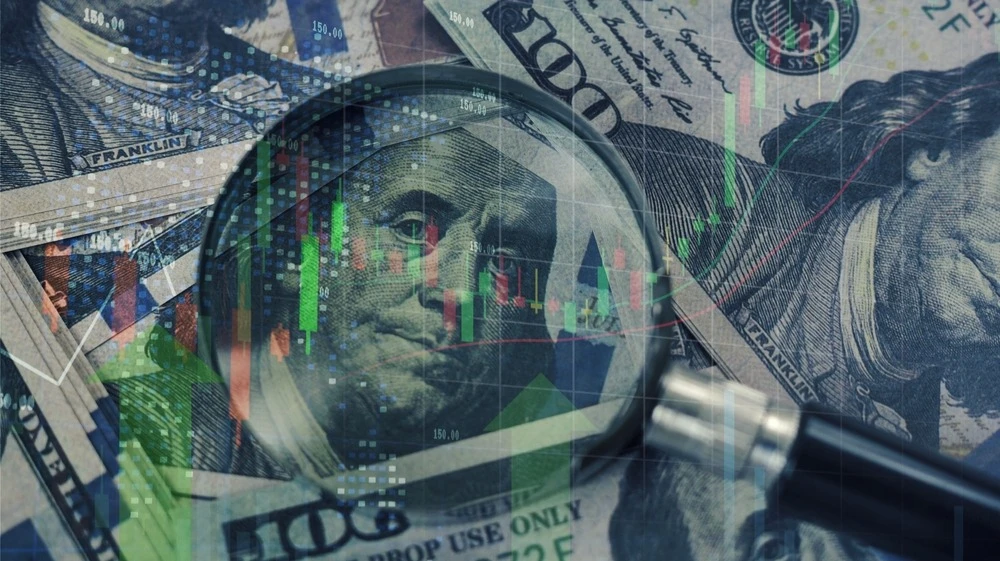
Technology corporations are competing with the government for investors' money, raising massive amounts of capital to build data centers for AI. Photo: Shutterstock.com/Bird stocker TH
U.S. national debt has reached $40 trillion, the budget deficit shows no signs of declining, inflation is high, the debt burden of many other countries is also growing, and geopolitical tensions remain high. Against this backdrop, governments are having to compete for investors with technology corporations that are raising hundreds of billions of dollars to develop artificial intelligence. The U.S. Treasury has attempted to prop up the government debt market, but so far this has only weakened the dollar and failed to convince investors.
Just three weeks ago, U.S. Treasury Secretary Scott Bessent intervened in the market to prop up the yen for the first time in 28 years—a move that market participants viewed as an attempt to actually prop up the U.S. Treasury bond market. Now Bessent has had to intervene directly in his own market.
On Wednesday, August 19, he announced an increase of “at least double” in the volume of Treasury bond redemptions with maturities ranging from 10 to 30 years. This came just two weeks after the Treasury Department published a buyback schedule calling for auctions of $2 billion each.
Following the announcement, the yield on 30-year bonds—which had risen to a 19-year high the day before—fell by 10 basis points to 5.18%, while the dollar dropped to a three-month low. “Now we know the Treasury’s pain points,” commented John Briggs, director of U.S. interest rate strategy at Natixis North America.
The stakes are too high
The main sticking point is the cost of servicing long-term debt. The yield on 30-year U.S. Treasury bonds reached 5.34% on Tuesday, its highest level since 2007. To be sure, 19 years ago, the U.S. Federal Reserve’s benchmark interest rate was 5.25%, and bond yields were nearly on par with it. Now, with the rate at 3.5–3.75%, the market is demanding a significant additional yield from the government in exchange for lending to it.
The U.S. is not alone in its debt woes. In France, long-term bond yields have reached their highest level since 2007; in Germany, since 2011; in the United Kingdom, they have approached 6%; and in Japan, they are close to a historic high. But the U.S. still has the widest spread between the interest rate and bond yields—1.6 to 1.8 percentage points—while, for example, in Germany, which placed its latest issue of 30-year bonds at 3.78%, the spread is 1.5 percentage points compared to the ECB’s rate of 2.25%.
“The market seems to be saying: we’re expecting higher inflation—or at least greater uncertainty in the future—and so we’re demanding higher yields on long-term bonds,” Justin Onuekwusi, chief investment officer at St. James’s Place, explained to Bloomberg.
However, while high yields are good for investors, governments are forced to spend more on debt service. And the U.S. debt has reached $40.047 trillion. Although this figure—the “total public debt”— —which includes intra-governmental obligations (in Social Security trust funds)—and without them stands at $32.27 trillion, even that latter figure amounts to 100% of U.S. GDP. This is the highest level since World War II. In 2001, at the start of the century, it stood at 31.5%.
At the same time, the budget deficit has remained above 6% of GDP throughout this decade, and the government has had to finance it at increasingly higher interest rates.
Over the past half-century, its interest payments have averaged 2.1% of GDP. According to estimates by the Congressional Budget Office (CBO), these expenditures are projected to reach 3.3% this year and 4.6% by 2036. “The problem isn’t so much rising interest rates as it is the budget deficit,” says Michael Strain, director of economic policy at the American Enterprise Institute. “If there’s anything to worry about, it’s the deficit forecast for the next 10 years.” The CBO expects it to reach 120% of GDP by 2036.
But in the current situation, other factors are also influencing bond yields, notes James Macintosh, senior markets columnist for The Wall Street Journal. Technology companies are competing with the government for investors’ money, raising massive amounts of capital to build data centers for AI. More issuances mean lower prices and higher yields, McIntosh points out, citing Alphabet as an example: the yield on its bonds maturing in 2075 jumped even more sharply than that of government bonds, —from 6% in early July to 6.78% on August 18.
Geopolitics also plays a role. The war in the Middle East is fueling inflation—which, it would seem, had begun to “cool off”—and is driving expectations of higher interest rates. Meanwhile, the breakdown of trade ties, the imposition of trade barriers due to Donald Trump’s policies and the growing confrontation with China, as well as attempts to protect domestic production and bring it back to the country, are leading to a decline in the efficiency of capital investments, rising prices, and higher interest rates from capital providers, notes Macintosh.
A Temporary Solution
Market participants found Bessent's intervention less than convincing, and on Thursday, the yield on 30-year bonds gave up more than half of the gains made on Wednesday, rising 6 basis points to 5.24%.
Jon Walsh, a portfolio manager at TwentyFour Asset Management, does not believe that intervention alone can lead to success. “Such measures appear to be a temporary solution,” the Financial Times quotes him as saying.
“Without a shift toward fiscal consolidation—raising taxes, slowing the growth of government spending, or cutting it outright, as was done in the 1990s—bond buybacks will have only a temporary effect,” says Joe Brusuelas, chief economist at RSM US.
Bessent tried to allay concerns. On Thursday, he stated in an interview with CNBC that the size of the buyback could be increased even further to “more than $4 billion” at each auction. Bessent also promised to discuss the issue of “fiscal consolidation.”
James Sullivan, co-head of global fundamental research at JPMorgan, is skeptical about the long-term success of efforts to control long-term government bond yields. First, the sharp rise in global debt issuance calls into question investor demand; second, the Treasury is effectively financing the buyback of long-term bonds by increasing the issuance of short-term ones, which may provide temporary relief but does not fundamentally change the debt burden, he explained. “It’s like paying off a mortgage with a credit card,” Sullivan said.
MUFG analysts believe that Bessent’s intervention “is not backed by a strategic plan”: “His statement… could prove counterproductive and dampen investor interest in either U.S. assets, the U.S. dollar, or both.”
A Dollar Victim
The dollar fell sharply after Bessent’s first statement, notes Jon Trisi, publisher of the Fuller Treacy Money investment newsletter: “If the Treasury Department intervenes directly in the market—rather than the Fed raising rates—that’s bad for the dollar. The minutes from the Fed’s latest meeting show that some members of the rate-setting committee advocated for a rate hike. To have a significant impact on the dollar, they need to take action, not just talk.”
Gold and silver prices surged sharply following Bessent's statement, Trisi notes: "It is precisely these kinds of events that fuel demand for real assets."
The dollar index (the exchange rate against a basket of currencies from the U.S.’s major trading partners) fell 0.8% on Wednesday and dropped another 0.3% on Thursday, although it later recouped some of those losses, the FT notes.
“The dollar has certainly been hit the hardest,” says Gerald Gan, chief investment officer at Singapore-based Reed Capital. In his view, Bessent is deliberately trying to lower long-term interest rates and is signaling that he is willing to tolerate a weaker dollar in order to support the economy.
Given the current negative market conditions for the dollar (diminished expectations for Fed rate hikes and uncertainty surrounding the U.S. midterm elections in November), bond-buying plans add yet another factor, Citigroup analysts wrote on Thursday. They have adopted a “bearish” stance on the dollar after maintaining a “more neutral” stance in recent months.
"I would diversify the portfolio even further by reducing the proportion of the dollar," agrees Gan of Reed Capital.
This article was AI-translated and verified by a human editor