Morning in New York: "Hawkish" Jackson Hole—Higher Rates, Wider Risk Premium

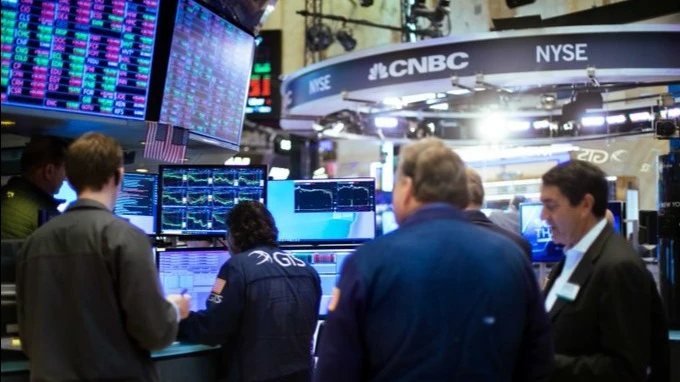
The key event for the markets on Friday was the Fed chair’s speech at the Jackson Hole symposium, which turned out to be significantly more “hawkish” than investors had expected / Photo: X / NYSE
A daily review and forecast of events in the U.S. stock market by Mikhail Denislamov, Deputy Director of Capital Markets Research at Freedom Broker.
We expect
The key event for the markets on Friday was the speech by Fed Chairman Kevin Warsh at the Jackson Hole symposium, which turned out to be significantly more “hawkish” than investors had expected. Warsh reaffirmed his commitment to the goal of bringing inflation back to 2%, noted the resilience of the U.S. economy, and declined to provide the market with any forward-looking guidance. This set of signals dampened hopes for an imminent easing of policy, while increasing the risks of further tightening should disinflation proceed too slowly. Market expectations for the upcoming meeting have shifted: futures now price in a nearly 60% probability of a 25-basis-point Fed rate hike in September, up from 41% a week earlier. Upcoming inflation data in the coming weeks will take on particular significance, as it will determine the Fed’s willingness to pursue a tighter policy path. Against this backdrop, uncertainty surrounding interest rates will continue to put pressure on the performance of the sectors most sensitive to the cost of financing—real estate (XLRE) and utilities (XLU).

Geopolitical tensions in the Middle East continue to escalate amid new U.S. strikes on Sunday against targets in Iran. In response, Tehran attacked targets in Jordan and the UAE. The White House’s lack of a clear exit strategy from the conflict increases the risk of further escalation, which is keeping the geopolitical premium on oil prices high: WTI rose above $85 per barrel.
A separate factor affecting the energy sector was the agreement announced by the Trump administration regarding U.S. access to Venezuela’s oil reserves. The White House has not yet disclosed the parties involved, the financial terms, production volumes, or the expected timeline for implementation. Consequently, the news is fueling interest in U.S. oil companies that could benefit from access to Venezuelan assets, and the energy ETF (XLE) is responding with gains. Venezuela’s Acting President Delcy Rodríguez described the potential benefits of the agreement as “limitless”: In her assessment, it should attract investment, technology, and infrastructure capabilities, as well as help the country increase oil revenues and production. At the same time, Rodriguez emphasized that Venezuela will retain ownership and sovereignty over its reserves. It is reported that the agreement may involve 17 strategic fields with a production potential of over 1.5 million barrels per day. However, even if an agreement is concluded and implemented, it will take a significant amount of time to negotiate the terms, attract investment, restore infrastructure, and ramp up production before the additional oil volumes reach the market. In this regard, the current positive reaction may prove premature: the final terms and the practical scope of the deal could differ significantly from the politicians’ initial ambitious statements.
U.S. index futures are trading in neutral territory. We assess the risk balance for the upcoming session as neutral, with moderate volatility. Following Kevin Warsh’s remarks in Jackson Hole, the near end of the yield curve shifted higher, reflecting growing expectations of a rate hike as early as the September meeting. Further market dynamics will largely be determined by investors’ reaction to the Fed’s more “hawkish” tone: market participants will assess the extent to which tighter interest rate expectations are already priced in and whether they could become a sustained drag on demand for risky assets. The escalation of tensions surrounding Iran also remains in focus, heightening the risks of rising oil prices and inflation.

What to Look for in the Pre-Market
— Chevron Corporation (CVX) is up nearly 2% on reports that a deal to transfer the company’s joint oil projects in Venezuela into the country’s new energy sector structure is nearing completion. Chevron, which already has an established presence and infrastructure in Venezuela, could gain more control over operations and expand production. This makes the company one of the main beneficiaries of the potential opening of Venezuela’s oil sector to U.S. investment.
— Aon plc (AON) is close to acquiring the insurance brokerage and consulting firm USI from KKR (KKR) for approximately $17 billion, including debt. The deal could be announced as early as today and will allow Aon to strengthen its position in the mid-market segment, as well as expand its services in risk management, employee benefits, and pension consulting. The acquisition is expected to begin positively impacting Aon’s earnings per share starting in 2028.
The Market on the Eve of...
Trading on August 28 on U.S. stock exchanges ended in negative territory. The S&P 500 fell 0.25%, the Nasdaq 100 lost 0.70%, the Dow Jones remained nearly flat, and the Russell 2000 dropped 1.39%. Pressure on risk assets intensified following remarks by Fed Chair Kevin Warsh at a symposium in Jackson Hole: his rhetoric was perceived by the market as “hawkish” amid persistent inflation risks. This led to a rise in Treasury yields and limited demand for stocks.
The most notable sell-off occurred in the semiconductor sector. The VanEck Semiconductor ETF (SMH), which tracks the performance of the largest chipmakers, fell 3.47%, while NVIDIA (NVDA) shares, after surging the previous day on the back of strong quarterly earnings, lost 4.58%. The correction in the sector was driven by profit-taking following the previous rally, as well as by the heightened sensitivity of AI companies’ valuations to changes in expectations regarding the Fed’s future policy.
The IT sector (XLK: −1.55%) was the session’s underperformer. At the same time, market performance remained mixed: Amazon (AMZN: +3.97% at the close of trading on August 28) posted one of the strongest performances, accounting for more than 80% of the gain in the consumer cyclicals sector (XLY: +1.15%). The rise in the stock price was driven by investors’ reassessment of the positive impact of integrating AI assistants into the company’s e-commerce operations. At the same time, the sectors most sensitive to interest rates ended the trading session lower: industrials (XLI) lost 0.93%, utilities (XLU) fell 1.04%, and the real estate sector (XLRE) fell 0.40%.
Company News
— Elastic N.V. (ESTC) shares rose more than 19% on Friday following the release of its first-quarter results for fiscal year 2027. The company beat revenue and earnings expectations, raised its full-year guidance, and reported accelerating demand. A key driver was the successful monetization of AI through its search platform, which connects enterprise data to large language models in real time.
— PG&E Corporation (PCG) fell 7.5% after California lawmakers rejected a proposal to limit insurers’ claims against utility companies for damages caused by wildfires. This leaves PG&E facing uncertainty regarding potential payouts and the risk of large lawsuits, which could complicate the financing and implementation of the company’s investment program.
— Rubrik, Inc. (RBRK) shares fell 13%, despite strong quarterly results and an upward revision to its annual guidance. The market was disappointed by the slowdown in growth of new cloud contracts. Since the stock had already risen significantly prior to the earnings release and was trading near its annual high, investors were expecting virtually flawless results.
— Rivian Automotive, Inc. (RIVN) shares fell 4.3% following the announcement of the CFO’s departure in late October. Investors are concerned about uncertainty in the company’s financial leadership during a critical period: Rivian is ramping up deliveries of its more affordable R2 crossover, on whose success the electric vehicle manufacturer’s path to sustainable profitability largely depends.
This article was AI-translated and verified by a human editor