Nvidia Could Gain or Lose $280 Billion After Its Earnings Report. What Does Wall Street Expect?
Traders have priced in stock fluctuations of more than 5% in either direction in the option prices

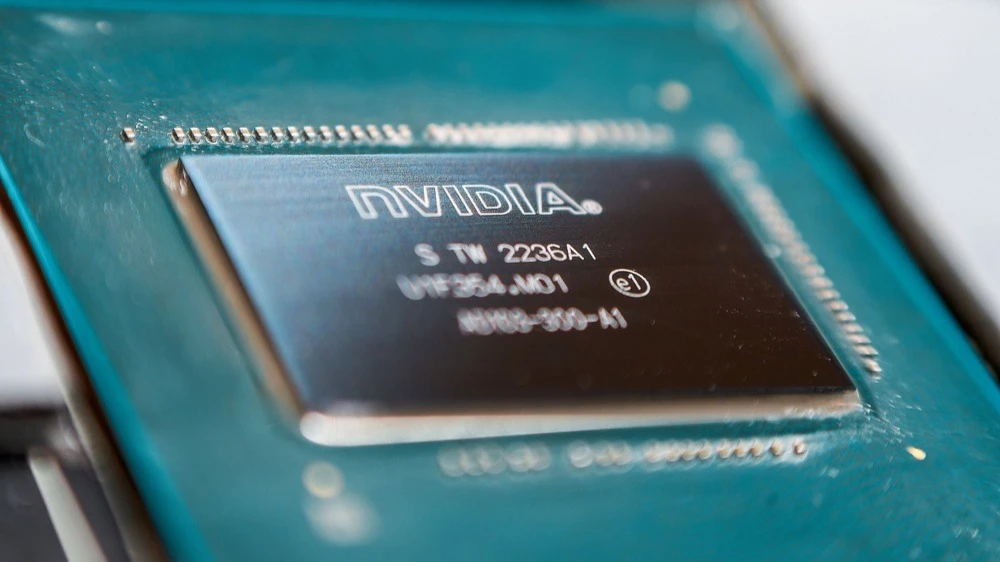
In recent years, Nvidia has been the undisputed leader in the market for chips used to train and run neural networks / Photo: alexgo.photography/Shutterstock.com
Nvidia will report its second-quarter financial results on August 26. Based on the options market, traders expect the stock of the AI accelerator market leader to move by 5.4% in either direction the following day, according to Reuters. For Nvidia, this translates to an increase or decrease in market capitalization of $280 billion—which is more than the market value of about 90% of the companies in the broad-market S&P 500 index.
Although such a swing seems enormous in monetary terms, a 5.4% move is relatively small for Nvidia stock. “This suggests a certain degree of complacency among investors and that the company is becoming more predictable,” said Matt Ambersen, founder of the analytics firm Option Research & Technology Services (ORATS) (quoted by Reuters).
For example, ahead of Nvidia’s latest earnings report in May, options market participants expected a 6.5% price movement. On average, following the last 12 earnings reports from the leading AI chip developer, its stock price has fluctuated by 7.4%, according to ORATS.
Nvidia never ceases to amaze
Chris Murphy, co-head of Susquehanna's derivatives strategy department, believes that the expected 5.4% move in Nvidia's stock price reflects a trend over the past two years: following the release of quarterly earnings reports, the stock has often moved less than traders had anticipated.
“It seems to me that the early days of the AI era—when Nvidia surprised everyone by far exceeding earnings forecasts and its stock price fluctuated by 10%, 15%, or 20%—are probably already behind us,” Murphy said. “Now, few people believe that the company will catch everyone off guard again, far exceed forecasts, and see its stock price really skyrocket” (quoted by Reuters).
A strong report isn't enough
Nevertheless, Wall Street hopes that Nvidia will once again exceed expectations, according to The Wall Street Journal. The company has beaten analysts’ earnings forecasts in each of the 14 quarters since the start of the AI boom. For the previous three-month period, net income rose 210% year-over-year, even though the market had expected a 126% increase.
However, another instance of beating expectations does not in itself guarantee a rise in the stock price: in the trading session following each of the last four earnings reports, Nvidia’s stock price fell. Some investors are bracing for a repeat of this scenario: at the end of last week, among the most actively traded Nvidia options were put contracts anticipating a decline to $205–210, according to data from Cboe Global Markets cited by the WSJ. However, Nvidia’s stock has already fallen into this range—during trading in New York on August 24, it plummeted 2.9% and closed at $208.48 per share.
Report on the Entire AI Market
“Nvidia’s earnings report now feels more like the World Cup final than the Super Bowl. That’s how significant this event has become,” the WSJ quotes Brian Mulberry, an investment strategist at Zacks Investment Management, as saying.
This attention stems from Nvidia's role in the AI industry. The $5 trillion company has been supplying key components for AI development since the launch of ChatGPT in 2022. Its forecast for semiconductor demand could affect the stock prices of memory chip manufacturers Micron Technology and SanDisk, data center operators, as well as the entire supply chain—including power generators, contractors, and other specialists involved in building AI infrastructure around the world, the WSJ notes.
"We joke among ourselves that everyone has become an analyst on Nvidia stock now," the publication quotes David Lefkowitz, a U.S. equity specialist at UBS Global Wealth Management, as saying.
The consensus forecast calls for Nvidia's quarterly earnings to be $2.08 per share—nearly double the figure from a year earlier—and revenue of $92.06 billion. Even more important is the company’s own forecast, Barron’s emphasizes: Wall Street expects Nvidia’s annual sales to approach $400 billion, compared with $216 billion in the fiscal year that ended in January 2026.
This article was AI-translated and verified by a human editor