Nvidia posted 85% revenue growth, beating market expectations. Why did the stock fall?
Even a sharp increase in quarterly dividends did not improve investor sentiment


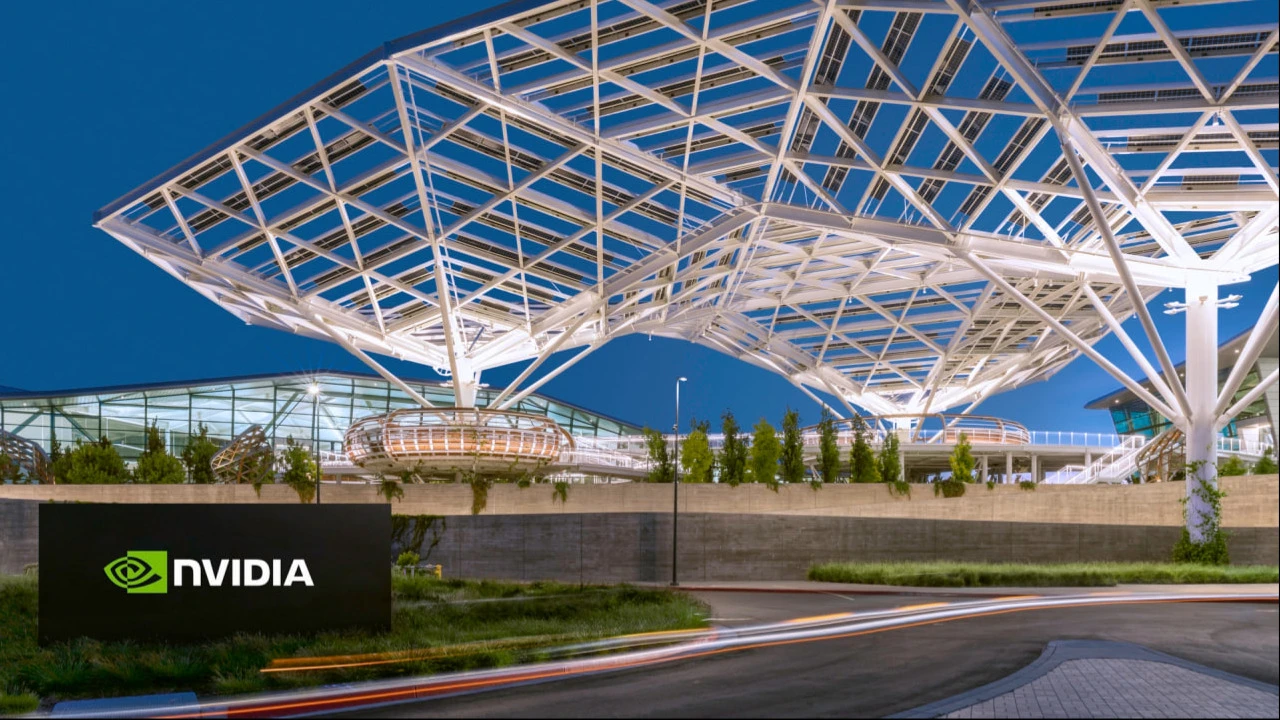
Photo: Nvidia
Nvidia, the world's most valuable company, beat Wall Street's expectations for quarterly revenue and earnings for the 14th consecutive quarter. In addition, the company gave a strong outlook for the current quarter and announced a 25-fold increase in dividend payments. However, it failed to dispel investors' fears: the chipmaker's shares fell by almost 1.5% in extended trading.
Details
Nvidia's key sales segment - data center hardware and solutions, including computing and networking products for AI infrastructure - generated $75.2 billion in the first quarter of fiscal 2027, ended April 26. That's up 92% from a year earlier and slightly above Wall Street estimates. This area accounted for 92% of the company's total revenue.
Overall revenue for the quarter rose 85% year-over-year to $81.62 billion. Analysts, according to LSEG, were expecting $78.86 billion, CNBC reported. The chipmaker's adjusted earnings per share rose 140% to $1.87.
Nvidia's adjusted gross margin was 75%. The indicator slightly decreased compared to the previous quarter, while a year ago it was at the level of 71.3%. The company attributed the margin improvement to higher sales of Blackwell chips.
Total sales in the current quarter, according to Nvidia estimates, will be $91 billion. Although analysts on average were hoping for $87 billion, the range of forecasts, according to Bloomberg, was up to $96 billion. Investors, accustomed to the chipmaker significantly exceeding expectations, took the new benchmark coolly, the agency notes. The company's shares fell almost 1.5% in the aftermarket after the publication of the reports. This fits into the picture that the market has already seen in previous quarters, the agency notes: Nvidia shows huge numbers in reports, but investors' reaction remains restrained.
Their mood was not improved by the chipmaker's announcement of a sharp increase in payments to shareholders: it raised its quarterly dividend from $0.01 to $0.25 per share. Nvidia also expanded its existing share buyback program by another $80 billion. This signals that the company is not directing all of its cash to investments in the AI ecosystem, but is increasing the amount of funds returned to shareholders, Bloomberg noted.
Nvidia reduces dependence on core customers
During a conference call with investors and analysts, Nvidia's top management tried to dispel one of the main doubts of the market: the company's head Jensen Huang said that the chipmaker "should grow faster than the capital expenditures of hyperscalers". Investors fear that tech giants may eventually cut spending on Nvidia's AI chips, Barron's writes: they are investing in developing their own processors.
Hyperscalers such as Alphabet and Meta continue to be the company's largest customers. They accounted for more than half of its total revenue in the data center hardware segment, explained Nvidia CFO Colette Kress. The figure reached $38 billion, more than doubling year-on-year.
However, another $37 billion in revenue was generated by the AI Clouds, Industrial, Enterprise segment, which is the cloud services, industrial and enterprise markets. Here, growth amounted to 74%. Expansion of sales in this segment is a trend that investors would like to see accelerate further, Bloomberg notes. Huang believes that smaller players, including tech startups, will ramp up spending on Nvidia chips by incorporating AI into their operations.
All told, Kress predicts that annual infrastructure spending for AI will reach $3-4 trillion by 2030.
Strengthening positions in the CPU market
Kress said Nvidia expects to generate nearly $20 billion in total revenue from central processing unit (CPU) sales this year. She said the conditions are in place for the company to "become the world's leading CPU vendor."
This was addressed to investors who fear that technologies from other chipmakers such as AMD and Intel will start to push Nvidia out of this market segment, Bloomberg explains. Demand for CPUs began to grow when they were tapped to generate answers to user questions, in what is known as inferencing.
"We're building share in the inferencing space very, very quickly," Huang said at the conference call. In the chipmaker's new Vera Rubin line of systems, Vera CPUs are designed to do just that.
The China question
Kress emphasized that the company did not sell H200 chips to China in the reporting quarter and did not include revenue from such shipments in its forecast for the current quarter. Despite the fact that the U.S. allowed the export of these chips to the Chinese market, the Chinese government prohibited its companies from buying them to support its own production. The situation was not helped by Huang's last-minute inclusion in the U.S. delegation accompanying Donald Trump to talks with Chinese President Xi Jinping. Immediately during the trip, Beijing blacklisted another Nvidia gaming chip.
This article was AI-translated and verified by a human editor