Goldman Sachs: oil inventories are falling twice as fast as a month ago. What is the threat?

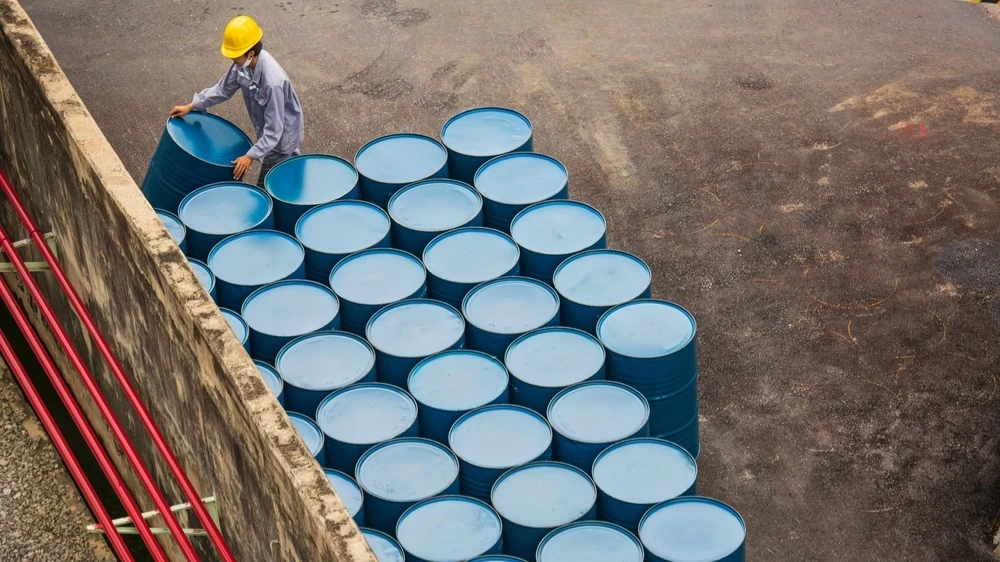
World oil inventories fall twice as fast relative to the average since the start of the war amid the closed Strait of Hormuz / Photo: noomcpk / Shutterstock
The decline in global reserves of oil and oil products, the rate of which the International Energy Agency (IEA) called record, has accelerated further, follows from the estimates of analysts at Goldman Sachs, cited by Bloomberg. Due to the war in the Middle East and the ongoing blockage of shipping through the Strait of Hormuz, the rate of reserve depletion has almost doubled compared to the average rate since the conflict began, analysts said, warning of possible prolonged shortages of crude.
Details
In May, visible stocks of crude oil and petroleum products (volumes in official storage facilities, in exchange warehouses and in tankers on the water) are declining at a record rate - by an average of 8.7 million barrels per day, according to a note from Goldman Sachs analysts. They were declining by nearly 4 million bpd in April, the IEA said, calling the pace a record. The current rate of decline in inventories is also nearly double the average rate since the war in the Middle East began in late February, Goldman analysts said.
According to their estimates, about two-thirds of the May inventory decline was due to a reduction in so-called oil-in-transit (oil in tankers on the water) - exports fell faster than imports. At the same time, the decline in imports is spreading from Asia to Europe: in particular, jet fuel supplies to the European market were 60% below the 2025 average.
Nevertheless, in annual terms, global inventories are still stable, according to Goldman Sachs data. Although they have declined by an average of 4.6 million barrels per day since March, the figures are held at the level of last year due to the "significant buffer" formed in the nine months before the war, analysts noted.
In China, the world's largest importer of crude oil, refineries showed a "lack of appetite" for crude, reflected in a "large decline" in import volumes, the bank added. Domestic fuel sales fell 22% in April partly due to a slowdown in economic activity, the bank's economists calculated.
Goldman Sachs cites the protracted war in the Middle East as the main reason for the decline in oil inventories, which continues to hit supply chains hard. "Physical markets continue to tighten as estimated oil exports through the [Strait of Hormuz] remain at an extremely low level of just 5% of normal," emphasized analysts Julia Zestkova-Grigsby and Daan Struyven.
Before the war, the Strait of Hormuz was a key water route for energy exports from the Persian Gulf. Now this route is blocked from two sides at once: Iran since late February and the United States since mid-April. The U.S. military has been detaining ships traveling to or from Iranian ports in the Strait.
What's happening in the oil market
Brent crude oil futures on Ma 21 are trading around $107 per barrel. Although oil quotations have risen by more than 70% since the beginning of the year, they remain well below the peaks of the Iranian crisis, when Brent exceeded $126 per barrel. June futures for WTI crude oil cost about $101.8 on Ma. 21. Market hopes for an imminent end to the war persist: on May 21, Iran said it was considering the latest proposal from U.S. President Donald Trump's administration for a possible peace deal. A day earlier, Trump said he was willing to wait a few more days to "get the right answers" from Tehran, CNBC reported.
Context
On Ma 13, the head of the International Energy Agency (IEA) Fatih Birol warned that in April the world oil reserves were declining at a rate of about 4 million barrels per day (in total for March-April they decreased by 250 million barrels). The IEA at the time called such a reduction a record and warned that the depletion of oil reserves amid the closure of the Strait of Hormuz would lead to a deficit in the oil market until the fourth quarter of 2026 and cause new volatility in oil prices during the summer peak of consumption.
"This could have serious implications for food prices and, combined with higher energy prices, has the potential to push up inflation figures," Birol said.
This article was AI-translated and verified by a human editor