"Inevitable, like death and taxes": what Wall Street expects from Nvidia's report
Freedom Capital Markets sees Nvidia stock as an attractive bet for the next two years

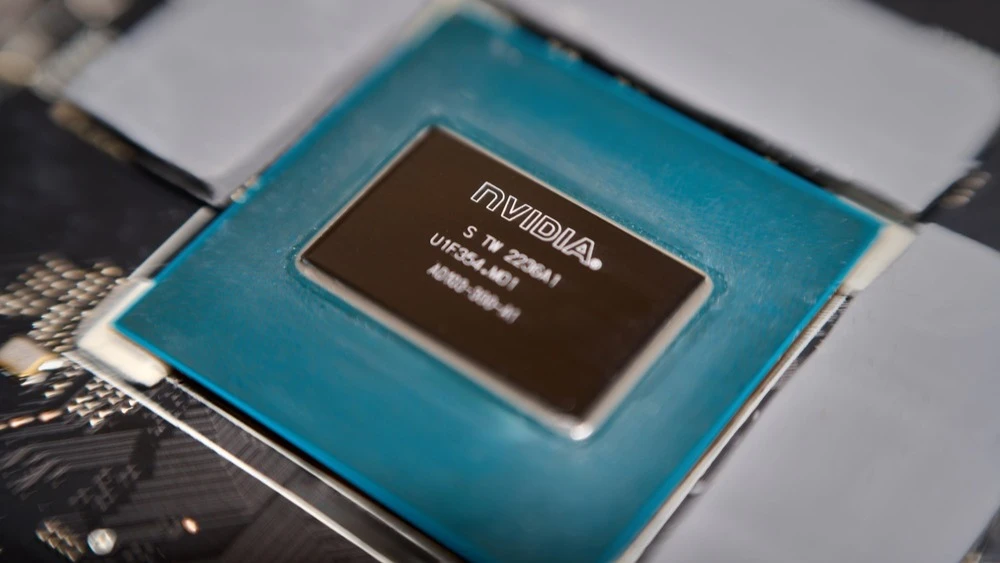
The market reaction to Nvidia's report may be negative, despite another exceeding of forecasts on financial indicators / Photo: alexgo.photography/Shutterstock.com
Stock analysts are in no doubt that quarterly sales and earnings at leading AI chip vendor Nvidia will once again beat preliminary estimates. Nevertheless, Nvidia is the top short among S&P 500 companies ahead of the report. Nvidia will reveal its financial results for the first quarter of fiscal 2027 on Wednesday, May 20, after the U.S. stock exchanges close.
This time, Wall Street's focus will be not only on financials, but also on plans to return capital to shareholders and Nvidia's ability to adapt to the rapid shift in demand from neural network training to practical applications.
What to prepare for?
Wall Street expects Nvidia to announce a 79% increase in quarterly revenue, the fastest growth rate in more than a year, Reuters writes, citing LSEG data. Adjusted earnings, according to the consensus forecast, should grow year-on-year by 81.8% to $42.97 billion. Hopes for sharp revenue growth are driven by massive capital spending by customers such as Microsoft and Meta Platforms: the bigtechs will invest more than $700 billion in AI this year versus $400 billion in 2025, the agency notes.
What else should an investor keep an eye on?
Reuters and Barron's point to a few key factors beyond earnings and sales that the market will be paying attention to today:
- M&A impact on revenue. Since new chips built on the technology of recently acquired startup Groq are not included in Nvidia's long-term revenue forecast (assuming $1 trillion in sales from the Blackwell and Rubin platforms by the end of 2027), Wall Street is waiting to signal the emergence of this new growth driver;
- Market share retention. As the industry shifts from training AI models to operating them (inferencing), investors will evaluate Nvidia's ecosystem position. In this field, the company will face tough competition with custom bigtech processors (TPU from Alphabet, Trainium from Amazon) and solutions from traditional players (AMD, Intel);
- Pressure on profitability. With Nvidia's margins expected to be 74.5% in the first quarter, analysts will examine the downside risks in the second half of the year. The main concerns relate to the rising cost of memory, the rising cost of chip packaging and the cost of ramping up Rubin processor production;
- Supply-side constraints. The market will follow Nvidia management's comments on production capacity. It will be important to see if the company can continue to manage the shortfall, given that its supply-side costs have doubled over the past two quarters (from $50.3 billion to $95.2 billion);
- Infrastructure barriers to demand. Investors are concerned about the pace of data center construction by Nvidia customers such as CoreWeave and Nebius. The lack of physical space and capacity at customers to accommodate the AI chips they purchase could be a constraint on demand in the short term;
- China factor. The region remains an area of uncertainty. Wall Street will be waiting for Nvidia to make progress in returning to the PRC market, whose authorities have recently blocked shipments of U.S. chips. Hopes for progress came after Nvidia CEO Jensen Huang recently traveled to China with a delegation from U.S. President Donald Trump;
- Return of capital to shareholders. Bank of America cited another key question ahead of the report: will Nvidia go for a dividend increase? With an "attractive" valuation for the company's stock, BofA said, increasing dividend payments remains "key to broadening the shareholder base." In this, Nvidia lags behind other bigtechs: from 2022 to 2025, BofA estimates it has allocated only 47% of its free cash flow to dividends and share buybacks, versus 80% for other large companies.
Optimism dominates
Nvidia's stock has fallen for the last three consecutive trading sessions, but analysts don't seem to be paying attention to the short-term noise, Barron's says. One such optimist is HSBC's Frank Lee - on March 19, he raised his target price on Nvidia to $325 from $295 and reiterated a Buy recommendation; at the last close on Ma. 19, Nvidia stock was worth $220.61 apiece. According to MarketScreener, KeyBanc (to $300 from $275), DA Davidson (to $300 from $250), and Morgan Stanley (to $285 from $260) also raised their annualized price targets on the company's shares this week, while maintaining positive ratings (Buy and Overweight). Investors should expect "a typical pattern of outperformance and increased guidance," Morgan Stanley analyst Joe Moore wrote.
"That Nvidia's EPS (earnings per share) and revenue will be better than market expectations has become almost as inevitable as death and taxes, so no one expects the company to fall short of forecasts on the key metrics when it reports," said Bespoke Investment Group. It will be important to watch exactly how the market reacts to these financial results: over the past 13 reported quarters, Nvidia's stock has ended the session in the plus on the day of the market reaction less than a quarter of the time, Bespoke pointed out.
Freedom Capital Markets managing director Paul Meeks pointed out to clients that Nvidia shares are trading at a perfectly adequate forward P/E multiple (the company's capitalization to earnings ratio) of about 20 to projected fiscal 2028 earnings. That valuation is justified by its high growth rate: the company's adjusted earnings are expected to soar 73% in 2027 and another 36% in 2028. "Unless you think Nvidia's business will collapse next year - and I don't think it will - you should probably bet on this stock for the next 2 years, or at least to the $300 level," Meeks summarized.
Traders lay after the publication of the report fluctuation of capitalization of Nvidia by $355 billion, writes Reuters with reference to the data of option positions. This implies growth or fall of the company's quotes on the day after the publication of quarterly results by 6.5%. Among S&P 500 companies ahead of the publication of its own statements, Nvidia ranks first in terms of the volume of short positions, according to data from S3 Partners. It is now hovering near 52-week highs at $62.5 billion, the researchers calculated.
This article was AI-translated and verified by a human editor