Trench instead of hype: will Burberry become the most interesting company in European luxury

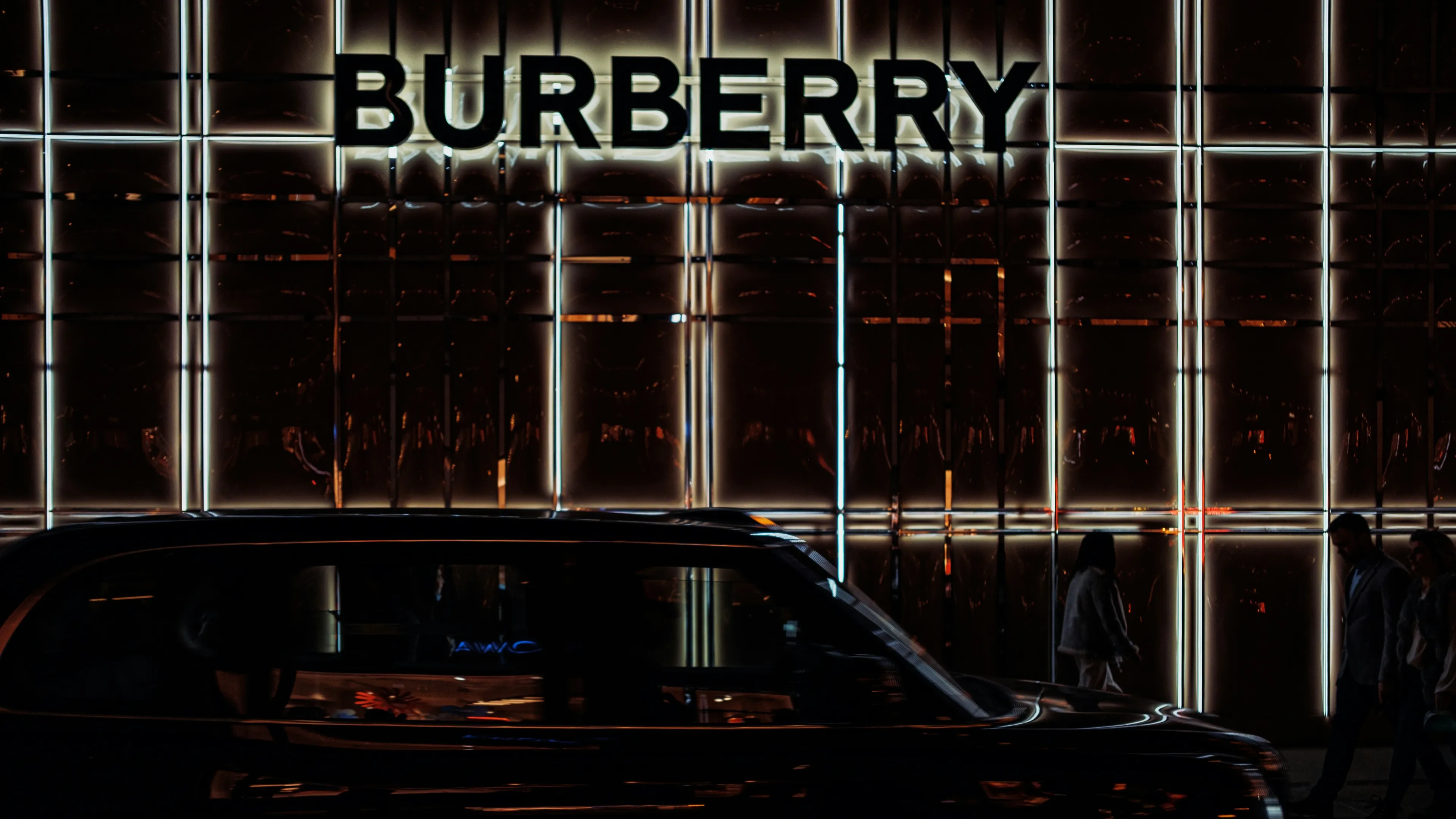
Burberry has started to receive the first positive results of its new strategy: it reported operating profit and sales growth of 10% in the Americas and Greater China / Photo: Samuel Regan-Asante / Unsplash.com
British company Burberry has been in poor financial shape for several years. And now - surprise surprise - in May it reported a return to operating profit and a surge in sales in the Americas and Greater China at the end of the fiscal year. The company has come out of a prolonged slump, but from an investment point of view it still looks ambiguous, says Alena Nikolaeva, an independent portfolio manager for global markets.
Problematic history
Burberry has long been one of the most troubled stories in European luxury. While Hermès and Prada were growing sales and margins even in a weak economic cycle, the British company has been floundering for several years between trying to become ultra-premium and the desire to maintain mass brand recognition. As a result, it lost both a portion of its status-oriented luxury customers and the broader audience that used to come for affordable luxury.
And then Burberry suffered a few more blows: falling consumption in China and the US, conflict in the Middle East and a drop in tourism in the region.
That's why Burberry's latest report - namely, the company's return to operating profit - is being discussed so vigorously by the market. This is the first signal that the company, after several years of strategic mistakes, is finally starting to assemble a more understandable and viable business model.
Burberry reported a 5% increase in comparable sales in the fourth quarter of its most recent fiscal year, which ended March 28, 2026, with year-over-year growth of 2%. Annualized operating profit reached £115 million versus a loss of £3 million in the last reported period. Adjusted operating profit was £160m, 5% above market expectations at £141m in the second half of the year.
Gross margin in the second half of the year rose to 67.9%, which was one of the main positive surprises of the financial statements. At the same time, a year ago the company was actually balancing on the verge of operational degradation: in FY2025 the EBIT margin fell to about 1%.
An illustrative example: not yet luxury, but no longer for the middle class
Burberry's turnaround, as well as the history of its development in the last few years, is quite indicative of the whole European luxury. For many years, the company tried to repeat the path of Louis Vuitton or Dior and move into a higher price segment, sell more leather accessories and bet on fashion luxury with higher margins.
But luxury isn't just about price. It's also about the cultural weight of the brand, scarcity, queuing for things and a sense of status. And here Burberry has never had the same level of influence as the French fashion houses.
In fact, the company overestimated the strength of its own brand, especially during the period of Jonathan Akeroyd's leadership - from April 2022 to his swift resignation in July 2024 - and the vision of Daniel Lee, who became Burberry's chief designer in September 2022. The Mark's prices were rising too fast, some of its collections were drifting into a more niche fashion aesthetic, and the brand slowly began to lose the identity for which it had traditionally been most loved: trench coats, British character, strong outerwear expertise, and a recognizable signature plaid.
As a result, the company ended up somewhere between real luxury and the premium mass segment. And for the super-rich clients, Burberry's clothes became insufficiently exclusive, and for the wider audience of affordable luxury, they became too expensive.
The situation has been exacerbated by the fact that over the past two years the luxury sector has been living in a highly polarized demand environment. Ultra-wealthy clients continue to actively buy status luxury, while the broader audience is becoming much more sensitive to rates, the state of the labor market and general economic uncertainty. This is particularly evident in the US and China. As a result, it is not Hermès or Brunello Cucinelli that are feeling worse than the market, but those brands that have historically lived off the wealthy middle class and up-market buyers - Burberry, Gucci and some of the more affordable luxury.
The conflict around Iran has only intensified this effect. According to Goldman Sachs, the drop in traffic in luxury retail in the Middle East in March-April was up to about 50%, and it could cost the sector about 3 percentage points of growth in the second quarter.
Burberry's sales in the EMEIA (Europe, Middle East, India and Africa) region declined by 2% in the fourth fiscal quarter (although analysts' consensus expected them to remain unchanged). The company's management directly attributed this to the conflict and a drop in travel demand. It was the weakness of sales in Europe and the Middle East that prevented the market from fully believing in Burberry's turnaround.
Burberry's U-turn: what worked in the new strategy
The problem with slowing sales, by the way, does not only concern Burberry. Since the start of the conflict in the Middle East, the Goldman Sachs European luxury index has fallen by more than 10%, and the sector itself is now trading at almost its lowest levels since 2017 relative to the broader European market. That is, investors are gradually ceasing to see European luxury as a perpetual growth story where sales and margins can steadily increase in almost any macro cycle.
And the important point here is that Burberry's U-turn is precisely built around a more understandable and commercially sustainable identity, not just aggressive price increases. New CEO Joshua Shulman, who joins the company in 2024 and previously ran Coach and Michael Kors, has effectively turned the strategy 180 degrees. Instead of trying to turn Burberry into a British Bottega Veneta, the company is once again focusing on recognizability, wearability, and a more scalable product. In other words, the very things the brand has historically done best.
The company stopped aggressively promoting the theme of new iconic handbags and focused again on trench coats, scarves and the signature plaid. And the first results are already visible.
In the fourth quarter, sales in the Americas and Greater China grew by 10%. In the latter, Burberry seems to have hit the local demand for more recognizable and wearable luxury quite successfully. The company has been actively strengthening marketing through local ambassadors and separately betting on Zoomers.
After the post-coveted boom, the market started to value not so much hype and ultra-fashionability, but rather a brand's clear DNA. And Burberry has unexpectedly gained an advantage here: the brand is too well-known and strong for the market to simply write it off, but at the same time its potential has clearly not been used to its full potential in recent years.
Burberry is now recovering the quality of sales. Gross margins are growing due to a reduction in the number of sales and an improved inventory structure. In essence, the company is trying to move away from a model where growth was supported by constant discounts and outlet stores. And for the luxury sector, this is one of the most important signals: a brand can temporarily support revenue through discounts, but almost always pays for it by losing a sense of status.
Burberry has been pretty aggressive on internal efficiencies as well - its cost-cutting program should generate £100 million in annual savings by fiscal 2027. The company is slashing costs, but also continuing to invest heavily in marketing, stores and product at the same time, in an effort not to skimp on rebuilding brand strength.
At the same time, the company is one of the few in the sector not just raising prices, but trying to maintain a sense of reasonable value of the product. Burberry's price increases in recent years have been noticeably below the industry average. And this seems to be part of the new strategy as well.
Key questions for investors
The main question remains the same: whether Burberry has enough pricing power to play in the big leagues again. Hermès, Chanel or Louis Vuitton can raise prices in almost any cycle because their audience will continue to buy anyway. Burberry has no such margin of safety yet. That is why the brand again has to compete not only in terms of status, but also in terms of feeling justified to buy.
Hence the market's caution. Yes, operating performance has started to recover much faster than expected, and analysts are already discussing the possibility of operating margins returning to double-digit levels in the coming years. But investors are still questioning whether this recovery will be sustainable.
This is largely because Burberry remains dependent on a more cyclical consumer, with the global luxury market now in its third year of slowdown mode. In addition, investors still need proof that the company is capable of sustained growth beyond its historically strong categories.
As a result, from an investment point of view, the story looks ambiguous. On the one hand, Burberry is already noticeably cheaper than most European luxury companies: according to JPMorgan's estimates, the company is valued at about 2x EV/Sales versus about 2.3x for the sector. Many major banks maintain positive recommendations on the paper. But on the other hand, it is still a recovery story. The market is still "buying" primarily improved margins, sales quality and brand confidence.
So the main conclusion now is probably this: Burberry no longer looks like a company in free fall, but it still has a long way to go to become a full-fledged leader. We are still witnessing the early stages of a long and still quite fragile recovery.
The technical picture also looks more like a cautious stabilization. After the May sell-off - after the publication of the reports Burberry shares lost 8.7% in price in two days. But it looks more like an emotional washout after management's cautious forecast than the beginning of a new deep sell-off.
Since the beginning of the year the company's securities have lost about 13%. The 200-day average for the company's shares is in the zone of 1180-1200 pence. So far, the price of its shares remains below this level. But if it is able to firmly consolidate above 1200 pence, the market may well start to perceive Burberry not just as a brand in recovery, but as one of the most interesting growth stories in European luxury.
This article was AI-translated and verified by a human editor