Nvidia's revenue more than doubled in the second quarter. Why aren't investors impressed?


Photo: gguy / Shutterstock.com
Nvidia's revenue in the second quarter jumped 106% year-over-year to $96.22 billion, exceeding analysts' expectations of $92.17 billion, according to CNBC . Adjusted earnings per share also came in above market estimates: $2.22 versus $2.10.
Nvidia’s key data center division generated $89 billion in revenue, exceeding Wall Street’s average forecast of $85.8 billion, according to Bloomberg. This was driven by increased shipments of Blackwell Ultra-based infrastructure. The Vera Rubin platform is expected to be the next driver of growth—according to CFO Colette Kress, it will account for 20% of the data center division’s revenue in the third quarter.
A significant portion of its sales came from a group of major cloud companies, including Amazon and Alphabet. Although Nvidia still derives a disproportionately large share of its revenue from hyperscalers, the rest of its business is gaining momentum, CNBC notes. Customers in the AI Clouds, industrial, and enterprise sectors generated $40.3 billion in revenue for the company during the quarter—a 138% increase from a year earlier. Revenue from sales to hyperscalers more than doubled, reaching $48.7 billion.
Nvidia stated that revenue for the current quarter is expected to reach $105.84–110.16 billion, while analysts’ average forecast was around $105 billion. However, the most optimistic estimates reached as high as $138.7 billion, according to Bloomberg.
The adjusted gross margin in the second quarter remained unchanged from the previous quarter at 75%, fully in line with expectations. However, the forecast for the third quarter was weaker: 74% plus or minus 0.5 percentage points, while the consensus expected a margin of 74.8%. This is unlikely to ease concerns about rising component costs, especially given that the company plans to raise prices for many of its customers, according to Bloomberg.
Nvidia’s growing demand for components is also reflected in a sharp increase in its liabilities to suppliers. In just one quarter, these obligations more than doubled—from $119 billion to $279 billion—with the company attributing the increase primarily to the need to purchase scarce memory chips, according to CNBC.
The company's results send a signal to the market about the state of the global stock market, whose growth is largely driven by the AI boom, CNBC noted ahead of the earnings release. “Nvidia is, in essence, the leading indicator of the state of the AI market,” Fu Li, an analyst at Benchmark StoneX, told the network.
What about the stocks?
Following the announcement, the chipmaker's shares fell by about 1.6% in after-hours trading.
The muted reaction to an otherwise strong forecast underscores growing skepticism surrounding the AI boom, according to Bloomberg. After several years of rapid growth, some investors have become wary of a potential bubble. Nvidia’s numerous investment agreements with companies in the AI industry also raise concerns that deals involving circular financing could make the industry more vulnerable, the agency notes.
"Even outstanding growth may not satisfy investors, as AI spending and the ways it is financed are coming under increasingly close scrutiny," Bloomberg quotes eMarketer analyst Jacob Born as saying.
Context
Over the past year, Nvidia's results have exceeded expectations in every instance except for the second quarter of last year, when the figures simply matched the forecast. Nevertheless, investors “punished” the company every time with a sell-off in the trading session following the release of its earnings report, according to data from Bespoke, as reported by CNBC.
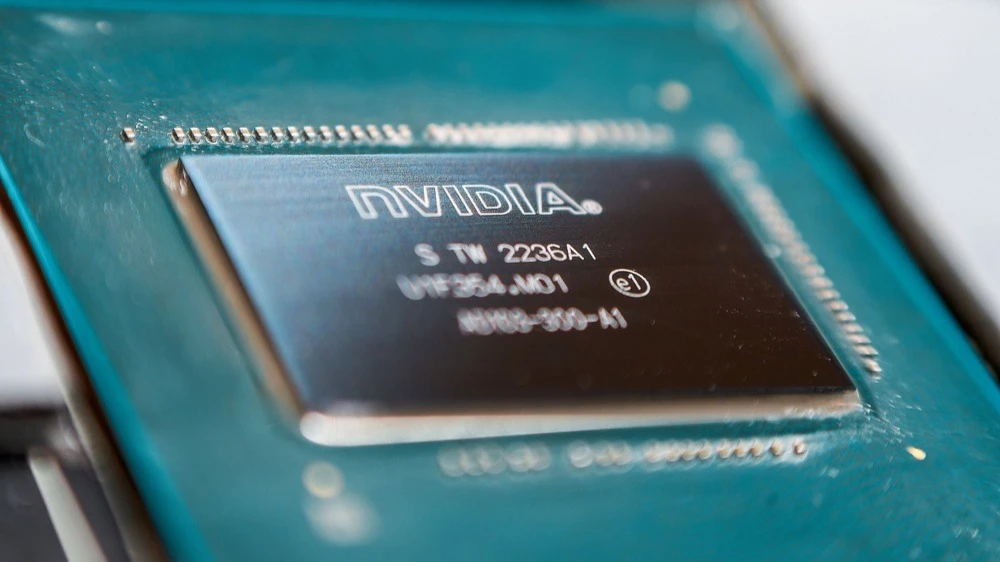
Business Insider notes that Nvidia’s stock has been looking much more “mortal” of late. After several years of almost “otherworldly” dominance, the company’s 14% gain since the start of 2026 is just two percentage points ahead of the S&P 500, the publication writes. And since mid-May, Nvidia’s stock has fallen 19% amid a widespread sell-off of chipmakers.
Nevertheless, Wall Street remains extremely optimistic about Nvidia. Seventy-nine out of 82 analysts recommended buying the company’s stock ahead of the earnings release.
This news story is being updated.
This article was AI-translated and verified by a human editor