Nvidia Takes a Back Seat: How Prominent Executives Have Readjusted Their Bets on AI
What Investment Gurus Bet On in the Third Quarter of 2026

In the third quarter, out of more than 500 funds that held Microsoft shares in their portfolios, 264 purchased additional shares of the company. Photo: Simon Ray / Unsplash
For every $100 invested in artificial intelligence infrastructure, about $25 goes toward accelerators, another $25 toward memory and other chips, and the remaining $50 goes toward networks, cooling, electricity, and buildings, according to calculations by analysts at BNP Paribas Equity Research.
However, hedge fund portfolios in the third quarter of 2026 reflected a different set of priorities: managers favored the stocks of tech giants, which are themselves investing billions in AI development.
Oninvest analyzed the third-quarter 13F filings of more than 500 funds, along with data from public sources, and identified the strategies that well-known fund managers used when selecting AI stocks.
Who has overtaken Nvidia?
The companies from the "Magnificent Seven" (all except Tesla) that are competing in the AI race remain among the top 10 most popular stocks held by hedge funds.
And this is happening despite the fact that the tech giants’ strategy in the race for artificial intelligence is beginning to cause more concern among investors. First and foremost, companies are increasingly raising funds to develop AI—in just the first eight months of the year, the volume of bonds issued by Alphabet, Amazon, Meta, and Oracle more than doubled the total for all of 2025. Investors have already begun demanding a higher risk premium on these bonds: for some issues, yields are higher than those of companies with investment-grade ratings.
However, there were changes within the list of the most popular stocks among hedge funds in the third quarter. Amazon retained the top spot in the ranking of the most popular stocks among hedge funds, while Microsoft and Meta moved up in the ranking to take second and third place. As of the end of September, shares of these two companies were among the top ten holdings of 109 and 108 funds, respectively—up from 87 and 77 funds at the end of June.
In the case of Microsoft, investors were effectively split into two camps: of the more than 500 funds that already held Microsoft shares in their portfolios in the second quarter, 264 increased their positions, while 245 reduced or closed them.
Among major Wall Street investors, Ken Griffin's Citadel and Steve Cohen's Point72 have significantly increased their investments in Microsoft.
Both funds purchased approximately 2 million shares each of the company. Citadel increased its stake by 55%—to $3 billion as of the end of September. Microsoft became the fund’s second-largest holding, accounting for 1.64% of the portfolio. Point72 increased its investment in Microsoft 65-fold. The company’s shares now account for 1.66% of the fund’s portfolio.
Daniel Leb's Third Point has opened a new position in Microsoft by purchasing 450,000 shares. The fund has allocated just over 5% of its portfolio value to the company.
Ken Fisher's Fisher Asset Management also increased its investment in the company by 2%. As a result, the company's share of the fund's portfolio reached 4%.
Bill Eckman's Pershing Square found itself on the opposite side of the fence—over the course of the quarter, it reduced its stake in the company by nearly 35%. However, Microsoft shares still account for a significant portion of his portfolio—6.77% of its value.
Back in May, Ekman said that the market was underestimating the resilience of Microsoft's business. According to him, its services are "virtually impossible to replicate."
Unlike niche software solutions, which may be replaced by more effective alternatives powered by artificial intelligence, Microsoft 365 is tightly integrated into the daily workflow of nearly every large enterprise.

Meta was losing popularity among hedge funds as early as the second quarter, but the situation changed in the third: according to Goldman Sachs’ estimates, it ranked among the top five AI-related companies with the largest net buying interest among hedge funds.
Two well-known fund managers bought Meta shares in the third quarter and made it one of their funds' top holdings.
In Daniel Loeb’s Third Point fund, this company’s securities are the largest holding in the portfolio. Steve Mandel’s Lone Pine Capital stake was worth $908 million at the end of the quarter —Meta shares account for 5.93% of the fund’s portfolio.
Several other funds also bought more of the company’s shares in the third quarter. ARK Investment Management, led by Cathie Wood, more than doubled its position to $355 million (just over 2% of its portfolio). Ken Griffin’s Citadel increased its stake by 64.4%, to $1.3 billion (0.73% of the portfolio), while Ray Dalio’s Bridgewater Associates nearly doubled its stake, to $160 million (0.69%).
Where Do the Funds Go?
In the third quarter, funds most actively reduced their holdings in energy and utility stocks linked to AI development. According to Reuters, from July through September, institutional investors closed more than twice as many positions in energy and utility companies as they opened—212 funds versus 96.
For example, Steve Cohen’s Point72 has completely exited its position in the shares of the electricity provider Vistra. Meanwhile, Bridgewater and George Soros’s fund have virtually sold off all their shares in NRG Energy.
Hedge funds have become less likely to include, among their largest holdings, stocks of companies that benefit from the growth in energy consumption by data centers.
GE Vernova and Vertiv, suppliers of energy infrastructure equipment, have been removed from the Goldman Sachs list.
The number of funds in which shares of the electricity supplier Vistra were among the top ten holdings fell from 18 to 15. Talen Energy was the exception: as of the end of September, its shares were among the top ten holdings of 27 hedge funds, compared with 18 a quarter earlier.
Semiconductors: Selective Betting on Memory and Equipment
Investors continued to increase their investments in the semiconductor sector during the third quarter. But even here, fund managers’ opinions on the industry’s prospects were divided: 51% of the funds that held shares in semiconductor manufacturers in the second quarter increased their positions, while 44.7% reduced them, according to Reuters.
Among chip manufacturers, hedge funds favored Intel and Astera Labs—a developer of high-speed data transmission solutions—in the third quarter.
At the same time, shares of the largest memory manufacturers were losing popularity among hedge funds, despite strong demand for their products. Micron, for example, reported that 75% of its 2027 output had already been sold. However, its stock fell out of the top ten assets favored by hedge funds. According to Goldman Sachs, the stock dropped from 7th to 11th place in the hedge fund popularity ranking.
At the same time, several major investors increased their positions in the company. Appaloosa Management founder David Tepper increased his stake in Micron by 28%, bringing it to nearly 18% of his portfolio. The company’s stock became the fund’s largest holding, displacing Amazon. Ken Griffin’s Citadel increased its stake in Micron to 0.43% of its portfolio, while Ray Dalio’s Bridgewater Associates increased its stake to 1.1%.
Semiconductor equipment manufacturers have also lost some of their appeal among hedge funds. Applied Materials and Lam Research dropped off Goldman Sachs’ list of the 50 most popular stocks, while ASML retained its spot on the list.
However, some large investors, on the contrary, increased their investments in this sector. Bridgewater nearly doubled its stake in Applied Materials. As of the end of September, it was valued at $288.1 million and accounted for 1.25% of the fund’s portfolio. David Tepper also opened a new position in the company worth $115.1 million, or 1.52% of Appaloosa’s portfolio.
Cloud Computing: Who's Still Buying?
In the third quarter, large investors lost interest in data center stocks: according to Reuters, at least 138 funds completely closed out their positions in these stocks. Meanwhile, cloud provider Nebius and data center operator Core Scientific were dropped in September from Goldman Sachs’ list of the 50 most popular stocks among hedge funds.
Nevertheless, several well-known fund managers took advantage of the decline in the share price of one of the largest players in the neo-cloud sector—CoreWeave, whose stock fell 12.5% during the third quarter.
Cathie Wood’s ARK Fund increased its stake in this company by 58% during the third quarter. As of the end of September, it accounted for more than 2% of her portfolio. This fall, Wood continued to build her position: for example, on November 12, she bought an additional approximately $16 million worth of CoreWeave shares as the stock price fell by nearly 7%.
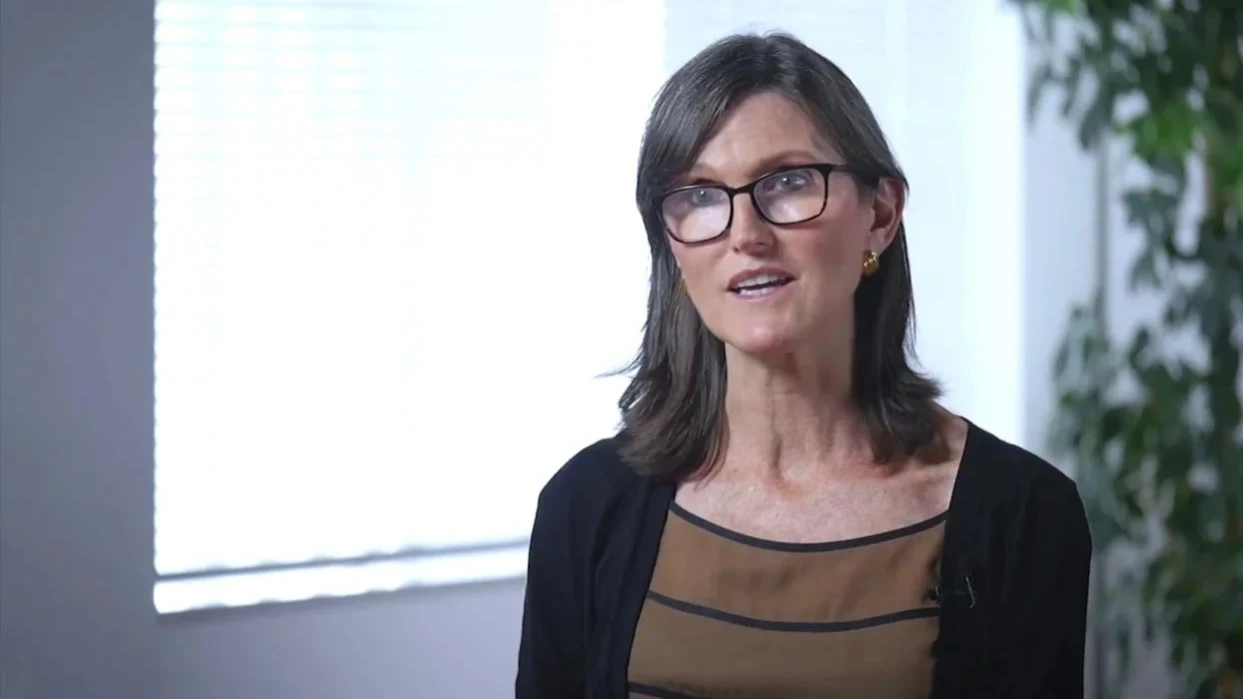
“I find it interesting that CoreWeave’s contracts are mainly with major cloud providers, and they’re backed by these contracts. So they must be bringing in good money,” Wood said in an interview with Bloomberg in mid-October.
David Tepper increased his stake in CoreWeave by nearly 13% (it now accounts for 1.39% of the Appaloosa portfolio), while George Soros’s fund has doubled its stake in the company, though its share of his portfolio remains small—0.82%. Ken Griffin’s Citadel and Steve Cohen’s Point72 each increased their CoreWeave holdings more than 22-fold, although the positions still account for a negligible portion of their portfolios.
At the same time, Citadel increased its stake in Nebius—a competitor of CoreWeave—by nearly 2.4 times, bringing the company’s share of the portfolio to 0.18%. Point72, on the other hand, completely exited the company.
Griffin was also actively buying shares of another cloud provider—IREN. During the third quarter, Citadel increased its stake in the company 12-fold; as of the end of September, the stake accounted for 0.14% of the portfolio. George Soros’s funds (0.02% of the portfolio) and Paul Tudor Jones’s funds (less than 0.01% of the portfolio) also opened positions in IREN.
***
In the “Guru Portfolios” section on Oninvest, you can track the composition and changes in the portfolios of the world’s largest investors and funds. The service allows you to analyze the largest holdings, new ideas, and changes in asset allocations based on 13F filings, as well as compare portfolio performance over time.
This article was AI-translated and verified by a human editor