Oil collapses, luxury rally, dollar falls: Trump's agreement with Iran has roiled markets
Tehran demands legalization of navigation fees in the Strait of Hormuz

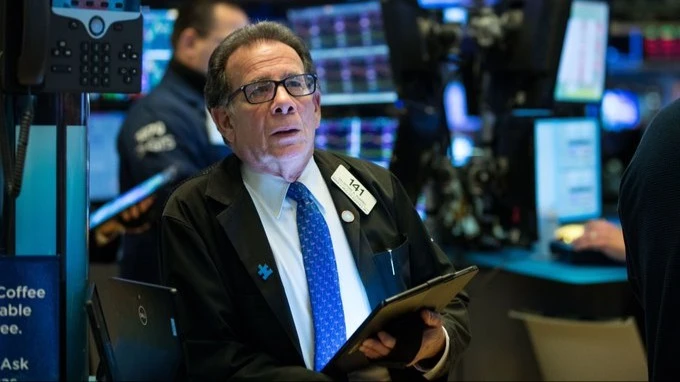
The truce in the Middle East supported stock prices and collapsed hydrocarbon prices / Photo: X/NYSE
The temporary ceasefire between the US and Iran has triggered a wave of optimism in the markets, supporting stock prices and causing a strong collapse in oil prices. We tell you what is happening on world markets two hours before the opening of trading in New York.
Details
- Energy prices collapsed synchronously: Brent crude futures collapsed by 14% - below $94 per barrel, and contracts for U.S. WTI lost 17%, falling to $93.6. Despite the deep correction, oil quotes still remain well above pre-war levels. At the same time, European gas futures slipped by more than 15% to about €45 per megawatt-hour, the lowest in five weeks, Trading Economics reports.
- Hong Kong stock market has renewed the weekly maximum: at the end of trading on April 8, the Hang Seng index added 3.1%. The rally was supported not only by the reduction of geopolitical risks, but also by the fall in oil prices coupled with the strengthening of the yuan, which gave investors back confidence. The growth drivers were shares of financial and technological companies: Semiconductor Manufacturing (+10.2%), Meituan (+10.2%), Pop Mart (+7.6%), Xiaomi (+6.1%) and Tencent (+3.8%).
- Taiwan's benchmark TAIEX index jumped 4.6%, extending the previous session's gains and reaching peak levels since early March. Almost all sectors, including technology, manufacturing and financials, ended trading in the green zone. Bonds of contract chip maker Taiwan Semiconductor Manufacturing Co. (TSMC), which accounts for more than 40% of the market capitalization, rose by 4.8%. Quotes assembler of Apple smartphones - Foxconn - added 5%.
- European stock indices rose sharply following the rally in Asia: the Stoxx 50 soared by almost 5%, and the broad market index Stoxx 600 added more than 4%, hitting a one-month high. The rally was driven by the consumer and technology sectors. The best dynamics were demonstrated by Antofagasta, ArcelorMittal, Lufthansa and ASML. On the contrary, the energy sector stocks went into deep negative territory.
- Frankfurt's DAX 40 index soared more than 5%, approaching its highest level in a month. The most active at the beginning of trading were the securities sensitive to energy prices: Siemens Energy, Lufthansa, Heidelberg Materials and Siemens. Infineon, MTU Aero Engines, Commerzbank and Deutsche Bank also showed strong dynamics.
- French stocks recovered to a one-month high. The CAC 40 index rose by 4.8%, recovering the losses of the previous session and reaching the highest level in more than a month. Shares of luxury manufacturers were the favorites: LVMH, Hermes and Kering soared more than 6%. The financial sector also showed strong growth: quotes BNP Paribas, Credit Agricole and Societe Generale added from 7% to 11%.
- British stock index FTSE 100 rose more than 3%, having updated the maximum since March and approaching the February records. The outsiders were energy companies: BP quotes were falling by 10% before slowing to 5%, Shell - by 9%, despite the strong results of the latter in oil trading. The rest of the sectors saw broad-based growth. The leaders were Antofagasta (+13%), EasyJet and Fresnillo (over +10%), as well as Rolls Royce and Anglo American, which added 9-10%.
- Futures on leading U.S. indices added at least 2.8%. Contracts on the Nasdaq 100 rose the most - by 3.5%. Investors are betting that falling energy prices will help curb inflation and support the economy, according to Bloomberg.
- The U.S. dollar, one of the main defensive assets during the Iran crisis, sagged 1%.
- The euro rose to $1.17, strengthening to its highest level since late February. The ceasefire triggered capital flows into risky assets, while a sharp drop in oil and European gas prices forced investors to temper expectations for an ECB interest rate hike. Markets are currently pricing in only two rate hikes this year instead of three before the ceasefire.
- Gold rose more than 2% in trading, above $4850 an ounce, and silver rose nearly 6%, breaking through $77 an ounce: precious metals traditionally benefit from low interest rates.
Context
U.S. President Donald Trump announced the truce less than two hours before his ultimatum to unblock the Strait of Hormuz under threat of strikes on Iran's civilian infrastructure expired, in response to which Iranian authorities promised to stop counterattacks and ensure safe transit.
Tehran proposes to include a clause in the truce agreement that would allow transit fees to be charged to ships in the Strait of Hormuz, a key international oil artery whose passage was free before the war, the Associated Press reports. According to Reuters, Iranian authorities want the long-term peace agreement to also give the Islamic Republic the right to set fees for passage through the strait, and to vary them depending on the type of ship, the nature of the cargo and current conditions.
This article was AI-translated and verified by a human editor