Ryanair prepared for 'armageddon' amid fuel crisis
The carrier has fixed prices for 80% of the required fuel for the summer period

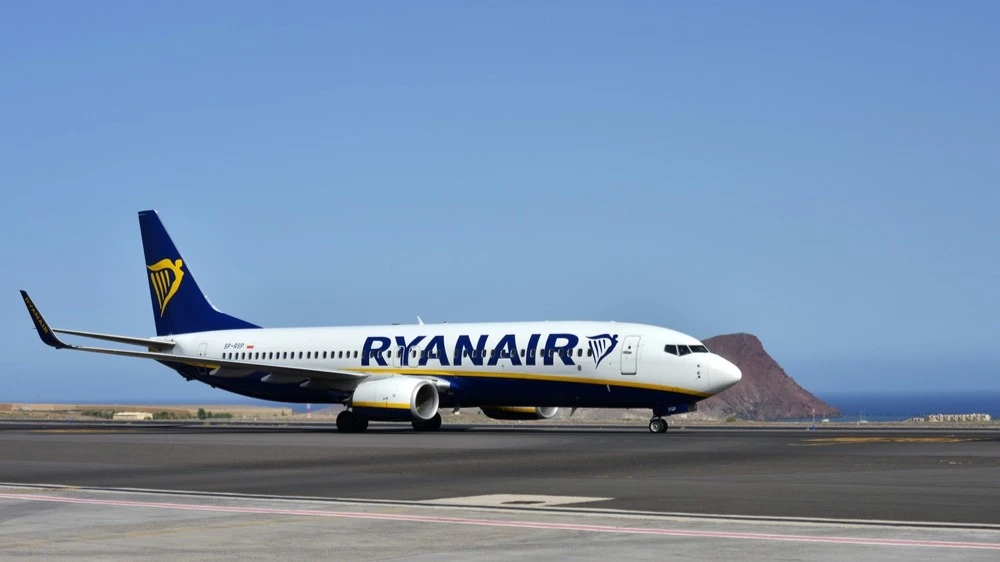
Irish low-cost carrier Ryanair has developed a plan in case of "armageddon scenario" / Photo: teal sun/Shutterstock
Irish low-cost carrier Ryanair has developed a plan in case of "armageddon" due to the fuel crisis, but now the company is operating normally, the carrier's CFO Neil Sorahan told CNBC. Ryanair, according to him, has fixed prices in advance for 80% of the fuel needed for the summer. But due to the rising cost of kerosene, aircraft repairs and rising crew salaries, the company's annual costs may still rise.
Details
Against the background of the closed Strait of Hormuz since the end of February and doubled the price of aviation fuel Ryanair, despite the fact that in advance fixed the price of 80% of the necessary fuel for the summer season - at $67 per barrel, or about $668 per ton - still had to increase fuel costs by "several hundred million" euros after the war began. This was revealed by Neil Sorahan in an interview with CNBC. He did not give the exact figure of the increased costs. However, he assured that the airline has no plans to cancel flights in the near future.
"Do we have plans for some semblance of Armageddon? Of course we do, but I don't think it will come to that," Sorahan said. - At the moment, we are flying a full summer schedule and plan to maintain full capacity in the winter," he added. "In the winter," the top company executive continued, "I think we will see some of the weaker carriers that were struggling even before the war started, possibly on the verge of bankruptcy.
Sorahan did not disclose what measures Ryanair has developed to support its own business. The carrier's management expects that the hedged cost of 80% of the required fuel for the summer season against the background of the ongoing blockade of the Strait of Hormuz will give Ryanair a serious advantage over its competitors. However, the remaining 20% of kerosene the low-cost carrier is forced to buy at current spot prices, which have now risen sharply. In part because of this, as well as against the backdrop of rising personnel and maintenance costs, Ryanair expects unit costs in fiscal 2027 to rise by "a mid-single digit percentage " - about 4-6%.
Specific forecasts on future profits, according to the carrier's management, "it is too early". The reason is strong price volatility, supply instability and a complete lack of understanding of how long the conflict in the Middle East will last, Bloomberg notes.
For now, Ryanair is not "too concerned" about jet fuel supplies as Europe's dependence on the Strait of Hormuz declines, Sorahan said: suppliers are now buying oil from the US, Venezuela and Brazil, among others. "Right now we are obviously in a very volatile oil market. If you go back a couple of months, we may have had some concerns about supply, but now we are increasingly confident that there will be no problems with oil this summer [in the context of jet fuel]," he opined.
Against the backdrop of the U.S.-Israeli war against Iran, jet fuel prices on the world market have soared from $85-$90 to $150-$200 per barrel.
What are Ryanair's financial results
Also on Monday, Ryanair reported the results of its most recent fiscal year, which ended in March. The carrier reported a 40% year-on-year increase in net profit to almost €2.3 billion ($2.7 billion), while passenger traffic increased by 4% to 208.4 million. At the same time, the company's revenue fell 11% to €15.54 billion ($18.09 billion) year-on-year.
The airline plans to carry 216 million passengers in the current fiscal year, a 4% increase over last year's figure.
Ryanair has no plans to introduce fuel surcharges (an additional fixed mark-up that airlines build into the price of a ticket) yet, Sorahan noted, but he added: "We haven't promised that tickets won't go up in price. Our strategy is 'active load, passive yield'. Simply put, we regulate prices so that we can fill the planes to capacity, so the final price of a ticket is largely determined by the passenger and his willingness to pay.
What about the stock
After the publication of the annual report Ryanair shares fell by 3.6% at the trading in Dublin on May 18, but later recovered the losses and at the time of publication are growing by a symbolic 0.05%. In total, since the beginning of the year, the company's capitalization has fallen by about 25%. Ryanair securities on Nasdaq add 3.3% on the premarket on May 18, since the beginning of the year they are down by more than 26%.
Of the 19 analysts who monitor the company's securities in Ireland, 16 advise to buy the low-cost carrier's securities, three - to hold. The average target price of Ryanair shares - €31.45 - suggests their growth of almost 43% relative to the last closing in Dublin.
This article was AI-translated and verified by a human editor