Oninvest opens guru portfolios
The new service allows you to follow famous investors and their thinking style, successes and failures
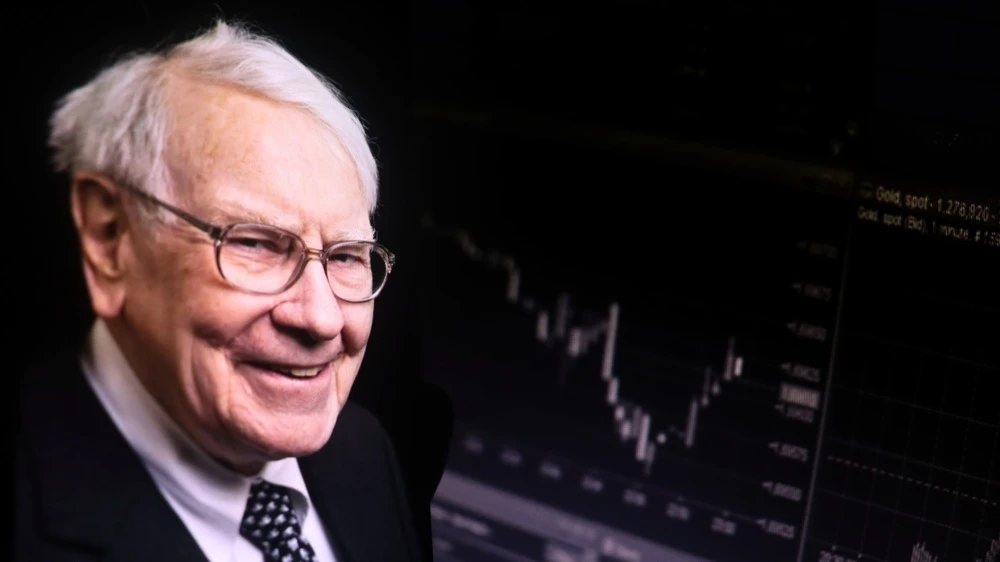
Warren Buffett saw the ability to remain calm during periods of market turmoil as an investor's greatest asset / Photo: Creative Salim / Shutterstock.com
Last year, we followed with great interest which stock Warren Buffett's Berkshire Hathaway fund was secretly buying into its portfolio. We argued, made bets, tried to guess. Soon it turned out that the fund was secretly buying Unitedhealth Group, having received permission from the SEC not to disclose the deal until it had collected the entire position. The decision of both the regulator and the fund was quite justified - immediately after the deal was disclosed, the stock rose by more than 10% just because investors found out what Buffett's fund was buying.
It's not unusual for investors to follow and replicate the trades of big-name managers in an effort to achieve the same success. But the investment strategies of famous investors are not just interesting to follow for the sake of following their example. Their strategies reflect their philosophies and thinking patterns, many of which determine success in life, not just in the stock market.
For example, Warren Buffett, who has already retired from business, did not try to predict the market, but looked for quality assets at a good price. For Buffett, it was fundamentally important that the company whose shares he was buying had a so-called economic moat - an advantage that limited the influence of competitors. In his letters and speeches, he talked a lot about patience and discipline and considered the ability to remain calm in times of market turmoil as an investor's main asset.
The Berkshire Hathaway fund is now managed by Greg Abel. In his first letter to investors, he confirmed that he will adhere to Buffett's philosophy, and his approach will remain the same - not to make deals just for the sake of deals, but to wait for really good opportunities.
Another famous investor, Howard Marks, goes further. He believes that it is not enough just to determine whether the company in front of you is a good one. You need to understand what is already built into the price and how wrong other investors' expectations are. He calls this second-level thinking. Marks also pays a lot of attention to economic cycles and crowd psychology, believing that you can't predict the future, but you can prepare for it.
Li Lu - founder of Himalaya Capital - is grounded in the principles of Benjamin Graham, Buffett and Charlie Munger: long-term ownership of high-quality companies with a sustainable "economic moat," high growth potential and credible management. Li Lu favors small-cap bets and can hold individual positions for decades, ignoring short-term noise and focusing on the fundamental value of the business.
Point72 founder Steve Cohen represents a completely different type of investment thinking - fast, adaptive and tactical. The fund relies on the speed of information processing, flexibility and constant adaptation to the changing market.
Cathie Wood, in her turn, bets on breakthrough innovations and is ready to buy unprofitable companies in the expectation of a breakthrough in the future. ARK Invest invests in artificial intelligence, robotics, genomics, blockchain, autonomous transportation and other promising technologies. This approach requires a high tolerance to volatility: ARK portfolios often experience sharp drawdowns, because the bet is made not on the stability of current cash flows, but on potential leaders of the next technological cycle.
In order to follow famous investors and their style of thinking, successes and failures, Oninvest opens a section called "Guru Portfolios". There are only 19 portfolios in it so far, which we have selected voluntaristically - the ones we are interested in. Portfolios can be sorted by size or profitability. In the second case, the reader will immediately see which of the gurus managed to beat the S&P 500 index in the last reporting quarter.
This article was AI-translated and verified by a human editor