"Shocktober" is the perfect time to buy stocks, according to a Citadel strategist. Why?
This month has a bad reputation among investors, but is it justified?

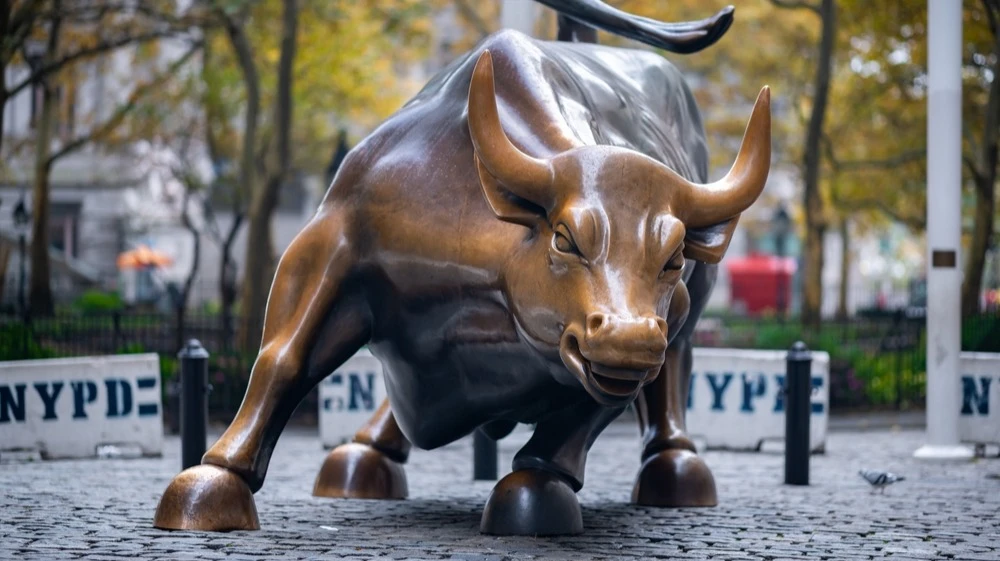
Citadel Securities called October the perfect time to buy stocks / Photo: VOJTa Herout / Shutterstock
September lived up to its reputation as a challenging month for investors, but the situation may improve in October, according to Scott Rubner, chief equity strategist at Citadel Securities. The analyst presented arguments in favor of market growth for the remainder of the year and explained why this is the ideal window for buying stocks, according to Business Insider.
Details
Following the market's rebound in September, new sources of growth are emerging in October, although the upward trend in stock prices may not be linear, Rubner emphasized in a blog post on the Citadel Securities website.
“October may still bring volatility and [provide] a better entry point. But positioning has become clearer, valuations are lower, profits are returning, and several of the market’s largest buyers now have significantly more opportunities to participate,” he believes.
Among the growth drivers, Rubner highlighted the “Super Bowl” of the earnings season, which will take place in late October: 44% of companies in the S&P 500 and 38% of those in the Nasdaq 100 will report their results, including the largest tech giants that supported the market in the second half of the year.
“Corporate profits in the U.S. rose 22.8% year-over-year in the second quarter, reaching a record $4.83 trillion, marking the highest annual increase since the fourth quarter of 2021,” Rubner said. He noted that profit growth has been accelerating for four consecutive quarters, while nominal GDP increased by 6.6% over the same period. “This resilience is once again evident ahead of the third-quarter earnings reports,” he added.
In addition, Rubner expects buyers—corporations, funds that use algorithmic trading strategies, and individual investors—to return to the market. According to him, funds appear to have finished selling, and retail activity traditionally picks up at this time of year.
“Cash trading volume increased by an average of about 8% from September to October in each of the last four years, while options trading volume grew by an average of 15% in each of the last three years,” Rubner noted.
According to the analyst, historically, September sees the lowest volatility in individual stocks before it begins to increase in October and November amid corporate earnings reports and year-end cash flows. Rubner believes that this is where the main opportunity lies: index volatility has normalized, but the range of potential growth opportunities within the index itself remains significantly broader.
Not everyone agrees with him
The stock market is likely to underperform in October, Barron's reported, citing a new study. In the months that mark the start of a new calendar quarter, the market typically moves in the opposite direction of the trend seen in the second month of the previous quarter, according to the study “Correlation Neglect in Asset Prices,” published in September. This is also linked to the earnings release schedule.
In August 2026—the second month of the third quarter—the S&P 500 index rose 2.6%, compared with a historical average of 0.7% per month over the past 100 years. According to the study’s logic, this is precisely what increases the likelihood of a pullback in October.

In addition, October itself has a bad reputation among investors because it was during this month that the two biggest market crashes in U.S. history occurred—“Black Thursday” in 1929 and “Black Monday” 1987. Because of this, October is sometimes called “Shocktober,” as Barron’s noted.
What's next?
The S&P 500 broad-market index could fall to 5,000 points by the end of 2027—a 35% drop from its most recent closing price— warns the British brokerage firm Panmure Liberum.
Strong growth in corporate earnings and solid economic indicators are still supporting stock prices. However, the upcoming third-quarter earnings season, as well as companies’ 2027 forecasts—which will begin to be released early next year—will serve as an important test of how sustainable the current positive trends are, according to Panmure.
Her forecast differs from the estimates of several other brokerage firms. Many of them expect the S&P 500 to end 2026 at 8,000 points or higher, with the bull market continuing into next year, Reuters notes.
S&P 500 futures were up about 0.25% ahead of the opening of regular trading on October 6. The index rose just 0.9% in September, but has gained more than 13% since the beginning of 2026.
This article was AI-translated and verified by a human editor