Short Selling: How Carl Icahn Lost $22 Billion Betting Against the Market
Warren Buffett once said, “Never bet against America.” Carl Icahn didn’t listen to him—and lost most of his capital.
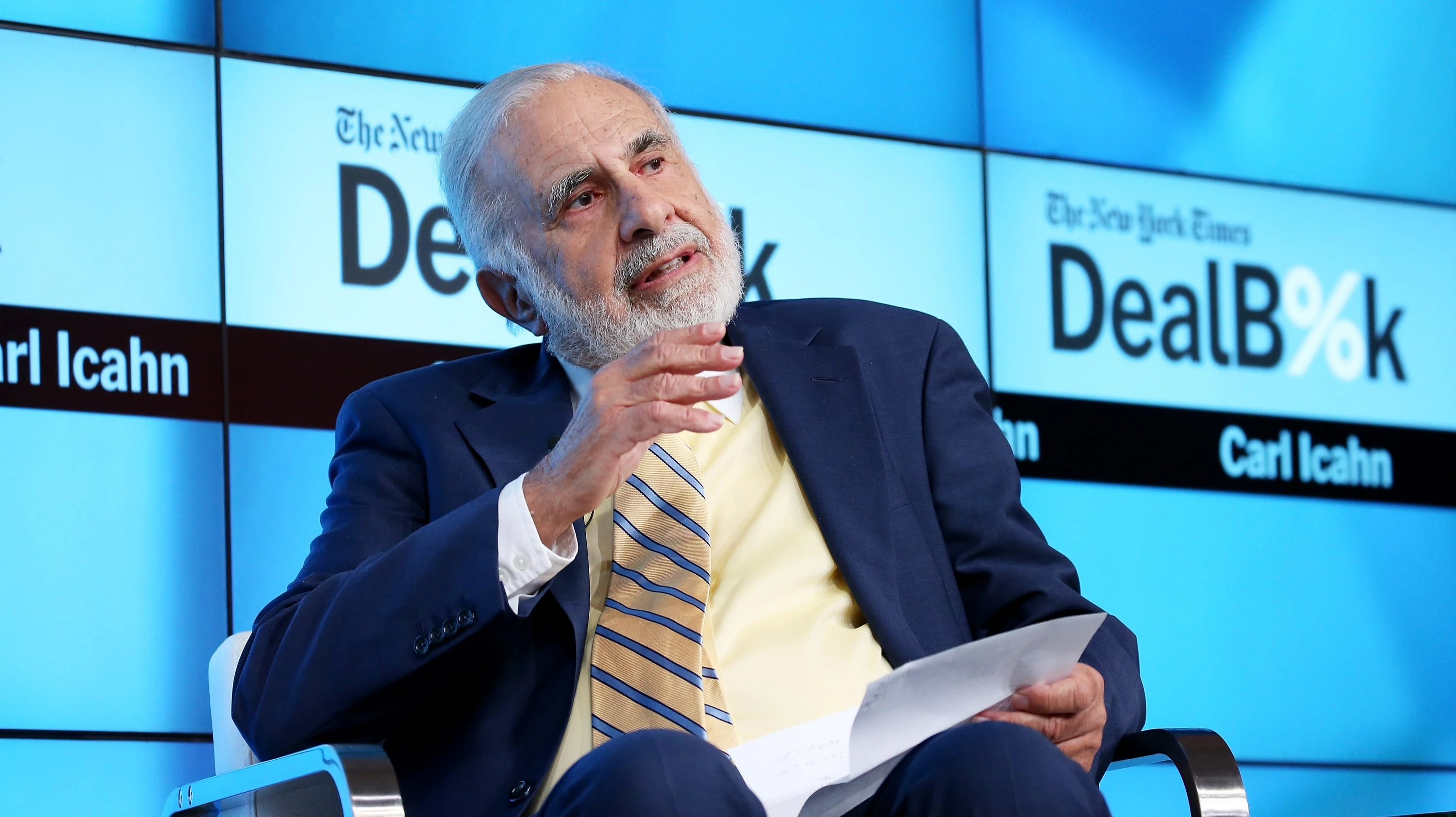
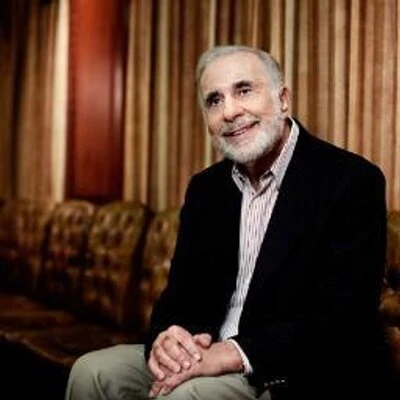
In 2023, Icahn admitted in an interview with the FT that he had made a mistake in trying to predict an imminent market crash / Photo by Neilson Barnard/Getty Images for The New York Times
Carl Icahn, one of the most famous corporate raiders in the U.S., failed to make the list of America’s richest billionaires—which Forbes publishes every fall—for the first time in 40 years. According to the magazine’s estimates, his net worth fell from $26 billion in 2014 to $4.1 billion, which was below the threshold for inclusion in the ranking.
The investor disputes Forbes’ valuation. But he himself had previously acknowledged publicly that his strategy had resulted in losses amounting to billions. For many years in a row, Icahn aggressively bet on stock crashes, losing money in the process. If he had invested all his capital in the S&P 500 index in 2014, he could be among the top 10 richest Americans today, according to Forbes’ calculations. What drove the investor to stubbornly go against the market?
On the Path to Iconic Status
Icahn first appeared on the list of America’s richest people in 1987. That same year, he became a part of popular culture with the release of Oliver Stone’s film *Wall Street*, whose main antagonist—the unscrupulous financier Gordon Gekko, played by Michael Douglas—was partly modeled after Icahn.
By that time, Icahn had been investing for a quarter of a century. Coming from a modest background, he worked his way into Princeton, where he studied philosophy. Icahn paid for half of his education with winnings from poker, a game he learned from books and by watching the players at the beach club where he worked part-time. After Princeton, Icahn enrolled in medical school but dropped out and joined the military before ending up on Wall Street.
In 1961, with the help of his uncle, the wealthy entrepreneur Elliot Schnoll, Icahn landed a job as a broker at Dreyfus Corporation, an investment firm that was at the forefront of the mutual fund industry, and in 1968, he opened his own firm, Icahn & Co. To pay the $400,000 fee for a seat on the New York Stock Exchange, he borrowed money from his uncle.
At first, Icahn specialized in arbitrage—he bought shares in the hope that a buyout offer at a premium would drive up their value. By the late 1970s, he had developed his own strategy: he began acquiring large stakes in underperforming companies and pressuring management to implement changes—such as asset sales, strategic shifts, or payouts to shareholders. One of the first companies where Icahn did this was the American home appliance manufacturer Tappan. In 1978, the investor became a shareholder in the company and joined its board of directors, and subsequently secured its sale to the Swedish company Electrolux. The deal netted him $2.7 million in profit.
"Corporate Democracy"
Perhaps what made Icahn most famous as a ruthless corporate raider was the story of Trans World Airlines, once one of the largest airlines in the U.S. but facing financial difficulties. In 1985, Icahn bought its shares and gained control, and three years later, he took the airline private. TWA bought back shares from investors at $20 apiece and bonds with a face value of $30. As a result of the deal, Icahn and his entities received approximately $469 million, but instead of bonds, they received preferred stock. Thus, the investor came to control about 90% of the company.
In 1993, Icahn stepped down from TWA’s management but continued to profit from the company. His companies lent the carrier about $200 million, and after the loan went into default, Icahn’s firm, Karabu, gained the right to purchase tickets from TWA at a discount of up to 45% and resell them—even after the debt was repaid. TWA, which was forced to file for bankruptcy, did not succeed in terminating the onerous contract until 2001 through the courts. It was said that Icahn was profiting from the airline without solving its problems.
Icahn himself detested the term “corporate raiding,” claiming that he was engaged in “corporate democracy” in the interests of shareholders. At the same time, his deals were not always beneficial to other investors. In the 1980s, Icahn actively used greenmail tactics: he would buy up shares and then force the company to buy back his stake at a premium. In 1980, office equipment supplier Saxon Industries bought back nearly 10% of its shares from Icahn and his partners at a price above market value to avoid a battle for control of the company. Icahn made $2.7 million.
Apple was among the companies where Icahn engaged in activist investing. In 2013, the investor stated that he considered the company “extremely undervalued” and acquired a large stake. On the same day, Apple’s stock rose by nearly 5%. This market reaction was later dubbed the “Icahn effect”: investors were counting on him to bring about changes that would boost the company’s market capitalization. The billionaire’s stake in Apple was less than 1%, but even with that stake, he was able to negotiate with management.
Icahn sought to nearly triple Apple’s share buyback program—to $150 billion. Reducing the number of shares would have increased the proportion of the company represented by his stake, while rising stock prices would have increased the value of the investment itself. Icahn partially achieved his goal: Apple increased its buyback program to $90 billion. In 2016, Icahn exited the position, realizing a profit of approximately $2 billion.
Thanks to a string of successful investments, Icahn’s fortune grew dramatically, and he remained one of Wall Street’s most aggressive activists. In 2013, he took the opposite side in Bill Eckman’s billion-dollar short position against Herbalife, sparking a fierce public feud that ultimately earned Icahn about $1.3 billion. Ekman lost nearly $1 billion on the deal.
The Big Short 2.0
By 2014, Icahn’s net worth had reached $26 billion—Forbes named him the richest investor on Wall Street. For four years, his investment funds outperformed the market, delivering an average annual return of more than 25%. For much of that period, his portfolio was hedged: his equity investments were offset by large short positions in the S&P 500 index.
It was precisely these large bets against the market that were the main reason why Icahn had been losing money since 2014, the Financial Times reported. At one point, the market value of the securities he was betting would fall exceeded $15 billion. According to the publication’s calculations, the investor lost about $1.8 billion in 2017 alone. In total, from 2017 through the first quarter of 2023, Icahn’s activist investments yielded about $6 billion in profits, while his bets on a market decline resulted in nearly $9 billion in losses.
"I've always said that no one can accurately predict market movements in the short or medium term. Perhaps in recent years I myself have made a mistake by not following my own advice."
After the 2008 crisis, Icahn increasingly bet on another market downturn, the FT reported. His strategy included short positions in indices, individual stocks, commercial mortgages, and debt securities. In late 2019, he invested $622 million in credit default swaps (CDS), anticipating widespread defaults on commercial real estate loans, including those for shopping centers. Such swaps allow investors to profit if borrowers default on their debts and the value of the bonds backed by those loans falls. The media dubbed this strategy “The Big Short 2.0” in honor of the movie *The Big Short*, which chronicled the 2007–2008 mortgage crisis.
The closure of shopping malls due to the pandemic earned Icahn $900 million in 2020 alone. The investor called the deal “one of the best short positions” of his career, but instead of taking profits, he increased his investment to $2.1 billion, anticipating a repeat of the 2008 real estate crisis. In 2022, the unrealized loss on these positions reached $742 million.
The fate of individual malls, such as Crossgates in New York State, played a decisive role. Its debt was sold at auction to the hedge fund Cannae Portfolio Advisors and Morgan Stanley for $162 million. This amount prevented losses that would have resulted in Icahn receiving payments under the swaps. The investor called the market “rigged” and suspected that the counterparties to the transaction were engaging in manipulation.
His long-term portfolio was also suffering losses at the time. By the spring of 2020, Icahn was the largest shareholder in the Hertz car rental service, holding approximately 39% of its shares. But the pandemic caused travel demand to plummet, and Hertz filed for bankruptcy protection. Icahn sold his entire stake, recouping less than $40 million of the $1.88 billion he had invested.
The latest blow to the investor was an attack by short sellers. In 2023, the activist group Hindenburg— known for its investigations into prominent market participants—accused Icahn Enterprises, a company owned by Icahn, of overstating the value of its assets and concealing debt. This led to a collapse in Icahn Enterprises’ stock price and hit Icahn himself, who had used a significant portion of the company’s shares as collateral for loans. The financier’s personal losses exceeded $8 billion, according to The Wall Street Journal. In 2024, Icahn and his company paid the authorities $2 million for failing to disclose information to investors in a timely manner regarding the use of shares as collateral for personal loans.
In August, S&P Global Ratings downgraded Icahn Enterprises’ credit rating from BB− (moderate risk) to B+ (high risk). It noted that, with the exception of 2025, Icahn’s investment funds have posted losses every year since 2019—primarily due to bets on a market decline. Icahn’s funds posted a net loss of $591 million for the first half of the year.
______________________
In the “Guru Portfolios” section on Oninvest, you can track the composition and changes in the portfolios of the world’s largest investors and funds. The service allows you to analyze the largest holdings, new ideas, and changes in asset allocations based on 13F filings, as well as compare portfolio performance over time.
This article was AI-translated and verified by a human editor