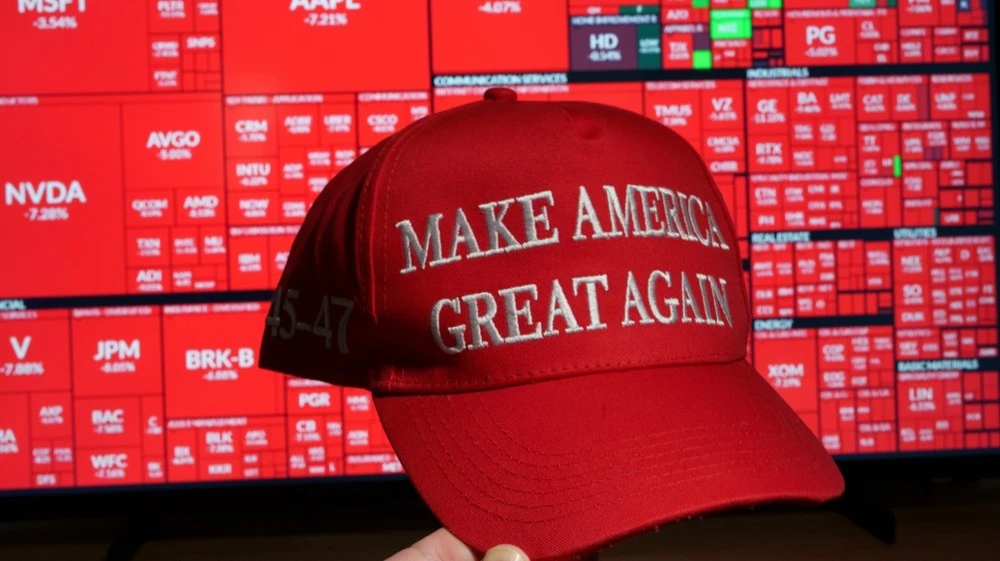
The AI bubble threatens to trigger the worst S&P 500 crash since the 2008 crisis: Strategist expects a 36% decline

The artificial intelligence investment bubble will burst in 2027–2028, according to a strategist at Panmure Liberum investment bank / Photo: M. Knijnenburg / Shutterstock
The artificial intelligence investment bubble will burst in 2027–2028, triggering the sharpest stock market decline since the 2008 crisis, warned Joachim Clement, head of market strategy at the British investment bank Panmure Liberum, according to calculations cited by Bloomberg. Based on his projections, the S&P 500 index could plummet by 36% from current levels. This forecast was the most pessimistic compared to the views of seven other strategists tracked by the agency. On average, they expect the S&P 500 to rise 14% by the end of 2027.
What the expert predicts
Clement’s baseline scenario assumes that the current stock market boom, driven by advancements in AI, will end in 2027, leading to a sharp drop in stock prices. According to him, hyperscalers’ free cash flows have largely been exhausted, while the cost of debt is rising rapidly and becoming prohibitively high for these companies, Bloomberg reports.
According to the strategist’s forecast, the S&P 500 index will fall from its current level of 7,802 points to 5,000 by the end of 2027. Meanwhile, the European benchmark Stoxx 600 will fall by more than 30%—to 430 points.
This year, stock prices around the world have risen to record levels, driven in part by optimism over the rapid growth in AI infrastructure spending, the agency notes. According to Bloomberg Intelligence, hyperscalers’ capital expenditures on data centers could more than double by the end of 2026, reaching $713 billion. This figure is expected to continue growing, albeit at a slower pace, a trend that previously underpinned many earnings forecasts for U.S. technology companies.
“We’ve reached a point where people are focused on only one thing—profits, specifically profits in the tech sector,” said Clement. “And they use this as an excuse for any macroeconomic, credit-related, or other negative factors you can think of.”
A strategist at Panmure Liberum was one of the first among major institutional analysts to predict the imminent end of the current “bull” trend, Bloomberg notes. At the same time, Clement radically changed his forecast in just a few weeks: as recently as mid-September, his base-case scenario called for the S&P 500 to soar to 8,300 points by the end of next year. The sharp shift reflects concerns that persistent inflation and the associated rise in borrowing costs—necessary to finance investments—could derail the AI infrastructure boom, Bloomberg reports.
How to Protect Your Portfolio
The strategist did not advise clients to sell their assets right now, but recommends developing a contingency plan in advance and using timing tools to help identify the start of a crash. His main recommendation is to “go fully defensive” as soon as the S&P 500 falls below its 200-day moving average (the index’s average value over the past 200 trading days, which investors use to assess long-term market trends). If this happens, he suggests selecting “ultra-defensive” sectors, including stocks in the food, tobacco, and pharmaceutical industries.
What Others Are Saying
Bloomberg notes that Clement's position echoes a recent warning from Rohit Sipahimalani, chief investment officer at Temasek International, that a reversal of the AI trend poses a key risk to global markets.
Ray Dalio, founder of Bridgewater Associates, expressed a similar view. He called the situation surrounding artificial intelligence a “classic bubble” that is nearing the point of bursting. According to the billionaire investor, AI projects are financed by massive amounts of debt, and as interest rates rise, a crash is inevitable. Dalio added that the threat is also exacerbated by investors’ need to convert their accumulated capital into cash.
Bank of America has also pointed to signs of a bubble in the U.S. technology sector. The bank’s analysts suggest the following strategy: investors who are wary of buying and holding big-tech stocks can benefit from the rally and avoid the consequences of a crash by using equity derivatives.
Michael Burry—an investor known as the inspiration for the protagonist in the movie *The Big Short*—turned to derivatives. In late September, he announced that he had restructured his portfolio and replaced all short positions in the AI sector with put options, betting on a market decline over a shorter time horizon. Burry has long held a pessimistic outlook: in May, he compared the current situation to “the final months of the 1999–2000 bubble,” and in August, he warned of a possible crash comparable to “Black Monday” in 1987.
At the same time, Citigroup strategists are more optimistic: this week, they stated that steady corporate earnings in 2027 could support further growth in global stocks, despite high interest rates and geopolitical risks.
This article was AI-translated and verified by a human editor