SpaceX at $100? In the coming days, the market will put Musk's strategy to the test

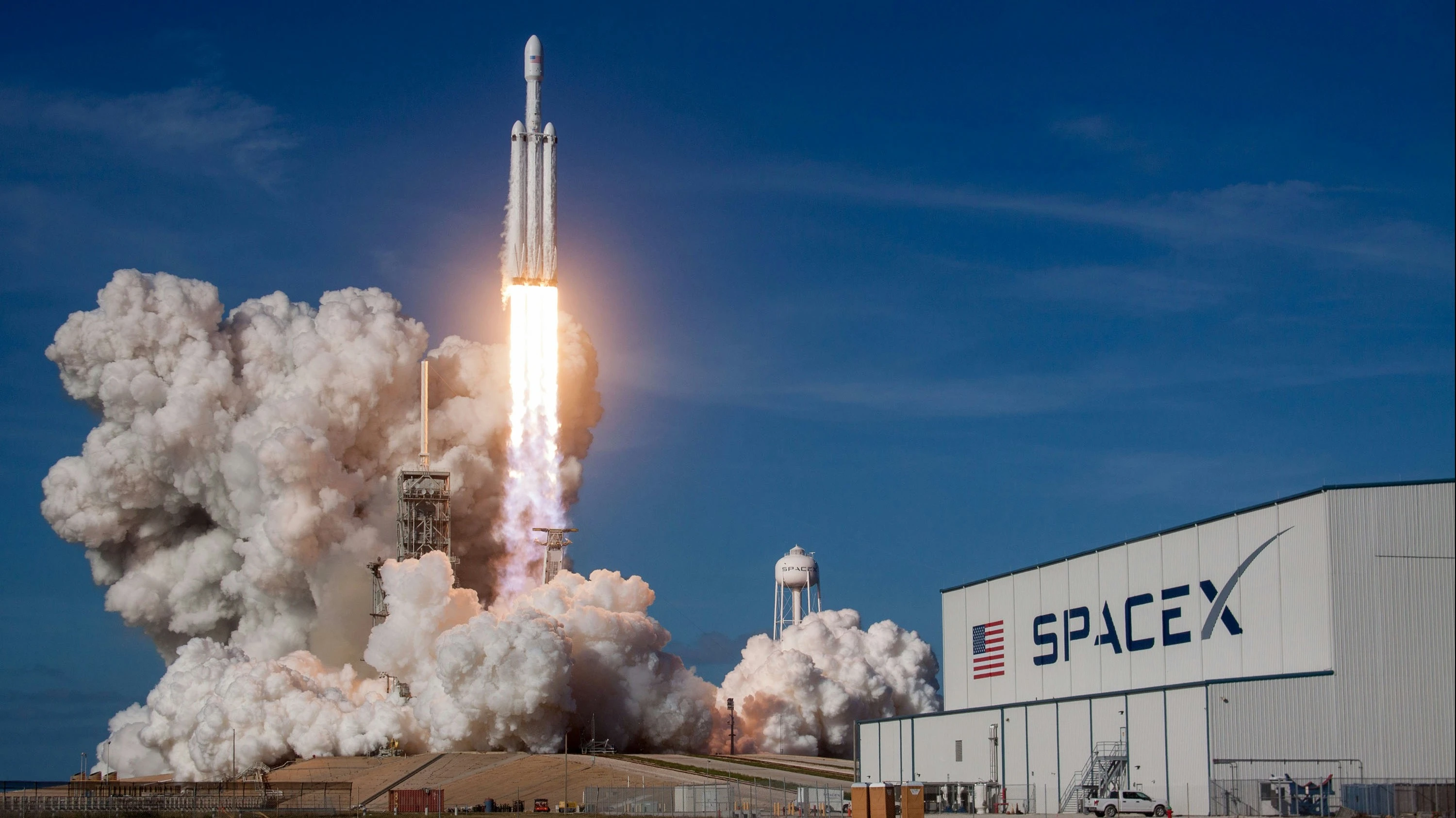
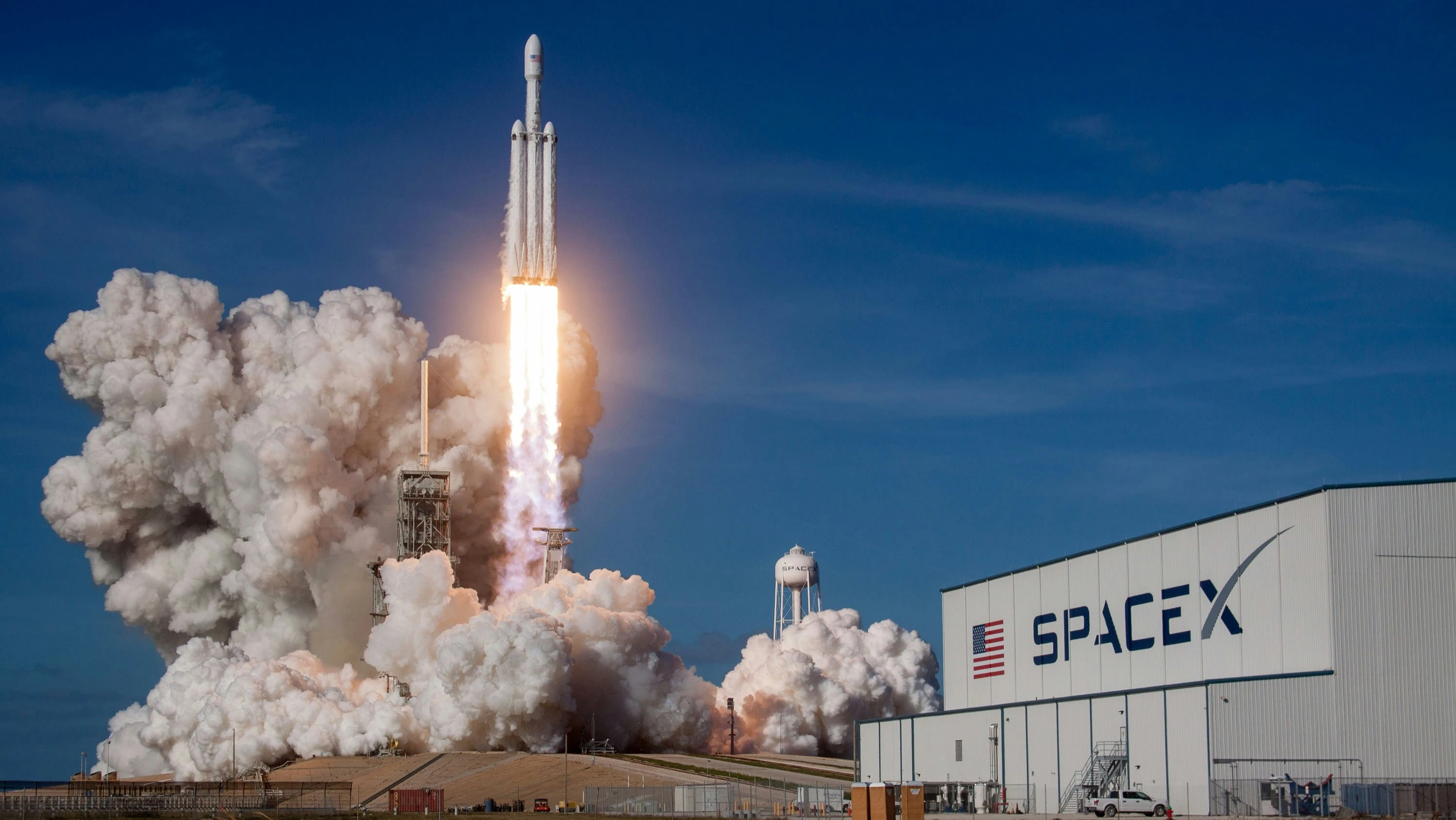
The end of the first lock-up period for SpaceX investors could prove to be even more significant in terms of its impact on the stock price than the company’s first financial report. Photo: SpaceX / Unsplash.com
SpaceX shares, which have fallen by nearly half from their peak since the IPO, could drop further. Analysts at Morgan Stanley do not rule out the possibility that the price could fall to $100, which is 12.7% below the closing price on July 3.
The reason is that the first lock-up period ends on August 6, after which a number of early investors and insiders will be entitled to sell their shares. In total, they can bring up to 911.5 million shares to the market, which is nearly one and a half times the current number of shares outstanding.
In terms of its impact on stock prices, this event could prove to be even more significant than SpaceX’s first financial report, accompanied by comments from its CEO, Elon Musk, and other top executives, according to the investment portal Motley Fool.
The report itself will be published on August 4. And it’s not certain that it will answer the key questions investors have—questions that are only growing in number.
The decline in SpaceX’s stock price comes amid growing doubts about the wisdom of spending billions (or, more precisely, trillion-dollar) spending on AI infrastructure without a guaranteed return—especially given the unpredictable consequences of a war between the U.S. and Iran, the entirely predictable rise in oil prices, and mounting inflationary risks.
This is further fueled by the growing perception that AI is just another market bubble on an unprecedented scale. While a few years ago, public concerns were mainly of an existential nature—that artificial intelligence would spiral out of control, destroy humanity, or, at the very least, take away people’s jobs— the prevailing sentiment now is “enough is enough with AI.”
SpaceX for $100—what is it?
If the price drops to $100, it would be fair to say that not only has a psychological threshold been breached, but that Elon Musk’s company’s AI segment has effectively lost value. At least, that’s the view of analysts at Morgan Stanley.
According to a bank memo dated July 24, 2026, if SpaceX’s business is divided into two parts — rocket launches and Starlink, as well as AI — it turns out that at a share price of $100, investors either attribute no value at all to the company’s AI division or, in fact, value it at a negative $300 billion.
Furthermore, this means that the market expects EBITDA from rocket launches and the Starlink business to be approximately 30% below Morgan Stanley’s baseline forecast by 2028.
The bank itself set a price target of $300 for SpaceX shares with an “outperform” rating, which corresponds to a buy recommendation.
Thus, for $100, investors are effectively getting an option on the company’s entire AI business for free, while its core segment—rockets and Starlink—already justifies the current stock price.
SpaceX operates in three areas: communications, space, and AI. Strictly speaking, Starlink is the company's only profitable division.
"We believe that the current disconnect between growing investor pessimism and virtually unchanged fundamentals presents an attractive entry point for SpaceX shares," according to a Morgan Stanley note.
The bank is not alone in its optimism—although the Wall Street consensus price is slightly lower at $231.82, 28 out of 38 analysts recommend buying SpaceX stock.
What Determines Growth?
Back when SpaceX was just preparing for its IPO and announced that it would be priced at $135 per share, many on Wall Street were saying that expectations for its growth were too high.
For example, analysts at The Morningstar believed that the fair value for the stock of a company whose strategy is based on a belief in lunar and Martian exploration was $63, and $62 by the end of the year.
And Brett Linzi, head of industrial research at Mizuho,told Bloomberg that the company's future depends, in one way or another, on Starship's success.
Strictly speaking, Morgan Stanley also acknowledges this kind of astronomical pricing. In another report dated July 22, the bank specifically compares investing to rocket science itself.
In space, failure isn’t just an acceptable option… it’s an integral part of the testing and refinement process…. Investors must have realistic expectations regarding the physical realities of space. Investing in SpaceX is an exercise in “the art of the possible,” grounded in physical reality.
The 14th and 15th Starship tests are expected in September and October, respectively, including the first orbital flight, which is intended to confirm or refute “the art of what is possible in the physical world.”
Morgan Stanley’s negative scenario, with a target price of $75, assumes that Starship will not “take off” before 2029 and that expectations regarding AI monetization will confirm investors’ worst fears.
The bank’s most optimistic forecast—which projects the stock price will reach $600—assumes that the AI sector will account for 60% of SpaceX’s valuation and that its computing capacity will grow by approximately 46% annually through 2040. In addition, the company will accelerate its project to build data centers in space and construct the Terafab semiconductor manufacturing facility in Austin. This would also mean that Starship would transition to regular operations as early as the fourth quarter of 2026.
Whether "maskism"—as it was dubbed in a book published this spring—is still in the driver's seat will become clear in the coming days.
This article was AI-translated and verified by a human editor