SpaceX Lost More Than $800 Billion in Market Value in a Month: Shares Are Close to Their IPO Price

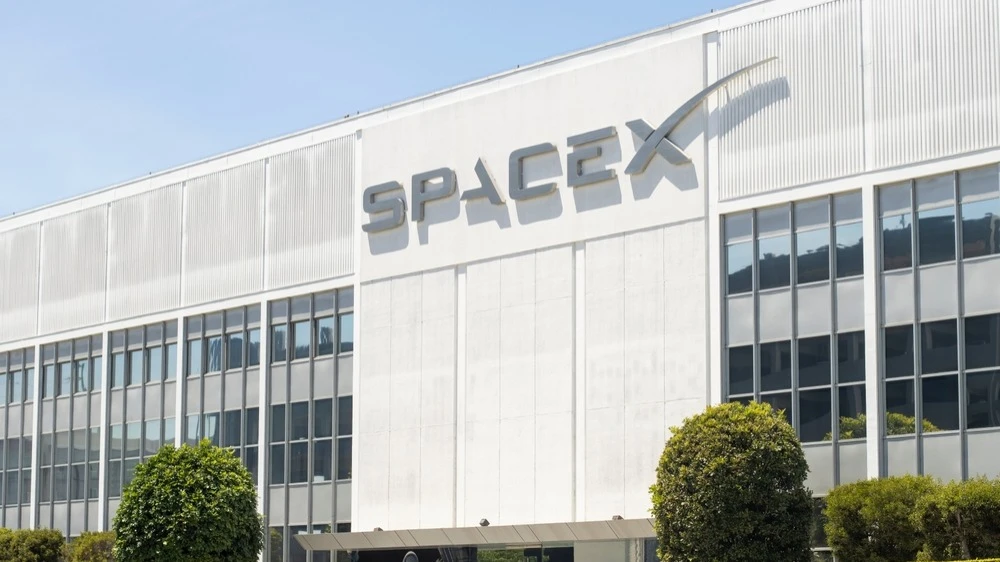
After a strong debut on Wall Street, SpaceX has faced challenges in maintaining its growth momentum. Photo: Tada Images/Shutterstock
Shares of Elon Musk’s aerospace company SpaceX have hit their lowest point since the initial public offering (IPO) amid recent sell-offs in the tech sector, falling back to nearly their IPO price. During Monday’s trading, the stock fell as low as $136.78 and closed at $139.14. This is 7.2% below their opening price during the initial public offering in mid-June, but still 3% above the IPO price of $135. Analysts’ opinions on SpaceX’s prospects are divided: some view the decline in the stock price as inevitable due to the company’s weak financial performance, while others call the drop temporary.
Details
During Monday's trading session, SpaceX's stock price fell to an intraday low of $136.78 and closed at $139.14, down 4.2% for the day. Thus, compared to the all-time high of $225.64 per share reached on June 16, SpaceX shares have already lost more than 38%, and the market capitalization of Musk’s company—which had surged to $2.67 trillion at its peak this month—has fallen by $831 billion, according to Dow Jones Market Data, as reported by MarketWatch.
Against this backdrop, SpaceX has slipped to seventh place in the ranking of the most valuable U.S. corporations, falling behind semiconductor giant Broadcom, the publication notes. Prior to this, the company had consistently held sixth place, moving from that position only once—and then only upward—when, on June 16, SpaceX briefly surpassed Amazon and Microsoft in market capitalization.
In pre-market trading on July 14, SpaceX shares remained virtually unchanged.
What People Are Saying in the Market
After a strong debut on Wall Street, SpaceX has faced challenges in maintaining its growth momentum. The company’s market valuation has regularly come under fire from analysts, who point to a disconnect between its current market capitalization and its fundamentals. The main concerns stem from the prolonged delay in reaching profitability in the near term and the company’s large-scale reorientation of its business toward the creation of orbital data centers.
The disconnect between these multiples and reality is particularly evident when comparing the results: with a market capitalization of around $2 trillion, SpaceX’s net loss for 2025 was approximately $4.9 billion, while its revenue was $18.6 billion. By comparison, as MarketWatch reports, Broadcom—which has surpassed SpaceX in market value—reported a net profit of $23.1 billion on revenue of $63.9 billion for its most recent full fiscal year.
Against this backdrop, Michael Ashley Shulman, a partner at Cerity Partners, noted: “The fact that SpaceX is trading [roughly] at its IPO price is far from a crisis. Rather, it’s a sign that the ‘narrative premium’ built into the price simply has nowhere to go in the short term. We’ve seen this play out before with other high-profile IPOs,” after which the shares had little room to grow, notes MarketWatch.
Nevertheless, the current correction has already hit those who bought shares after the IPO, says CFRA analyst Kit Snyder: “If you bought shares in the very first seconds of trading, you’re definitely in the red right now.” The stock has come to strongly resemble a meme stock. Everyone saw SpaceX as an AI story. With Elon Musk, any company he touches generates excitement among people. But in this case, for the first time, investors got the feeling that they could invest in an asset that’s being marketed as an AI project,” he noted (as quoted by the BBC).
This divide among shareholders is also confirmed by Mergermarket analyst Samuel Kerr. “If you got in during the IPO itself, you’re fine. If you bought in the first few days, you’re not very happy right now. If SpaceX can deliver on everything it’s promising, then yes, investors will end up owning the most valuable company in history. But it has a tremendous amount of work ahead of it to achieve that.”
By “all the promises,” Kerr was referring to Musk’s plans to colonize Mars, deploy a constellation of 1 million satellites, and create lunar transporters. Musk himself stated on July 10 that “SpaceX will be worth more than the rest of the Earth combined if we achieve our goals.”
At present, the overwhelming majority of Wall Street analysts recommend buying SpaceX stock—27 out of 34 analyst ratings are “Buy” or “Overweight.” Five analysts have a neutral stance (Hold), while only two recommend selling the stock (Underweight and Sell ratings).
Context
On June 12, SpaceX went public at $135 per share in a record-breaking IPO, during which the company was valued at more than $1.7 trillion. It raised $85.7 billion from investors, making this debut the largest IPO in history. According to Renaissance Capital, the SpaceX offering, along with South Korea’s SK Hynix going public in the U.S. last week, has definitively cemented 2026’s status as the “year of the mega-IPO,” MarketWatch reports.
This article was AI-translated and verified by a human editor