SpaceX Plunged 16%, Nasdaq Lost More Than 1%: Investors Are Selling Tech Stocks
The share price of Elon Musk's space company has almost returned to its opening price following its IPO

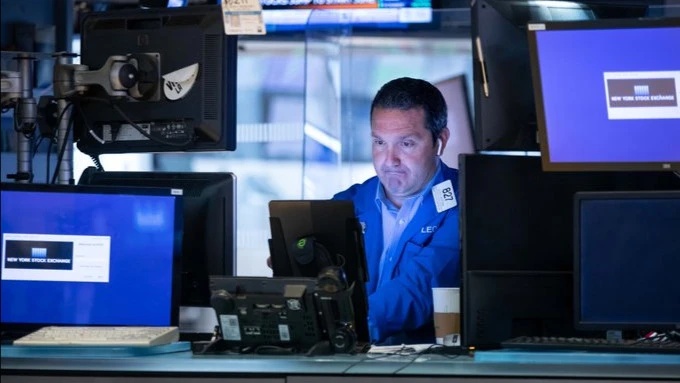
Photo: X / NYSE
Shares of Elon Musk’s space company, SpaceX, plummeted by more than 16% at the close of trading on June 22 after the company announced plans to issue bonds to fund AI investments. The stock has been falling for three consecutive days. The tech sector as a whole was weak on Monday: the Nasdaq Composite index lost 1.3%. The decline in shares of tech giants outweighed Wall Street’s hopes for progress in peace talks between the U.S. and Iran, according to Bloomberg. Rising Treasury yields also weighed on investor sentiment, the agency notes.
Details
— The S&P 500 broad-market index fell 0.37% during trading on June 22.
— The Dow Jones Industrial Average, a "blue-chip" index, rose 0.29%.
— The Nasdaq Composite technology index fell 1.33%.
— The Russell 2000 Small- and Mid-Cap Index rose 0.83% over the course of the day and reached a new high of 3,004.36 points.
— Brent crude oil futures fell 3% to $78.2 per barrel, while WTI crude oil futures fell 2% to $74.2 per barrel.
— The dollar strengthened by 0.16% against a basket of other world currencies, reaching 101.02 points.
— Spot gold prices rose 1% to $4,190.4.
What Affected Stock Prices
SpaceX’s stock price plummeted 16% to its lowest closing level since its IPO. It is now only $4.60 above its initial public offering price of $150. SpaceX also dropped to seventh place on the list of the world’s most valuable public companies, yielding sixth place to contract chipmaker TSMC. Investors sold off SpaceX shares for the third consecutive day. On Monday, the company announced that it would issue investment-grade bonds for the first time. The offering could total $20 billion. This is part of an expected large-scale borrowing program to finance its AI ambitions, Bloomberg notes. According to the agency, Alphabet, Amazon, and other companies have raised more than $300 billion in AI-related debt across various segments of the credit market since November.
On Monday, Alphabet led the decline among the “Magnificent Seven” tech giants: its shares plummeted 5%—the sharpest drop in more than a year—following the announcement that Google DeepMind Vice President John Jumper was leaving the company. On June 19, he announced he was moving to Anthropic—the most valuable startup in the artificial intelligence sector and a competitor to Google. Amazon’s stock fell 4.8%, Meta Platforms’ by 2.3%, and Microsoft’s by 3.2%.
The progress of negotiations between the U.S. and Iran led to a drop in the price of U.S. WTI crude oil to below $74 per barrel, its lowest level since March 2—the first trading day after the U.S. and Israel launched their war against Iran, according to MarketWatch. Oil futures fell on Monday after mediators—Qatar and Pakistan—announced that U.S. and Iranian representatives had agreed on a roadmap to reach a final agreement within 60 days, CNBC reports.
On Monday, the U.S. issued a 60-day waiver allowing Iran to sell oil on the international market, according to Bloomberg. Vice President J.D. Vance called the first round of talks between Washington and Tehran “very, very good” and said that Iran had agreed to allow nuclear inspectors back into the country, the agency reports. However, Iranian officials, who also spoke of progress, disputed this claim: according to them, Vance’s statement is “false and does not reflect reality,” Bloomberg reports.
The key event for the market this week will be Thursday’s release of the May Personal Consumption Expenditures (PCE) price index, the Fed’s preferred measure of inflation, according to CNBC. Even excluding volatile food and energy prices, core PCE is expected by economists to accelerate compared with April, the network explains.
What Analysts Are Saying
— Although geopolitical events are likely to remain a significant source of volatility in the near term, changes in investor confidence regarding the sustainability of the AI-driven rally could also lead to new bouts of market volatility, according to Ulrike Hoffmann-Burchardi, Chief Investment Officer for the Americas and Global Head of Equities at UBS Global Wealth Management, as reported by Bloomberg.
— “The most glaring issue is the extremely low return on the massive investments that hyperscalers are making in AI,” Matt Mealy, chief market strategist at Miller Tabak, told Bloomberg. — “Another serious problem relates to so-called circular investments, where companies invest in one another and simultaneously commit to purchasing each other’s products.”
— “Tech stocks will continue to rise for at least another couple of quarters, as spending on AI infrastructure is accelerating at a faster pace than it has over the past two years,” said Tiffany Wade, senior portfolio manager at Columbia Threadneedle Investments, in an interview with Bloomberg Television.
This article was AI-translated and verified by a human editor