Tefal's owner is returning to profitability. How will this affect its stock?
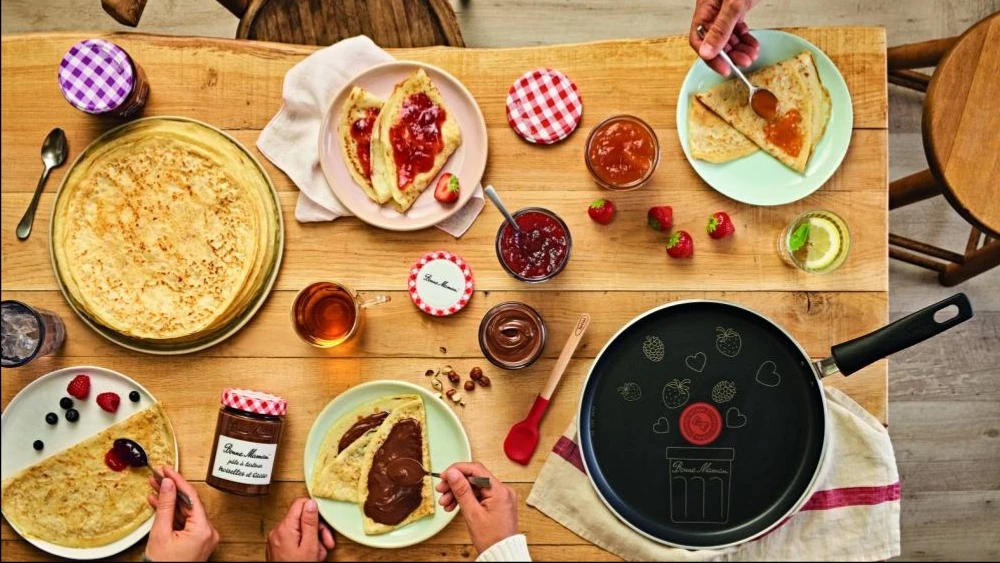
Groupe SEB's stock price has risen by about 8% since the beginning of 2026 / Photo: Groupeseb.com
Tefal frying pans, Nestlé coffee makers, and hair straighteners developed in collaboration with L’Oréal—the French company Groupe SEB is behind all of these products. The owner of Moulinex, Rowenta, and dozens of other brands is restoring profitability by cutting costs, but has yet to see significant sales growth. Analysts see potential for the company’s stock to rise by about a third: what supports this assessment, and what risks should investors consider? — in this Oninvest article.
From frying pans to professional coffee machines
The French industrial group Groupe SEB traces its history back to 1857, when tinsmith Antoine Lescure opened a workshop in Selonge, Burgundy, where he began manufacturing buckets, watering cans, and kitchen utensils. The acronym SEB was coined later, standing for Société d'Emboutissage de Bourgogne—the Burgundy Stamping Company. The company achieved its first major success in the 1950s with the release of the Super Cocotte pressure cooker: it boosted sales and helped the company enter the international market.
SEB’s business expansion through acquisitions began with the purchase of Tefal in 1968. Founded by French engineer Mark Grégoire in 1956, the company became famous for its nonstick pans. U.S. First Lady Jacqueline Kennedy helped boost the brand’s popularity: according to Tefal’s history, a photograph of her buying a frying pan helped make the brand recognizable around the world.
In 1975, Groupe SEB shares began trading on the Paris Stock Exchange, and the company continued its strategy of acquiring successful brands.
In 2007, SEB acquired a controlling stake in Supor, a leading Chinese manufacturer of cookware and small household appliances. The deal strengthened the group’s position in the Chinese market. As Le Monde reported, SEB was attracted by the potential of domestic demand and significantly lower production costs compared to France.
In 2016, SEB entered the commercial equipment market by acquiring the German company WMF. The deal, based on a valuation of WMF’s business at €1.585 billion, immediately made SEB the global leader in the commercial automatic coffee machine segment.
It's time to cut costs
Acquisitions helped SEB expand its business, but scale did not protect the company from a decline in profitability. In 2025, SEB’s operating profit from core activities (ORfA) fell by 25% to €601 million, despite organic sales growth of 0.3%. The company attributed this to U.S. tariffs, currency fluctuations, and a high basis of comparison in the professional segment.
To return to profitable growth, the company announced its "Rebound" plan. Among other things, it calls for enhancing engagement with consumers through artificial intelligence and a cost-cutting program totaling €200 million.
Operating profit for the third quarter of 2026 increased by 8.7% compared to the third quarter of 2025, reaching €161 million. The company attributes this result to an improvement in gross margin, continued strict control over operating expenses, and the impact of the Rebound plan: in the third quarter, the plan generated savings of €15 million.
SEB's quarterly revenue totaled €1.96 billion, remaining virtually unchanged year-over-year (-0.1%) but increasing by 2.5% on a reported basis—due to the favorable impact of exchange rates, the company explains.
The U.S. markets have become the main driver of the consumer segment, with sales there rising by 10.8%; double-digit growth rates were observed in both North and South America, the company reports.
In addition to its portfolio of private-label brands, the group is expanding its collaborations with well-known brands. “Partnerships account for 5% to 10% of the group’s revenue, making them an important driver of growth,” SEB reported. Partners with long-term distribution and co-development agreements included Nestlé (for Nespresso and Dolce Gusto coffee machines) and L’Oréal with its Steampod hair straightener products.
One of the longest-running collaborations is between the Tefal brand and British chef Jamie Oliver, who rose to fame thanks to the cooking TV show *The Naked Chef*. Among Rowenta’s partners in the hair care segment is fashion designer Karl Lagerfeld’s brand.
Social media platforms are helping the company grow in China. “We continue to hold a leading position: we’re No. 1 in the cooking segment on TikTok, which now accounts for nearly 25% of our online sales,” said Olivier Casanova, CFO of Groupe SEB, during a third-quarter earnings call with investors. The company hopes to attract Generation Z with its POP rice cooker, which features a compact size and a bright, eye-catching design.
Professional equipment remains a weak point: Quarterly sales in the segment fell by 9.1% on a comparable basis—to €215 million—due to lower sales of coffee machines to major customers, primarily in the U.S., and a slowdown in business in the Middle East.
SEB confirmed its forecast for the full year 2026, providing more specific targets: the company expects operating profit from its operations to grow by 5–10% for the year. Previously, it had forecast growth without specifying a range.
What Could Support SEB's Stock Price
One argument in favor of SEB shares is the company’s ability to restore profitability even amid weak sales growth. According to TP ICAP Midcap, the quarterly results confirm the effectiveness of the Rebound plan. The broker maintained its “buy” recommendation and €69.5 price target, although it lowered its organic revenue growth forecast for 2026 from 1.8% to 1%. It also considers the group’s valuation attractive: in its view, the market assigns limited value to SEB’s business outside of China, despite the potential for improved results.
Improved cash flow could provide additional support. During a conference call, CFO Olivier Casanova set a free cash flow target of €350–450 million for 2026. The company also intends to reduce its net debt-to-EBITDA ratio to approximately 2 by the end of 2027.
The company also expects sales of professional equipment to recover. As Casanova noted during a conference call, the Peak and Elevation coffee machines for offices and small businesses are already being sold in more than 30 countries, and production has reached full capacity. The company expects their contribution to revenue to increase starting in the fourth quarter, although it does not yet foresee a significant improvement in the overall market situation.
According to MarketScreener, at a closing price of €53.80 on October 23, the value of SEB’s business, taking net debt into account, corresponded to approximately 5.5 times the projected 2026 EBITDA. By way of comparison, between 2021 and 2024, the annual values of this multiple ranged from about 6.4 to 8.7. By comparison, De’Longhi is valued at approximately 7.7 times projected EBITDA.
Following the earnings report, analysts at BNP Paribas Portzamparc maintained their “buy” recommendation but lowered their price target from €94 to €87. They noted the stability of the quarterly margin, while warning of more challenging conditions toward the end of the year due to inflationary and currency pressures. SEB’s own ORfA forecast for 2026—€631–661 million— came in below the consensus estimate of €672 million.
Eight analysts recommend buying SEB shares, while three recommend holding them. According to MarketScreener, the average target price is €72.32—approximately 37% higher than the closing price on October 26.
This is not intended as individual investment advice.