Tesla has lost its leadership position in the global electric vehicle market to BYD. How did the market react?
Tesla deliveries in the last quarter of 2025 fell short of the company's own consensus forecast.

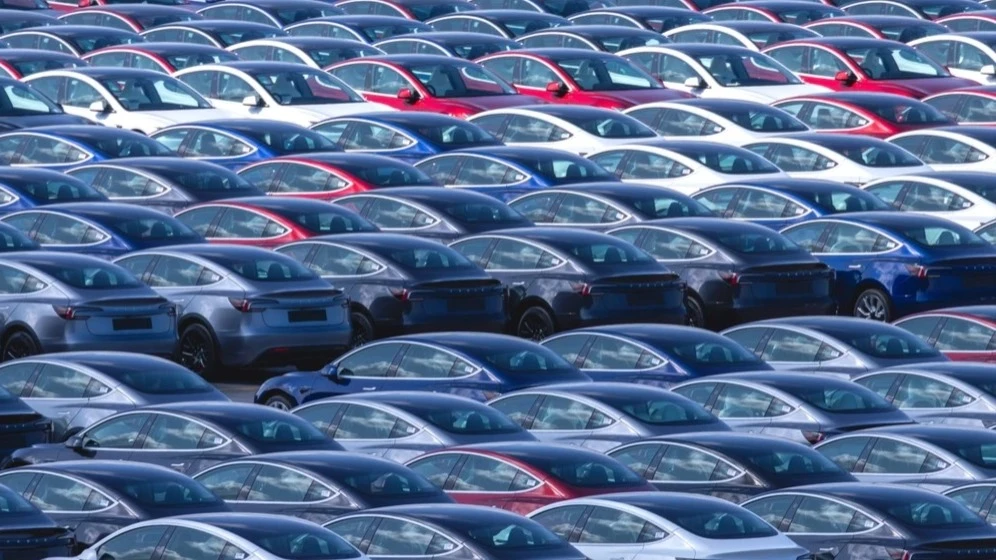
At the end of 2025, American Tesla lost its leadership in global sales in the electric vehicle market to Chinese corporation BYD. Tesla's deliveries for the fourth quarter of 2025 did not even reach the company's own consensus forecast. Shares of the world's most expensive automaker opened higher in early trading in New York in 2026, but then fell into negative territory.
Details
Global deliveries of Tesla electric vehicles in the fourth quarter of 2025 fell by 16% to 418,200 units, falling short of the consensus forecast set by the company itself. The annual figure fell by 8.6% to 1.64 million vehicles. BYD, on the other hand, increased sales both in October-December and for the whole of last year, Bloomberg notes. In 2025, Tesla's Chinese competitor delivered 2.26 million electric cars to the market, although its sales growth was the weakest in the last five years.
Context
Tesla's sales decline in the fourth quarter was expected: in September, the White House canceled a $7,500 tax credit for the purchase of electric vehicles, which led to their price increase in the US, Barron's writes. Anticipation of the subsidy cancellation also triggered frenzied demand in the third quarter, which was a record for Tesla.
In Europe, demand for Tesla cars fell sharply in 2025. Among other things, sales in France fell by 37% year-on-year, and in Sweden by 66%, according to Bloomberg. This is partly due to the negative reaction of European buyers to Tesla CEO Elon Musk's support for conservative European politicians, the agency notes. Norway was an exception to this trend, with Tesla electric car registrations increasing by 41% over the year.
What about the shares?
Tesla shares opened in New York with a 1.8% gain, attempting to recover after a six-day decline that ended 2025. However, the company's shares then fell into the red, down 1% from their closing price on December 31. Gary Black, co-founder of the Future Fund Active exchange-traded fund (ETF), argues that although Tesla's annual sales fell below consensus, they are more than enough to keep the stock stable — according to Black, sales of 415,000 cars per quarter would be enough to achieve this, writes Barron's .
Even after falling 8% at the end of December, Tesla shares entered 2026 above the level that Wall Street considers reasonable: FactSet's calculated average target price of $421.59 per share implies a 6% decline in the stock price. According to the service, out of 49 analysts, 20 recommend buying Tesla shares (Buy and Overweight ratings), 11 advise selling them (Sell and Underweight), and the remaining 18 experts are taking a wait-and-see position (Hold).
The picture is quite different for BYD: the consensus is "buy," with pessimists clearly in the minority—only two recommendations to sell (Sell and Underperform) against 23 to buy (Buy and Outperform), according to Marketscreener. At the current price of 85.7 yuan per share, analysts expect an average growth of 39% over the year, to 119.3 yuan.
This article was AI-translated and verified by a human editor