"The 30-Second Rule": How Investors Can Learn to Think Things Through Before Making Trades

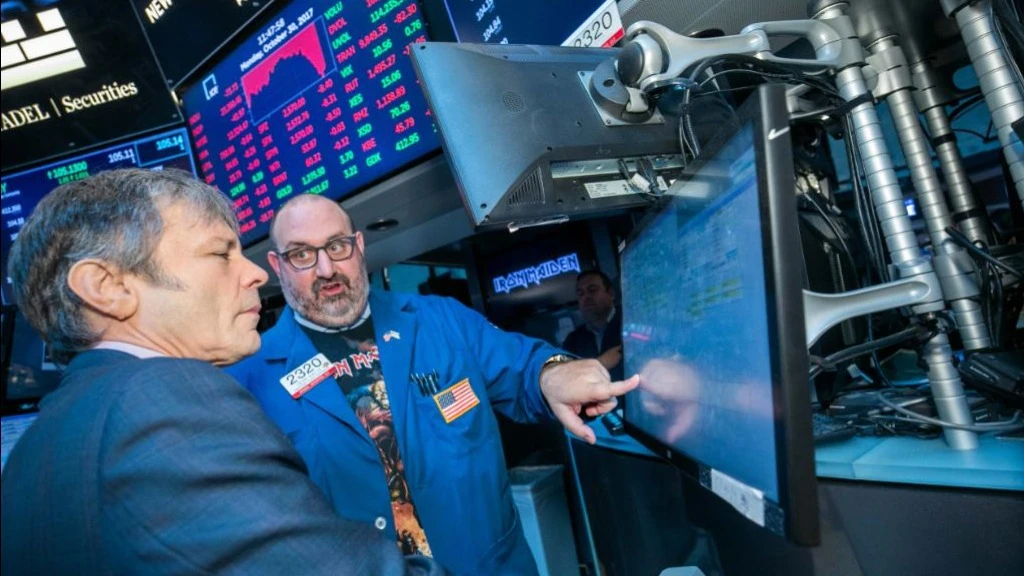
A brief surge in focus before entering or exiting a market position increases the likelihood of a successful trade. Conversely, a consistently high level of brain activity can reduce the effectiveness of trading decisions. Photo: NYSE / x.com
One of a trader’s main competitive advantages isn’t a well-calibrated algorithm or exceptional expertise, but rather the state of their brain at the moment a trade is executed. In essence, this is exactly what the authors of a new study claim: the most successful trades are preceded by brief bursts of neural activity within 30 seconds before they are executed. At the same time, the brain’s overall “vitality” offers no advantage for trades, and a high, constant level of arousal can even worsen the outcome.
Engagement Index
For their study, researchers from universities in the U.S. and China fitted professional traders with portable EEG devices and recorded their brain activity during actual trading sessions. It turned out that 30 seconds before making trades, the brains of some traders exhibited a rapid, brief surge of activity. The study’s authors called this period the engagement index (EI), which measures the ratio of beta waves to alpha and theta waves.
Alpha waves are present in all people when they are in a relaxed, restful state; theta waves appear when a person is in a state between sleep and wakefulness, and under normal circumstances, these waves are associated with a change in consciousness. Beta waves are associated with active, analytical thinking and concentration.
The authors compared EEG readings from different traders and found that this brief increase in the engagement index is statistically associated with more successful traders.
A higher IV reduces cognitive biases; therefore, the more engaged a trader is, the less likely they are to “get hung up” on nice “round” numbers. In other words, they don’t simply place orders for 100, 50, or 10, but instead focus on achieving a more optimal risk-reward ratio, and are less likely to hold onto losing positions “until they turn a profit” or close out profitable trades too early.
Essentially, a high IQ is an indicator that a person makes decisions based on reason rather than emotion—in a more analytical way.
The authors note, however, that while a brief surge in attention before entering or exiting a position increases the likelihood of a successful trade, a consistently high level of brain activity does not significantly affect the quality of the outcome. On the contrary, it may even reduce effectiveness.
When Willpower Is Powerless
Nobel laureate Daniel Kahneman described two decision-making systems in his book *Thinking, Fast and Slow* (translated as *Think Slowly… Decide Quickly* in Russian). “System 1” operates almost automatically; it is intuitive. “System 2” is analytical and more energy-intensive. In fact, it is the activity of this second system that EEG sensors detect when they indicate a brief surge in neural activity before a trade is executed.
The unique aspect of this entire process is that “System 1” is activated and operates by default, which is why “System 2” sometimes doesn’t have time to take over. In this sense, one of the mistakes traders or investors make is trying to solve the problem of cognitive biases through willpower. But willpower is a limited and exhaustible resource. When it runs out, we feel tired, and the first system—which requires less energy—takes over.
But it is possible to consciously create conditions in which the brain regularly switches to analytical mode before making a decision. It will be like working out in a “cognitive gym.”
How to Train Your Brain to Be More Engaged
A study published in February 2026 showed that focused attention meditation changes our perception of risk. In other words, the cognitive biases that cause us to overestimate unlikely events and underestimate likely ones are either turned off or, at the very least, reduced in intensity.
The essence of the focused attention method is to intentionally keep your attention on a single object (your breath, a sensation, a sound) and, whenever your mind wanders, gently bring your attention back.
With this practice, brain activity shifts from the so-called center of anxiety and impulsive reactions (the amygdala) to the prefrontal cortex. The prefrontal cortex is responsible for logic and planning, as well as impulse control.
Ray Dalio, the founder of Bridgewater Associates, has, incidentally, publicly attributed his investment success to a regular meditation practice.
Another useful tool is to take micro-breaks before making a trade and to “create” for yourself those 30 seconds that the scientists identified in the original study. This is literally what Kahneman refers to as “System 2.”
To do this, you can first pause, take a deep breath, and ask yourself one question: “Why right now, at this exact price, and for this specific position?” and then give a thoughtful answer. This will help you determine the best entry and exit points for the asset.
This article was AI-translated and verified by a human editor