The "explosive" rise in gold prices is not over — Deutsche Bank
Deutsche Bank's year-end target is $4,600 per ounce

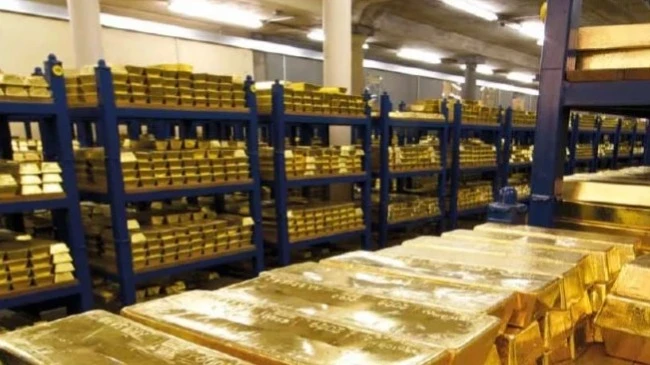
In 2026, the world’s largest central banks reduced their gold purchases, which had a negative impact on the price of the precious metal / Photo: Bank of England
Deutsche Bank strategist Michael Xue has reaffirmed his forecast that the price of gold will rise to $4,600 per ounce by the end of the year, according to MarketWatch. This target implies a 13% increase from current levels. “Statistical data indicates that the current episode of explosive gold price behavior began in August 2024 and is still ongoing,” he wrote on August 3 (as quoted by CNBC).
The “explosive” phase refers to when an asset’s price rises exponentially, breaking away from historical norms, and gold has more than doubled in price over the past couple of years, Xue explained. He assessed the situation from three angles. First, the Deutsche Bank analyst compared gold to the prices of copper, oil, and—unusually—bread: their long-term inflation-adjusted growth rates would give an ounce of gold a “fair” price of $2,600.
The analyst then tested the precious metal using an econometric test designed to identify speculative bubbles: according to this method, the price peak should have been $6,400, and the low, $3,700. Finally, Xue’s own model, which takes into account the S&P 500, 10-year Treasury yields, and exchange rates, put the fair value of gold at $4,700 by the end of the year — it had to be lowered due to a slowdown in purchases by global central banks, but it is close enough to $4,600 that the forecast remains unchanged, notes MarketWatch.
From $6,000 to $3,800
In late June, Deutsche Bank lowered its gold price forecast for the end of 2026 by 17%, to $4,800 per ounce, and warned that three to four Fed rate hikes this year would drive the price down to $3,800. However, as early as April, the bank had forecast $6,000 per ounce, citing the budget deficit, de-dollarization, and emerging-market central banks’ withdrawal from U.S. Treasuries, Kitco noted.
What's happening with gold prices?
At its peak in late January, gold was trading at $5,589 per ounce, but the war in the Middle East heightened the risks of interest rate hikes and a stronger dollar, which weighed on the precious metal’s price, CNBC notes. Gold has now stabilized around $4,050 within a narrow range, as the market monitors negotiations between the U.S. and Iran and the possible reopening of the Strait of Hormuz, according to Trading Economics.
"Gold prices have been stuck in a narrow range for the past few weeks, trading roughly between $4,000 and $4,100, as investors are uncertain about the trajectory of the Fed's interest rate," Reuters quotes ActivTrades analyst Ricardo Evangelista as saying. Traders now put the probability of a rate hike in September at 63%—after Fed officials, who were divided in their views, voted by a majority to keep rates unchanged at their July meeting.
This article was AI-translated and verified by a human editor