Wells Fargo sees gold's upside potential as three times greater than its downside potential
Long-term optimism does not rule out another price crash, the bank warns

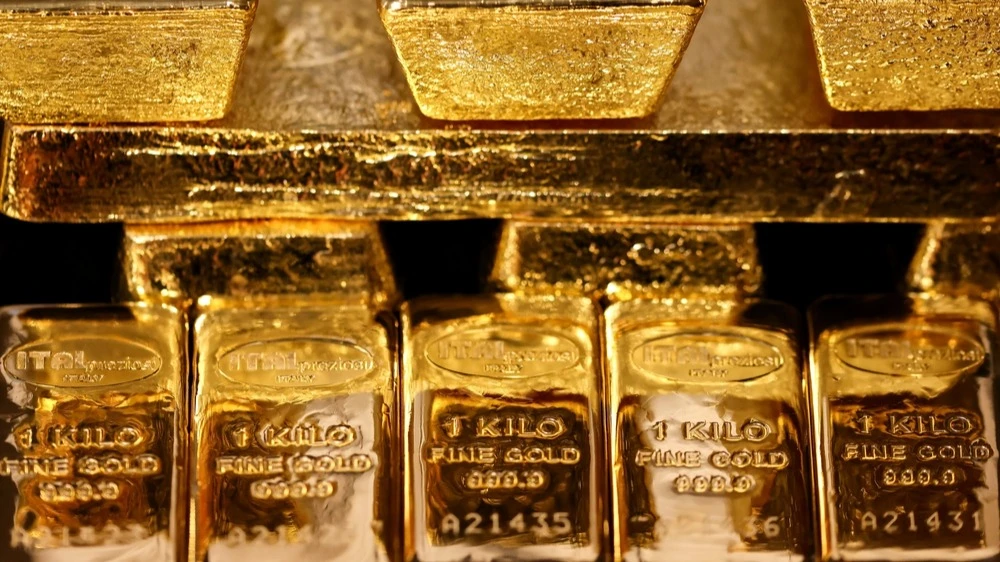
Wells Fargo is betting that gold prices will return to their all-time highs in 2027 / Photo: Alessia Pierdomenico/Shutterstock.com
After a correction of nearly 30% from its peak, the risk-reward ratio for gold has shifted in favor of investors, said Wells Fargo investment strategist Samir Samana. In an interview with Kitco, he suggested that in the short term, gold could fall to $3,500 per ounce, but by the end of 2027, it could return to or surpass its January high.
A $500 decline versus a $1,500 increase
"Looking ahead 18 months, through the end of 2027, I think gold will most likely return to its record high—and possibly even exceed it. That means the price could fall by about $500 or rise by $1,500. For an investor building a position in gold, this is, in my view, a very attractive risk-to-potential-return ratio,” Saman said in an interview with Kitco.
“It’s hard to say that gold has already bottomed out. In the near term, I think there’s still a risk of a decline to $3,500,” Saman noted. In assessing growth potential, he relied on the current forecast from the Wells Fargo Investment Institute: $5,300–5,500 by the end of 2026 and $5,800–6,000 by the end of 2027.
The risks have already been taken into account
Even if oil prices remain high and the Fed raises interest rates, a significant portion of these risks is already reflected in current prices, according to Samana. He notes that periods of declining gold prices typically stretch out over several years rather than resulting in a sharp collapse. Therefore, short-term fluctuations do not alter his assessment of the precious metal’s long-term prospects.
The conflict in the Middle East has intensified pressure on gold. Rising oil prices have heightened inflationary risks and, along with them, expectations of further interest rate hikes by the Fed. As a result, the non-interest-bearing metal has become less attractive.
Nevertheless, according to Samana, the market has become overly pessimistic. “The main question is whether it makes sense to hold gold in a portfolio given this balance of risk and potential return, considering that it’s difficult to replace it with another asset. I think so,” he told Kitco.
What Keeps the Price of Gold High
During trading on July 22, spot prices for the precious metal rose to their highest level since July 7, according to Reuters. An ounce is currently trading near $4,120. According to the agency, the rise was driven by buying following technical signals and demand for safe-haven assets. Interest in these assets remains high due to uncertainty surrounding Iran: U.S. Secretary of State Mark Rubio stated on July 22 that Washington is ready to discuss ending the war, but Tehran is not taking the negotiations seriously.
Opinions differ regarding the Fed’s future decisions. According to the median forecast of economists surveyed by Reuters, the Fed will keep its benchmark rate unchanged through the end of 2026. At the same time, market pricing suggests expectations of two rate hikes by the end of March 2027, and traders estimate the probability of the first hike as early as September at approximately 67%, according to CME FedWatch data.
This article was AI-translated and verified by a human editor