The Fed has kept interest rates unchanged for the fifth consecutive time. What's next?

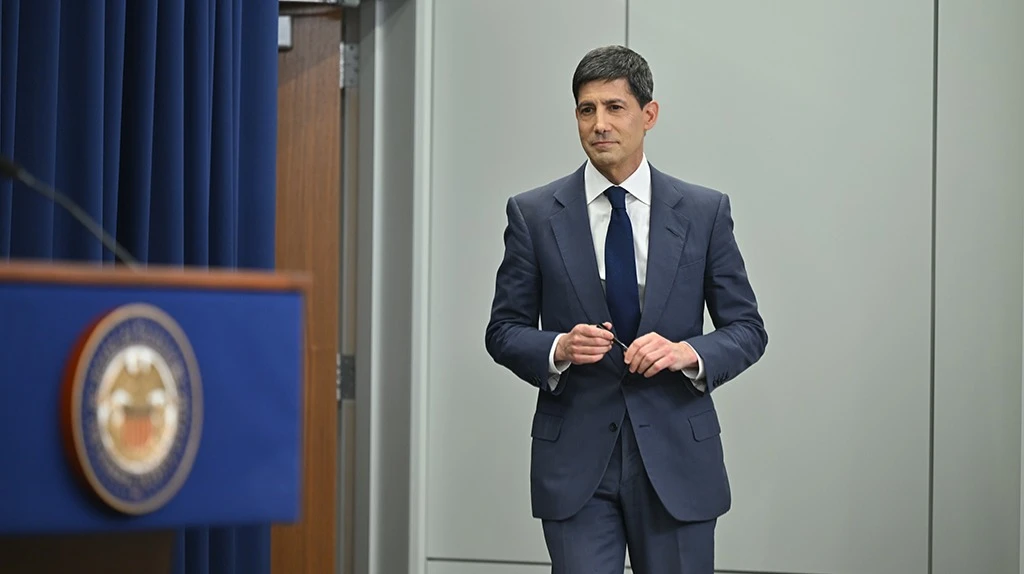
The Fed left interest rates unchanged for the fifth consecutive time / Photo: X / Federal Reserve
Following its July 28–29 meeting, the U.S. Federal Reserve System left the federal funds rate unchanged at 3.5–3.75%. This marks the fifth consecutive time the Fed has decided to keep the rate unchanged. It was in line with market expectations. This was the second meeting of the Federal Reserve under the leadership of Kevin Warsh, who was sworn in at the White House on May 22 as the new chairman of the U.S. central bank.
The Fed refrained from making any changes, even though inflation has remained above the Fed’s 2% annual target for the past five years, Barron’s notes. Meanwhile, concerns are growing in the market that inflation will not return to the central bank’s target unless higher interest rates are used to curb it, Bloomberg notes.
The Fed has been adopting a wait-and-see approach ever since it cut rates at each of its last three meetings in 2025. However, from January through June, the regulator’s officials’ rate forecasts underwent significant changes as the labor market stabilized and the downward trend in core inflation came to a halt, Bloomberg notes. Prior to the Fed’s rate decision on July 28, traders estimated the probability of a rate hike at 35%, up from 26% a week earlier, according to data from the CME’s FedWatch tool. The decline in confidence in the regulator’s forecasts is largely due to Warsch’s decision to abandon the practice of forward guidance, Barron’s reports.
What Analysts Are Saying
A rate hike immediately following a weaker Consumer Price Index (CPI) report for June would seem “strange,” according to Krishna Guha, head of economic research and central bank strategy at Evercore ISI. His opinion is cited by Barron’s. In June, the CPI fell 0.4% month-over-month, slowing to a 3.5% annual rate from May’s 4.2% growth rate. Excluding food and energy prices, the core CPI rose 2.6% year-over-year, compared with a 2.8% increase in May. “Raising rates now without any clear preparation or context risks excessive tightening,” Guh noted.
Ian Lingen, head of U.S. interest rate strategy at BMO Capital Markets, agrees: a rate hike today, July 29, would be the biggest surprise in recent history, he said. His opinion was reported by MarketWatch. Currently, the bond market is pricing in a tightening of 7.3 basis points, so a quarter-point rate hike would represent an “impressive” deviation of 17.7 basis points from the market’s expectations, he noted.
Historically, the Fed has not surprised the markets with rate hikes, notes the Bank of America economics team. After analyzing data on federal funds rate futures dating back to 1994, BofA analysts concluded that the Fed has never raised rates when the probability of a hike implied by the markets was below 60%. This would make a rate hike this week not only unprecedented but would also accelerate the tightening of monetary policy that markets are pricing in for the end of this year and next, writes Barron’s.
What's next?
Many economists believe that the Fed will adopt a wait-and-see approach this year and will not change interest rates, according to MarketWatch. Kevin Warsh has established five task forces to analyze the regulator’s work, the publication notes, emphasizing that this gives the new Fed chair the opportunity to refrain from making any changes until these committees present their findings, which is expected around the end of the year.
Federal Reserve officials who oppose raising interest rates believe that, as the situation evolves, inflation will continue to slow as the impact of tariffs wears off and energy prices stabilize, noted Stifel Chief Economist Lindsey Pigza.
It would be “incredibly foolish” for the Fed to raise rates this year, according to Jay Hatfield, CEO of Infrastructure Capital Advisors. In an interview with Bloomberg on Tuesday, he said that inflation this year is temporary, unlike in 2021, when it was rising rapidly, but the central bank mistakenly believed it was temporary, according to MarketWatch.
This article was AI-translated and verified by a human editor