The fast-food chain Wendy’s withdrew its forecast and lost its second-place ranking in U.S. sales
Six years later, Burger King got its revenge on a competitor

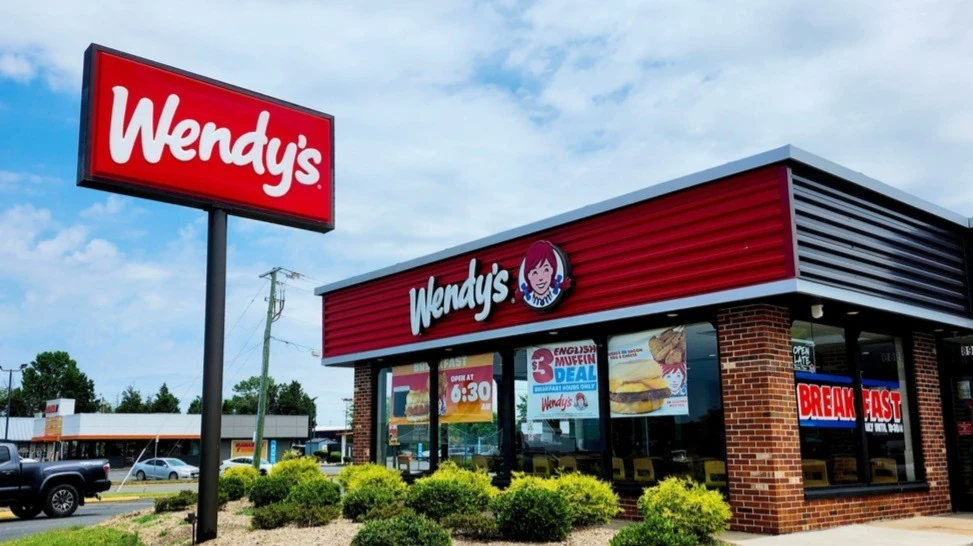
Wendy's restaurant chain has withdrawn its forecast for 2026 / Photo: Shutterstock.com / refrina
The American fast-food chain Wendy's has withdrawn its financial forecast for 2026 and announced that it is cutting its quarterly dividends in half. The new CEO is preparing a business recovery plan following a sharp drop in restaurant traffic—which hit the U.S. domestic market the hardest—and a deterioration in the franchise’s financial performance. As a result, Wendy’s has lost its second-place ranking in terms of sales in its home market.
Details
Wendy's has withdrawn its previously published full-year 2026 guidance. The restaurant chain's new management is using this opportunity to conduct a comprehensive assessment of the business and develop a comprehensive recovery plan, including the optimal allocation of capital, according to a statement from the company. In its previous earnings report in May, the company confirmed its expectations of flat revenue and adjusted earnings per share in the range of $0.56 to $0.60 per share.
In addition, Wendy's cut its quarterly dividend in half, to 7 cents per share—down from the 14 cents announced in its previous earnings report.
“We are clearly operating well below our potential today. Our restaurant traffic, value proposition for customers, and franchise economics are not meeting our expectations,” said Wendy’s CEO Bob Wright, who took the helm of the company in May. According to him, the company has already begun implementing a recovery plan that includes five key areas: updating the menu with a focus on quality and affordable prices, strengthening marketing, improving operational efficiency, developing digital services to increase visit frequency, and accelerating the growth of the restaurant chain.
In the second quarter, Wendy’s comparable sales (calculated only for locations that have been open for at least one year, which eliminates the impact of network expansion) in the U.S. fell by 7%, and in international markets by 2.3%. The decline in U.S. sales was worse than analysts’ expectations, who had forecast a drop of only 4.7%, notes Barron’s. At the end of the quarter, Wendy’s lost its second-place ranking in U.S. sales to Burger King, which regained the position six years after losing it.
Despite weak operating results, Wendy's adjusted earnings came in at 18 cents per share, compared with the expected 16 cents, and revenue rose 1.7% to $570.6 million, exceeding analysts' consensus estimate.
During trading on August 7, Wendy's shares rose more than 4% after falling 4.7% at the very start of the session.
Context
Wendy's first announced its restructuring program in late 2025, promising to close about 300 of its least profitable restaurants in the U.S., Barron’s notes. At the end of the first quarter, the company reported a net reduction of 174 restaurants as part of its ongoing restructuring, Fast Company notes.
The company’s largest shareholder is putting additional pressure on management. Activist investor Nelson Peltz stated in February 2026 that Wendy’s stock remains undervalued. The billionaire reported ongoing discussions with Wendy’s management and shareholders regarding “strategic transactions,” stating that he is exploring options to enhance shareholder value, which could include increasing his stake, Barron’s reports.
This article was AI-translated and verified by a human editor