The Fed cut rates for the second time this year. The balance sheet reduction program will be completed
The rate has fallen to a range of 3.75-4%

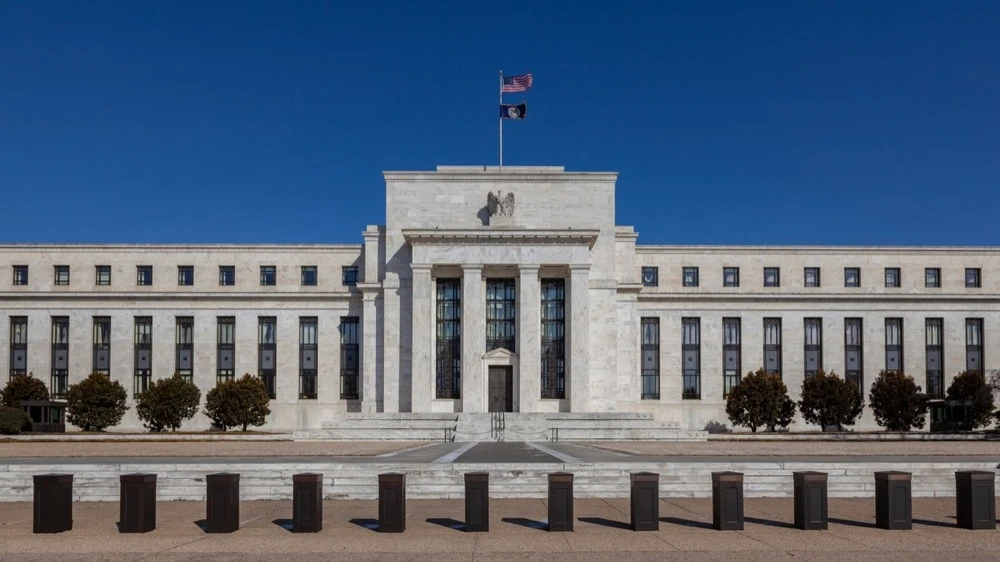
The U.S. Federal Reserve lowered its key rate by 0.25 percentage points to a range of 3.75% to 4%. This was the second consecutive easing of monetary policy this year after a similar decision in September.
Details
The decision to cut the rate was fully expected - its probability was estimated by the markets at almost 100%, Bloomberg wrote. Much more intriguing was the distribution of votes among the members of the Federal Open Market Committee (FOMC). In the end, two out of twelve voted against the decision to cut the rate by 0.25 p.p. Governor Stephen Miran was in favor of a 0.5 p.p. reduction, and Jeffrey Schmid, President of the Reserve Bank of Kansas City, was in favor of keeping the rate at the previous level of 4-4.25%.
The Fed also announced the end of its balance sheet reduction program (aka quantitative tightening, QT) effective December 1. During the pandemic, the U.S. central bank launched massive quantitative easing, buying trillions of dollars worth of securities to keep long-term rates low and support the economy, MarketWatch explains. As a result, the regulator's balance sheet grew to nearly $9 trillion, and the Fed has been gradually winding down stimulus since 2022, reducing assets by about $2.2 trillion.
How the market reacted
Immediately after the publication of the decision, the main U.S. stock indices mostly maintained the growth rates, which had been before the Fed's announcement. Thus, the S&P 500 added about 0.2%, the technology Nasdaq Composite grew by 0.55%, and the blue-chip index Dow Jones - by 0.3%.
Then, however, stock prices began to decline, and all three indices went into negative territory, with the S&P 500 falling the most - by more than 0.3%.
What the Fed has announced
U.S. economic activity is expanding at a moderate pace according to "available indicators," job gains have slowed this year and the unemployment rate, although rising, remained low through August, the Fed said. Inflation has picked up from earlier this year and remains slightly elevated, the regulator said.
Uncertainty about the economic outlook remains elevated, the Fed said. In addition, in its opinion, the risks of deterioration in the labor market have increased.
"The [FOMC] Committee is strongly committed to supporting maximum employment and returning inflation to its 2% target," the Fed said in a statement.
Context
The Fed made its rate decision amid the government shutdown that has been going on for almost a month. Because of the shutdown, the central bank was left without a full set of statistics on employment and consumer spending, on which it usually relies, including its favorite inflation indicator - the PCE (personal consumption expenditures) index. Earlier this month, Fed Chairman Jerome Powell made it clear that the Federal Open Market Committee remained focused on risks to the labor market, Bloomberg notes. Then, with a delay of a week and a half, the inflation report was released, which was weaker than expected.
Consumer Price Index (CPI) data released on October 24 showed that inflation rose at an annualized rate of 3% in September after 2.9% in August. This is slower than economists had forecast, but still above the Fed's target by about one percentage point. The Fed believes the labor market remains relatively balanced for now, but the regulator is concerned that companies may begin to cut hiring more aggressively or turn to layoffs due to fears of slowing economic growth, Reuters notes. These concerns are reinforced by the recent news of layoffs at Amazon and the rise in applications for unemployment benefits in some states, the agency adds.
According to ADP Research, an independent provider of analytics on the U.S. labor market, the number of jobs in the U.S. private sector fell by 32,000 in September, and Americans' confidence in the ability to find a new job fell to a record low. However, the economic situation remains stable, notes Barron's with reference to the survey of the Federal Reserve Bank of New York. Thus, almost 90% of companies from the S&P 500 index, which have already reported for the third quarter, exceeded profit forecasts. In addition, revised GDP data for the second quarter showed that economic growth rates were higher than previously expected.
What to expect from the Fed next
The Federal Reserve may cut rates by another 0.25 percentage point before the end of the year, after which it will pause, said Goldman Sachs economist David Mericle, cited by Barron's. The Fed has a historical tendency to conduct so-called safety net cuts serially three times in a row, Mericle said. "In the past, the Federal Open Market Committee has made precautionary rate cuts three times in a row and preferred to end the cycle, even if the situation looked less worrisome by the time of the third cut," said the Goldman Sachs economist.
According to CME FedWatch, a tool for monitoring market expectations regarding US Fed decisions, 85% of traders now believe that the regulator will reduce the rate by another 0.25 p. p. at the next meeting in December. However, for January, market participants' expectations diverge: almost 50% expect the previous rate to be maintained, while 43% expect another easing.
This article was AI-translated and verified by a human editor