Nvidia's CEO Was Fired, He's Been Found to Be in a New Relationship, and Investors Are Buying Shares — Online



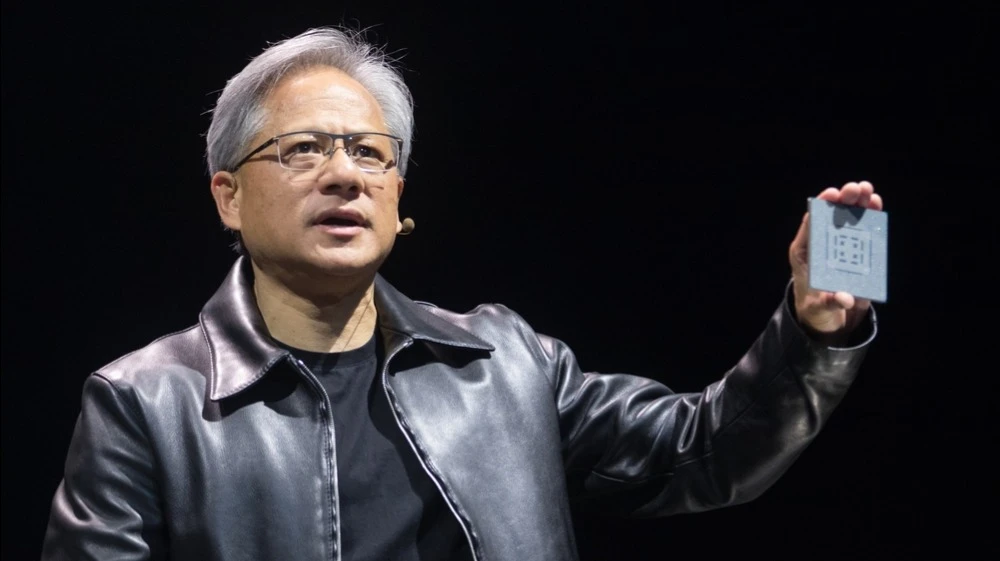
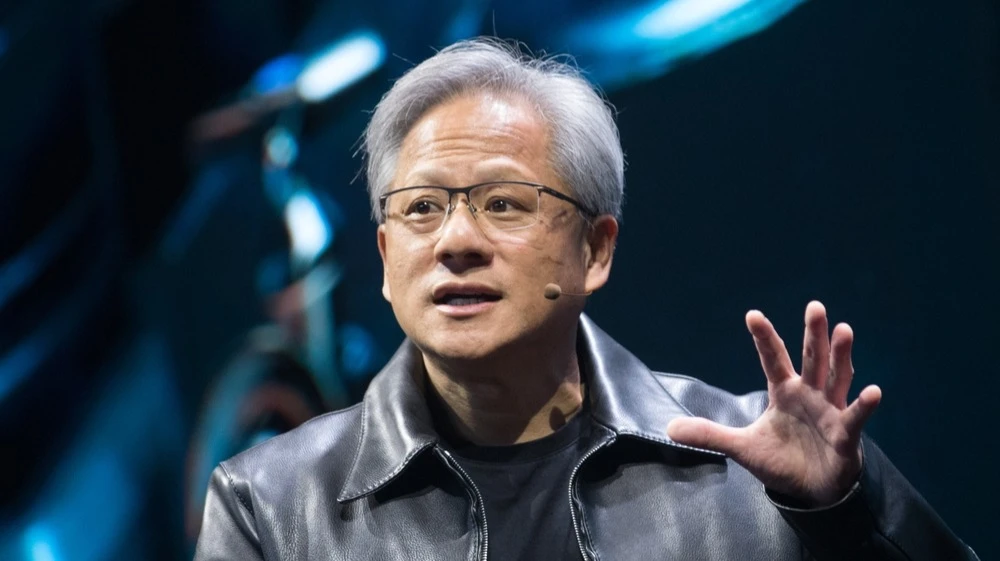
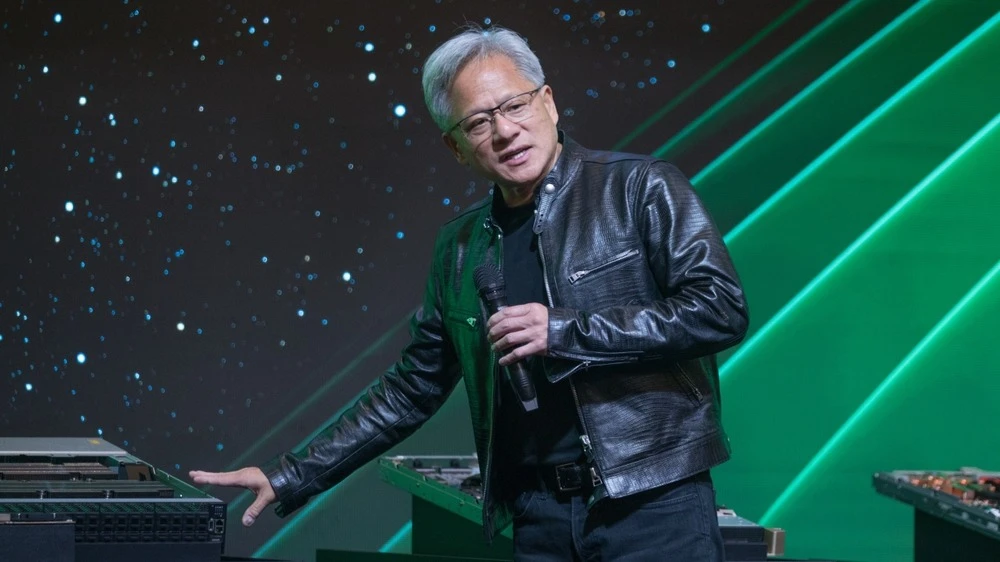
Jensen Huang stepped down as CEO and resigned from Nvidia's board of directors / Photo: jamesonwu1972 / Shutterstock.com
Nvidia's board of directors announced the resignation of CEO Jensen Huang following reports of two extramarital affairs, one of whose partners is suspected by U.S. intelligence agencies of working for Chinese intelligence.
Nvidia's stock plummeted more than 10% at the opening bell, causing the company's market capitalization to fall below $4 trillion for the first time since 2025. Nvidia’s CFO, Colette Kress, has been appointed acting CEO until the board of directors finds a permanent CEO.
How is the stock market reacting to the resignation, and what can investors expect now? Find out in our online coverage.
8:15 p.m. CET: Jensen Huang had extramarital affairs with more than one female colleague, Reuters reported, citing sources. The news agency claims to have identified the name of another Nvidia employee with whom Huang had an intimate relationship. Reuters did not disclose the name.
Huang, who has been married for a long time, admitted on November 8 that he had been having an affair. He did not disclose any details, particularly the woman’s name. The 63-year-old Huang made the admission following media reports about his relationship with a Chinese citizen who is suspected in the U.S. of working for Chinese intelligence. On November 11, The New York Times reported that Huang had been involved in another affair—with Kimberly Powell, Nvidia’s vice president of healthcare.
On the same day, Nvidia’s board of directors held an emergency meeting to discuss Huang’s future and announced his resignation on November 12. The decision to remove Huang was made the previous evening, a CNBC source reported. According to the source, the mood on the board of directors shifted dramatically after news of the CEO’s second extramarital affair came to light. The team worked late into the night on a communications strategy, and the decision was officially made in the morning.
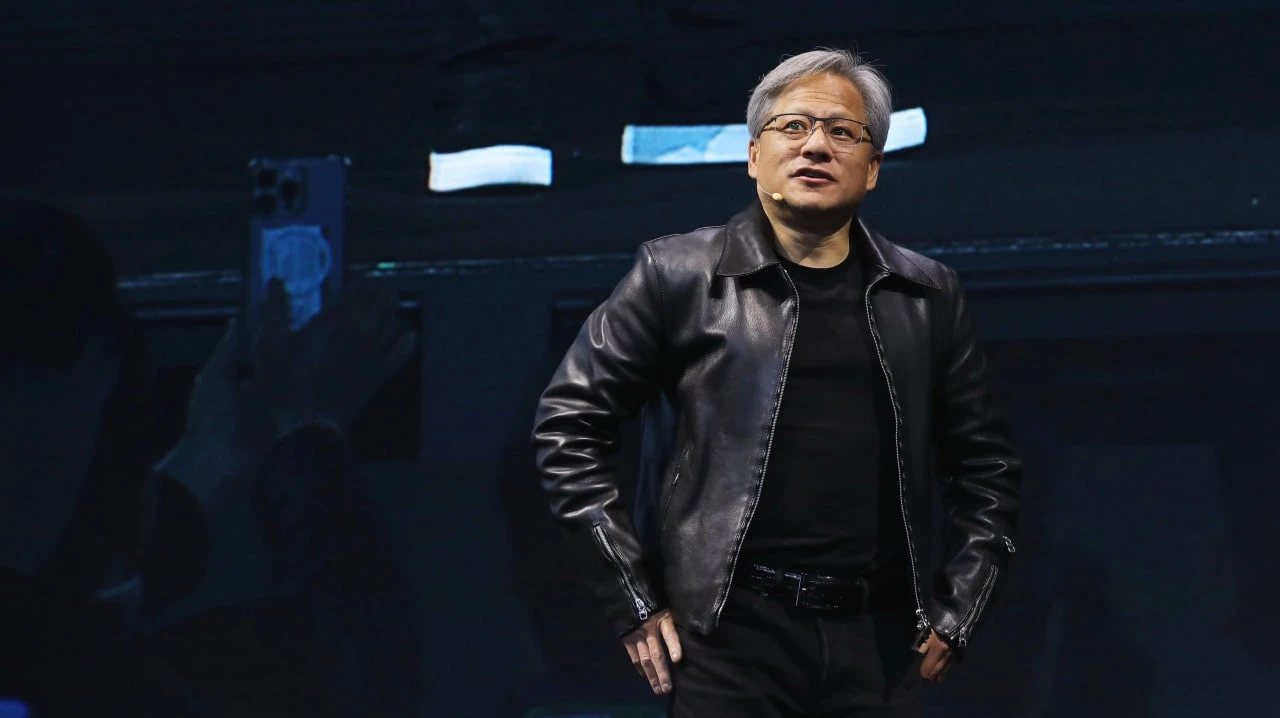
8:15 p.m. CET: Investors should “buy NVDA on the dip,” says Tom Lee, head of research at Fundstrat. According to him, Nvidia will remain one of the world’s most important companies even after Jensen Huang’s unexpected resignation.
8:00 p.m. CET: What's next for Jensen Huang after leaving Nvidia?
Traders on the Kalshi prediction platform estimate the probability of him joining Elon Musk’s SpaceX and xAI projects at 27%, according to Seeking Alpha. On Polymarket, the probability of this outcome is estimated at approximately 10%.
Earlier on Thursday, even before the announcement of Huang’s resignation from Nvidia, SpaceX founder and Tesla CEO Elon Musk responded to the discussion about Huang’s potential hiring on the social media platform X. The financial blog ZeroHedge urged Musk to bring the former Nvidia CEO on board, to which he replied, “It would be an honor.”
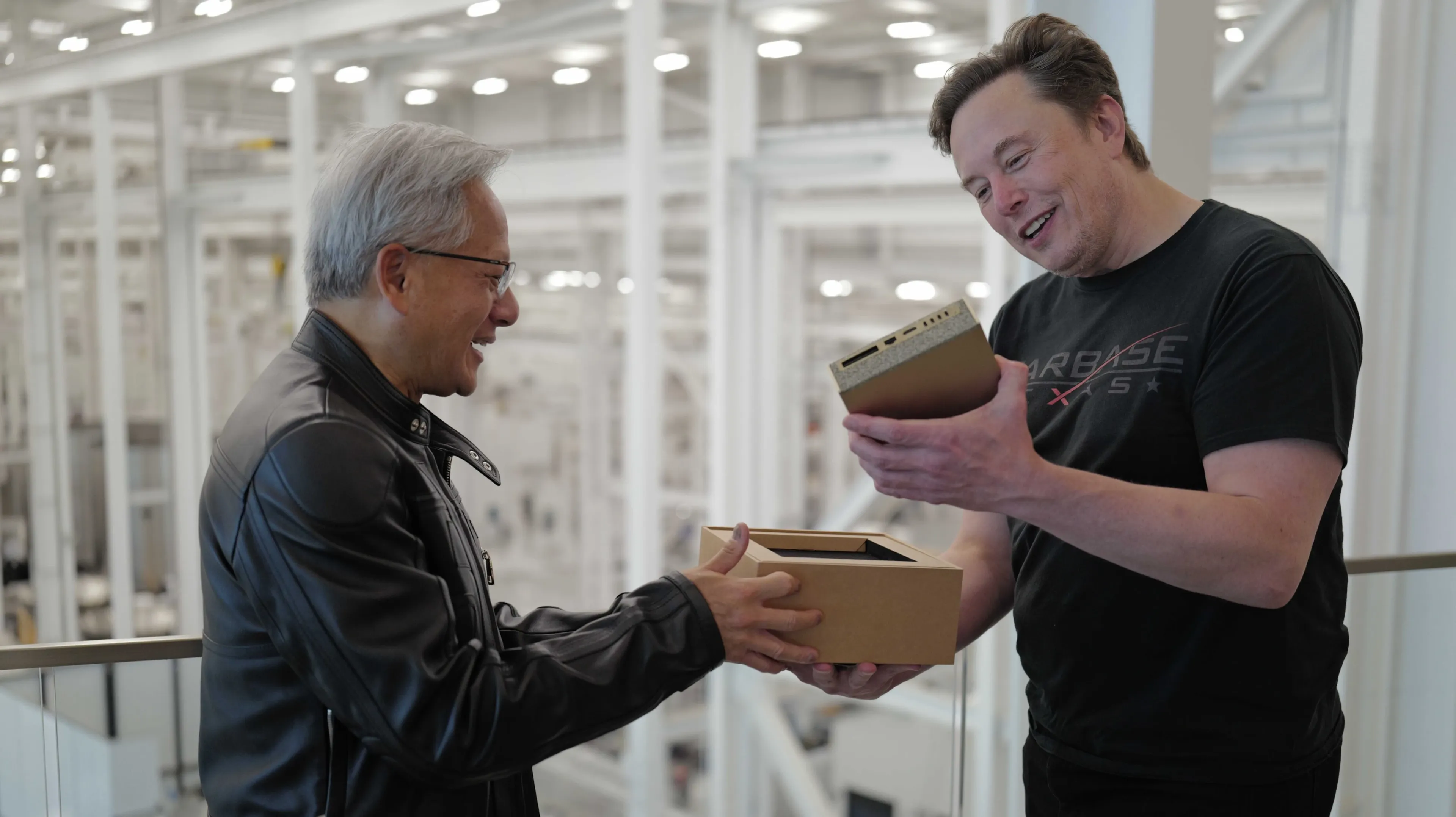
In addition to Musk’s projects, traders are citing other possible options: on Kalshi, Advanced Micro Devices and Tesla each receive 9%, Intel 7%, and Apple just 3%. Separately, Polymarket estimates a 20% probability that Huang will join a new company by December 31, 2026.
7:30 p.m. CET: Several more analysts lowered their ratings and price targets for Nvidia shares on Thursday following Huang's removal as CEO, according to Barron's.
Goldman Sachs analyst James Schneider lowered his price target from $300 to $220, while maintaining his “buy” recommendation. “Even with strong leadership at the level of the company’s individual functional units, it may be more difficult to operate as flexibly and efficiently as before in the absence of its central figure—a leader with a long-term strategic vision,” he wrote in a note to clients. Schneider also noted that it may become more difficult for Nvidia to negotiate with ecosystem partners on new large-scale joint investments on the same scale as before.
Ben Raitzes, an analyst at Melius Research, downgraded the stock to “hold” and cut the price target from $315 to $185. He believes that corporate and government customers may have second thoughts about committing to the Nvidia ecosystem, and that so-called “neoclouds” may prefer to cut capital expenditures during this challenging period. “Hyperscalers, on the other hand, are unlikely to abandon their plans anytime soon, as they truly need computing power. However, they will become even more active in developing their own specialized chips, as this incident only reinforces the understanding of how important it is to have their own processors,” Wrightzes believes.
Not everyone on Wall Street is equally wary. Mark Malek, Chief Investment Officer at Siebert Financial, noted that Nvidia’s competitive strengths extend beyond its founder. “Its CUDA software ecosystem, established customer relationships, and massive demand for artificial intelligence infrastructure create sustainable business advantages that will endure even in the event of an immediate change in leadership,” he wrote.
7:15 p.m. CET: Nvidia shares have pared their losses slightly and are now down less than 5%. They received support from retail investors who were actively buying shares during the sell-off, according to data from Vanda Research, an analytics firm that tracks investment flows.
According to Vanda, during the first 30 minutes of trading—when Nvidia’s stock plummeted 13% on news of the CEO’s dismissal—retail investors purchased $111 million worth of shares. This is the largest volume of Nvidia stock purchases in the first half-hour of trading in recorded history, according to the WSJ.
Investors who prefer to buy stocks on pullbacks have also been actively investing in leveraged exchange-traded funds (ETFs) focused on Nvidia’s growth. According to Vanda, from Monday through Wednesday, they invested $42.5 million in six ETFs that offer twice the return when Nvidia’s stock rises.
The last comparable surge in demand for such exchange-traded funds occurred in January 2025, when the Chinese AI startup DeepSeek caused a plunge in U.S. tech stocks.
6:50 p.m. CET: Analysts agree thatHuang's resignation affects not only Nvidia but the entire industry. Here are a few more comments:
“Overall, Nvidia will face a massive loss of trust,” said Mandip Singh, an analyst at Bloomberg Intelligence. According to him, given the company’s importance to the AI ecosystem and all of its transactions, Huang’s departure could have a disproportionately strong impact on so-called “neoclouds”—companies that provide computing power for AI—as well as on developers of open-source AI models or models with open weights.
“Huang’s departure is a turning point for Nvidia: the company must now prove that it can maintain its dominance in the field of artificial intelligence without the leader who was largely responsible for that success, ” said Asa Haiken, a senior analyst at eMarketer. “And given how heavily the entire AI industry relies on Nvidia’s chips, the resignation of Nvidia’s CEO creates uncertainty that extends far beyond the company itself.”
“As someone who studies economic history, I can’t even recall a single industry where a single figure was so influential and on whom so much depended,” noted Thomas Ferguson, an investor with the venture capital firm Blue Bear Capital.
The former head of Nvidia used the company's financial clout to support dozens of major players in the AI sector, including the cutting-edge labs at OpenAI and Anthropic. He also invested in cloud companies such as CoreWeave and Nebius and acted as a guarantor for their financing deals.
6:30 p.m. CET: Analysts at TD Cowen removed Nvidia from their list of top investment ideas due to uncertainty:
“Jensen Huang’s departure is a shocking, unprecedented, and tragic event. We don’t understand how NVIDIA will move forward. We certainly have no valuation model that accounts for the sudden departure of the outstanding co-founder and CEO of a company with a market capitalization of $4 trillion—especially in the absence of an obvious permanent successor.”
However, they are not revising their recommendation on Nvidia stock at this time—they are waiting for the situation to become clearer.
6:18 p.m. CET: The Department of Justice is investigating the activities of Chinese citizen Alice Huang, whom U.S. intelligence agencies suspect of possible espionage against the former head of Nvidia, to determine whether organizations associated with her may have been involved in attempts to illegally ship Super Micro Computer products to China. This was reported by a Bloomberg source.
It is not yet clear whether the investigation is directly linked to any of the microchip smuggling cases in which U.S. or Asian prosecutors have already filed charges, the agency reports. According to the agency, the U.S. Department of Justice is already investigating Alice Huang’s former company, Megaspeed International, on suspicion of illegally shipping semiconductors. Megaspeed denies any wrongdoing.
Super Micro declined to comment.
Alice Huang, also known as Huang Lei, was linked to former Nvidia CEO Jensen Huang through Megaspeed—Nvidia’s largest chip buyer in Southeast Asia. According to a Bloomberg source, the U.S. Department of Justice is also conducting an investigation into suspected espionage, as part of which it is examining Alice Huang’s relationship with Jensen Huang (they share the same last name).
On Sunday, Huang admitted that he had had an extramarital affair. This plunged Nvidia into an unprecedented crisis, triggered a sharp drop in the company's stock price, and ultimately led to his resignation as CEO.
2:02 p.m. CET: All major stock market indices are in positive territory: the Nasdaq Composite, S&P 500, and Dow Jones are up between 0.1% and 0.3%. Nvidia shares are still down 5%.
17:36 CET: Upon leaving Nvidia , Jensen Huang will forfeit equity compensation worth approximately $108 million, according to Bloomberg. Company policy stipulates that unvested RSUs (Restricted Stock Units) are forfeited as soon as an executive ceases continuous service. Huang holds about 346,000 RSUs, and under the incentive plan, he would have received about 310,000 of them provided the company met certain performance targets.
However, this amount represents only about 0.07% of his fortune. Bloomberg estimates the Nvidia founder’s net worth at $144.5 billion—and this consists almost entirely of Nvidia common stock. Huang controls about 3.5% of the company.
17:19 CET: According to its latest financial statements, Nvidia’s total liabilities and guarantees in the AI sector amount to approximately $530 billion. Huang’s departure is forcing the market to reassess the value of the entire network of companies linked to Nvidia through its investments and contracts, according to Yahoo Finance.
Nearly half of the total—about $279 billion—is allocated to supplies and reserved capacity. Another $105 billion goes toward a guarantee for the lease of OpenAI’s data center in Ohio, $36 billion toward cloud capacity for AI, $29 billion for cloud service agreements, and the remainder for leasing its own data centers, equity investment commitments in other companies, leasing data centers for third parties, capital expenditures, and other items. Of this total, Nvidia has committed to paying approximately $65 billion for the leaseback of cloud computing capacity from companies such as CoreWeave.
At the same time, the company’s customers have become slower to pay: Nvidia’s accounts receivable reached $63 billion in the last quarter, and the time it takes to collect them increased from approximately 45 to 60 days. The company attributed this to longer payment terms on major contracts. At the same time, Nvidia’s portfolio is losing value: the value of its largest public equity holdings—including Intel, SpaceX, CoreWeave, and Coherent—has declined by approximately $24 billion since June. Nvidia also pledged to invest up to $10 billion in Anthropic ahead of its IPO next week and has tentatively agreed to invest up to $100 billion in OpenAI.
It was Huang who built this entire network of deals, and now Colette Kress is determining their fate: as CFO, she approved the agreements and is now deciding how many new commitments the company will take on, according to Yahoo Finance. “This brings us back to what we’ve been talking about for almost the entire past year—the multitude of these interlocking relationships,” said SoFi’s chief market strategist, Liz Thomas, at the Yahoo Finance Invest event.
Concerns about such “circular transactions” had been raised before, but Nvidia had dismissed them. During a conference call with investors in August 2026, Huang said his only regret was that he hadn’t started investing in partners sooner and more heavily, while Kress asserted at the time that Nvidia’s risks from such investments were limited.
The company's balance sheet continues to offset these risks: as of the end of July, Nvidia had approximately $99 billion in cash and securities, compared with $33 billion in debt.
5:00 p.m. CET: Nvidia shares are down more than 5%, having recouped a significant portion of their losses at the market open an hour and a half ago. The S&P 500 is down only slightly, while the Nasdaq Composite is down less than 0.2%. Why did investors react relatively calmly to Huang’s resignation? It’s not because of a broad market rally: more than 340 stocks in the S&P 500 are on track to close lower today, notes Barron’s.
So what is Wall Street buying? Investors have flocked to the stocks of Nvidia's competitors—Broadcom and AMD. In addition, the stock prices of Amazon, Microsoft, Alphabet, Apple, and Tesla are rising. What's more, Apple's stock has set a new record.
4:50 p.m. CET: Analysts warn that Nvidia's management will have to focus on "putting out fires" in the near future:
“The situation will be very challenging,” said Michael O’Rourke, chief market strategist at Jonestrading. “Jensen had forecast a 70% increase in sales this year. Given the company’s client financing practices and aggressive business tactics, his successor will spend the next year putting out fires and cleaning up the mess.”
“Jensen previously described Nvidia as a ‘Formula 1’ race car built specifically for him as the driver. Everyone else in the company is a specialized component: the engine, the wheel, the axle, the turbocharger. No one else is prepared to take the lead,” says Gregory Allen, founder and CEO of Decision Tree Research.
16:38 CET: Donald Trump announced his candidate for the position of CEO of Nvidia on the social media platform Truth Social:
"Now that Nvidia CEO Jensen Huang, who did an excellent job, has stepped down, there is only one person to take his place: Tim Cook of Apple. One legend is being replaced by another!"
Tim Cook, 66, stepped down this fall as Apple's CEO, a position he had held since 2011. He remains chairman of the company's board of directors.
16:33 CET: “The Godfather” has fallen—and Nvidia risks facing the consequences of its overreliance on Jensen Huang. So wrote short seller Michael Burry, known as the inspiration for the character in “The Big Short,” on his blog Cassandra Unchained a few hours before Nvidia’s CEO’s resignation was officially announced.
Burry suggests that, with Huang’s departure, there is simply no one left at the company who possesses a comprehensive understanding of Nvidia’s business. But Huang’s departure could pose a much more serious problem for Nvidia than simply the loss of its CEO. According to Burry, Nvidia’s success was driven not only by cutting-edge technology but also by the financing and sales system Huang created, which allowed the company to maintain high growth rates and profitability. Following his departure, this system could collapse. The investor believes that strong quarterly earnings will give Nvidia shareholders another opportunity to sell their shares, and he directly advises them to take advantage of it.
16:29 CET: The first hour of the main trading session is drawing to a close. Investors are gradually buying back Nvidia shares—the decline has narrowed to 4.7%.
The Nasdaq Composite Index also narrowed its decline to 0.5%. The Dow Jones and the S&P 500 are down 0.2% and 0.4%, respectively.
4:15 p.m. CET: How much could Jensen Huang be worth to Nvidia shareholders? Here's what Wall Street analysts are saying
Citigroup analysts lowered their price target for Nvidia shares from $285 to $225. “The leadership change is putting pressure on the stock, given Huang’s central role in strategy, product vision, customer relationships, and investor confidence,” they wrote. However, Citi still recommends buying Nvidia stock.
Analysts at Oppenheimer have withdrawn their price target altogether. “We see a huge void that needs to be filled and no obvious successor,” they wrote. Oppenheimer also warned of an increased risk of a brain drain—talented employees may leave the company following Huang’s departure.
Dan Ives, managing director at investment bank Yorkville Ives, stated that Huang “created a web of complications” and “tarnished his own reputation and that of Nvidia.” In his estimation, the fair value of Nvidia’s stock without Huang is $225 (and with him, $300).
“The problem with Nvidia is that Huang is a very charismatic public figure, a true rock star of the industry. It will be difficult to find a suitable replacement for him. I think this could cause some stock volatility in the near term. But there are always two sides to every coin: the company’s fundamentals remain strong. Its main asset is still its cutting-edge graphics processors, for which there is no alternative on the market. “Looking beyond the current volatility, I remain confident in the company’s prospects,” wrote Anna Wu, investment strategist and founder of Floodlines Research.
3:55 p.m. CET: Following Huang's resignation, Nvidia has appointed a chairman of the board of directors for the first time in its history—Harvey Jones will assume the role.
The Wall Street Journal calls him a Silicon Valley veteran. In the 1980s, Jones co-founded Daisy Systems, a company specializing in computer-aided design for engineering. He later worked at Synopsys, a developer of computer-aided design systems, in which Nvidia invested $2 billion last year. Since 2004, Jones has been a managing partner at the investment firm Square Wave Ventures.
Harvey Jones is one of the longest-serving members of Nvidia's board of directors: he has been on the board since 1993, when the company was founded.
Previously, Nvidia's board of directors did not have a chairman. The company claimed that this unusual structure was beneficial to investors, according to the WSJ.
15:44 CET: Nvidia’s market capitalization fell below $4 trillion for the first time since 2025 following Huang’s resignation. At the start of trading, the company’s market value fell by $601 billion, according to Bloomberg. If trading trends remain unchanged until the market closes, this will mark the largest single-day drop in stock market history, the agency notes.
Just a few weeks ago, Nvidia was the most valuable company in the world. Now it ranks third, behind Apple and Microsoft.
"I've never seen anything like this, so we're entering uncharted territory. On a scale of one to ten, this is a ten."
15:32 CET: The main trading session has opened in New York. Here's the current situation:
Nvidia's stock plummeted 13%;
The Nasdaq Composite, which has a high proportion of technology companies, is down 1.5%, while the broad-market S&P 500 index is down 0.8%. The Dow Jones Industrial Average, a "blue-chip" index that is heavily weighted toward cyclical sectors of the economy, remains slightly in positive territory.
Shares of cloud AI infrastructure provider CoreWeave are down 12%, while those of its competitor Nebius are down 20%. Nebius released its third-quarter earnings report two hours ago, disappointing Wall Street with its revenue forecast. For both companies, Nvidia is an investor and a supplier of chips for data centers.
Shares of Super Micro Computer—a buyer of Nvidia chips and a company that relies on the profitable deployment of AI infrastructure—fell 9%. Dell Technologies shares are down nearly 5%.
Nvidia is the only stock in the "Magnificent Seven" that is currently falling in price. Amazon is the strongest performer in the group, with its stock up 1.4%.
3:20 p.m. CET: Colette Kress has served as Nvidia’s chief financial officer since 2013; prior to that, she worked at Cisco, Microsoft, and Texas Instruments. She is the company’s best-known executive after Huang, at least among investors, according to Bloomberg. Boards of directors often appoint CFOs when they need to stabilize the situation quickly, the agency noted.
Kress is an experienced financier, but she lacks the technical background that Huang has, Freedom Broker senior analyst Yegor Tolmachev told Oninvest earlier. Investor Michael Burry wrote about the same issue on his blog, Cassandra Unchained, on November 12. According to him, among Nvidia’s executives, “there is no one who has a comprehensive understanding of the company’s operations on a global scale.”
Oninvest discussed in this article who else in the market is being considered as a candidate for the position of Nvidia CEO.

Colette Kress / Photo: Nvidia
10:10 p.m. CET: Nvidia announced Huang's resignation in a statement on its website, thanking him for his "invaluable contributions." Here is the full statement regarding the change in CEO:
NVIDIA Announces Change in CEO
November 12, 2026
Jensen Huang is stepping down
Colette Kress, Executive Vice President and Chief Financial Officer, has been appointed interim CEO
Harvey K. Jones has been appointed as the company's first-ever chairman of the board of directors
The Board of Directors of NVIDIA (NASDAQ: NVDA) announced today that Jensen Huang has stepped down from his positions as president, CEO, and member of the board of directors.
Colette Kress, NVIDIA’s current executive vice president and chief financial officer, has agreed to serve as interim CEO. Kress will retain her positions as Executive Vice President and Chief Financial Officer while serving as interim CEO until a permanent successor is appointed. The Board of Directors is beginning the search for a permanent CEO and will consider both internal and external candidates.
Kress has served as Executive Vice President and Chief Financial Officer of NVIDIA since joining the company in September 2013. During that time, she has led the company’s finance division and played a key role in NVIDIA’s growth and development. Before joining NVIDIA, Kress spent nearly 25 years in finance roles at leading technology companies, including Cisco and Microsoft.
The Board of Directors has appointed Harvey K. Jones as its first-ever chairman. Mr. Jones has more than 30 years of experience as an entrepreneur, technology executive, and active venture capitalist, including serving as CEO and Executive Chairman of the Board of Directors at Synopsys.
“Colette has helped guide NVIDIA through a period of exceptional growth and has a deep understanding of our business, our customers, our operations, and our financial position,” said Harvey Jones, chairman of NVIDIA’s board of directors. “She is supported by an experienced management team that has played a key role in executing NVIDIA’s strategy and advancing its technology roadmap. The Board of Directors has full confidence in Colette and the leadership team, and we expect the company’s operations, commitments to customers, and product roadmap to continue without interruption.”
“NVIDIA’s strength has always been its people, and together with our leadership team, I intend to build on the outstanding foundation that Jensen has built over the past 33 years,” said Colette Kress, interim CEO and CFO of NVIDIA. “We will continue the work that has made NVIDIA a leader in accelerated computing and AI, and we will capitalize on the opportunities that lie ahead. Our priority remains serving the interests of our customers, partners, developers, and shareholders.”
Jensen's contribution to NVIDIA's growth has been immense. NVIDIA is one of the most influential technology companies in the world. The Board of Directors and the company thank Jensen for his invaluable contribution to the company and the industry.
NVIDIA will release its financial results for the third quarter of fiscal year 2027 on Tuesday, November 17, at approximately 1:20 p.m. Pacific Time, as previously scheduled. The earnings conference call will begin at 2:00 p.m. Pacific Time.
This content is being updated
This article was AI-translated and verified by a human editor