The Nasdaq fell 4% following the worst week of the year for semiconductor stocks

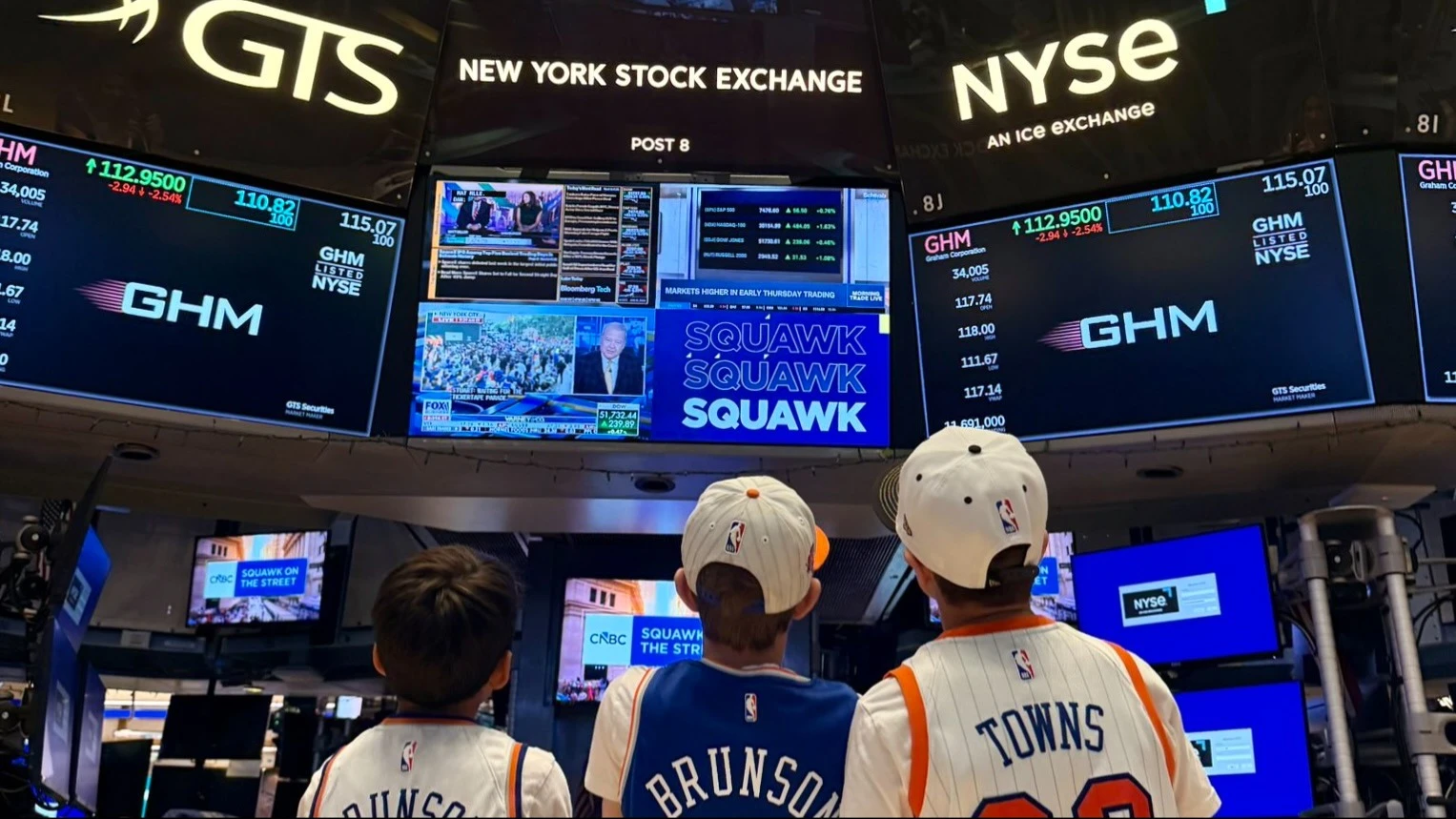
Photo: X/NYSE
The Nasdaq Composite, a technology sector index, fell by about 4% over the course of the week. The S&P 500, a broad-market index, also ended the week in the red, while the Dow Jones Industrial Average, a blue-chip index, managed to rise slightly. Semiconductor stocks fell by more than 7% over the week—their worst performance of the year—despite Micron’s earnings report, which exceeded all expectations.
Details
— The Nasdaq Composite Index lost 4.6% for the week, according to CNBC. It closed Friday down 0.24%, marking its fifth consecutive day of losses, even though it had been rising just half an hour before the markets closed. The PHLX Semiconductor Index fell by more than 7% this week—its worst performance since April 2025, MarketWatch reported, citing FactSet.
— The S&P 500 broad market index fell by more than 1% this week. On Friday, it fell by a modest 0.06%. The best-performing sector in the index on Friday was healthcare, followed by consumer staples, MarketWatch noted.
— The Dow Jones Index managed to gain about 0.6% over the week, although it fell slightly on Friday—by about 0.1%.
— The Russell 2000 Small- and Mid-Cap Index rose 1.3% over the week, but gained just 0.07% on Friday.
— Brent crude oil futures fell 4% on Friday to $72.21 per barrel, while WTI crude oil futures dropped 3.3% to $69.53 per barrel.
What Affected Stock Prices
Investors were selling shares of the “Magnificent Seven” and other beneficiaries of the AI boom due to doubts about the sustainability of industry leaders’ infrastructure spending, according to CNBC. In particular, the memory chip shortage became a major topic this week, serving not only as a growth driver for chip manufacturers but also as a threat to their customers’ profit margins. This forced Apple, for example, to raise prices on its products.
An additional negative factor on Friday was a report in The New York Times about the possible postponement of OpenAI’s IPO until 2027. This hit SoftBank, an investor in the startup: its shares in Tokyo plummeted 12.5% on Friday. In the U.S., shares of Morgan Stanley and Goldman Sachs—the banks with which OpenAI is working on its listing—fell, according to Bloomberg. The delay in OpenAI’s IPO “could slow the pace of infrastructure spending,” Adam Chrisfulli, founder and president of Vital Knowledge, told CNBC.
For Oracle—OpenAI’s partner, which builds data centers for the company and provides cloud computing services—this week was its worst since August 2001: its stock plummeted 19%, according to CNBC. To meet its AI infrastructure commitments, primarily to OpenAI, Oracle is taking on record amounts of debt. This poses risks to the company’s balance sheet, the network explains.
The plunge in shares of Michael Saylor’s Strategy has shaken up the crypto market, according to Bloomberg: the company’s stock fell 27% over the course of the week. Bitcoin hit a two-year low, falling by half from the record high set in October.
Amid a sell-off in tech stocks, the information technology sector of the S&P 500 fell 1% on Friday. At the same time, investors began actively buying shares of companies in the healthcare sector. Eli Lilly shares rose 7%, Johnson & Johnson gained 4%. AbbVie shares rose 4.2%. The consumer staples, financials, and utilities sectors were also among the day’s winners. Moderna shares soared 12.6%.
What Analysts Are Saying
— “We wouldn’t buy shares in big tech or AI companies at current levels, as their dominance is beginning to wane: the ‘Magnificent Seven’ stocks and Bitcoin peaked nine months ago and haven’t recovered since. The market is sending us a message, and investors would do well to heed it,” Richard Rail, chief investment officer at Questar Capital Partners, told Bloomberg.
— The rotation out of the IT sector could last “as late as July,” according to Baird investment strategist Ross Mayfield. The reason, he explains, is “how far” some chipmaker stocks have risen. That said, the analyst remains positive on this sector in the long term. “Looking ahead to the next 12 months, I would still bet that shares of chipmakers and AI infrastructure companies will outperform the market because demand is simply insatiable,” CNBC quotes him as saying.
This article was AI-translated and verified by a human editor